Showing posts with label Satellite. Show all posts

Diwata-1 Ends Space Mission

 10 October 2022


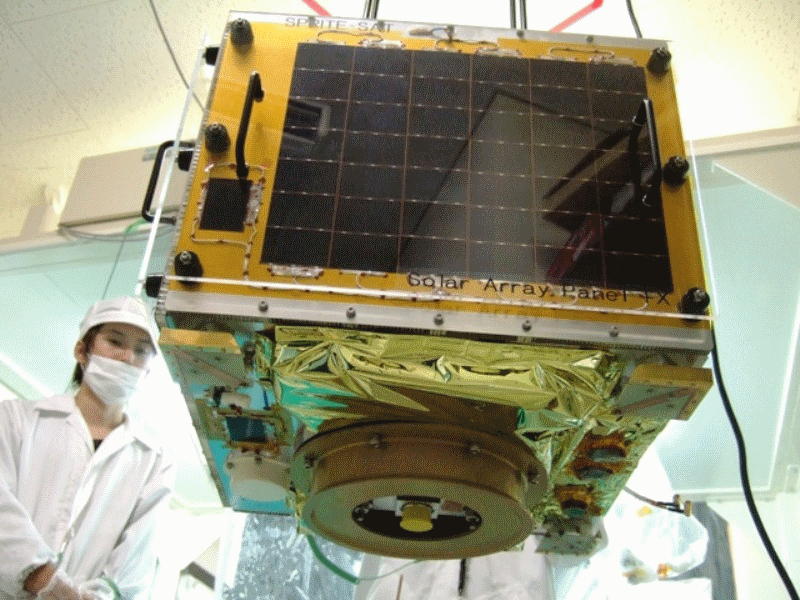
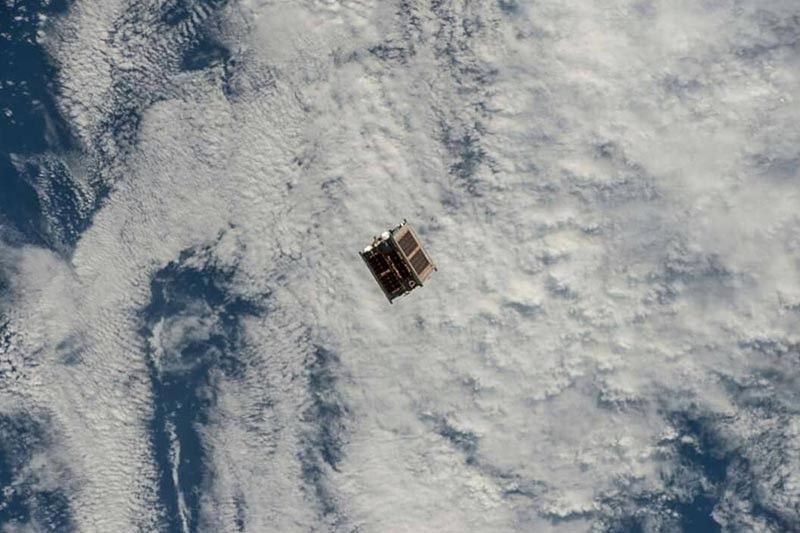
The Philippines’ first microsatellite Diwata-1, launched to the International Space Station on March 23, 2016 and was released into orbit on April 27, 2016, ended its Earth observation mission after four years in space, the government said.

According to Department of Science and Technology (DOST) STAMINA4Space Program, Diwata-1 was designed to operate for only 18 months but it outlived its design life and continued capturing
45,572 satellite images, 17,271 of which are images of the Philippines.

The first satellite built and designed by Filipinos was last seen at an altitude of approximately 114 kilometers, which is very close to the widely accepted boundary between the outer space and the Earth’s atmosphere, early Monday morning last week.

“It is expected that beyond this altitude, the chances of successfully establishing contact with Diwata-1 are extremely low,” Department of Science and Technology’s Sustained Support for Local Space Technology and Applications Mastery, Innovation and Advancement (STAMINA4Space) .

“This, therefore, marks the official end of the mission lifetime of Diwata-1,” it added.

The Philippines has launched two (2) Diwata satellites to the International Space Station, with the second launched in 2018.

Maya and Diwata microsatellites were developed in the University of the Philippines Diliman under the STAMINA4Space Program funded by the Department of Science and Technology. The program is implemented by UP and the DOST’s Advanced Science and Technology Institute. 


Maya-2 Satellite Launched Into Orbit

22 February 2021

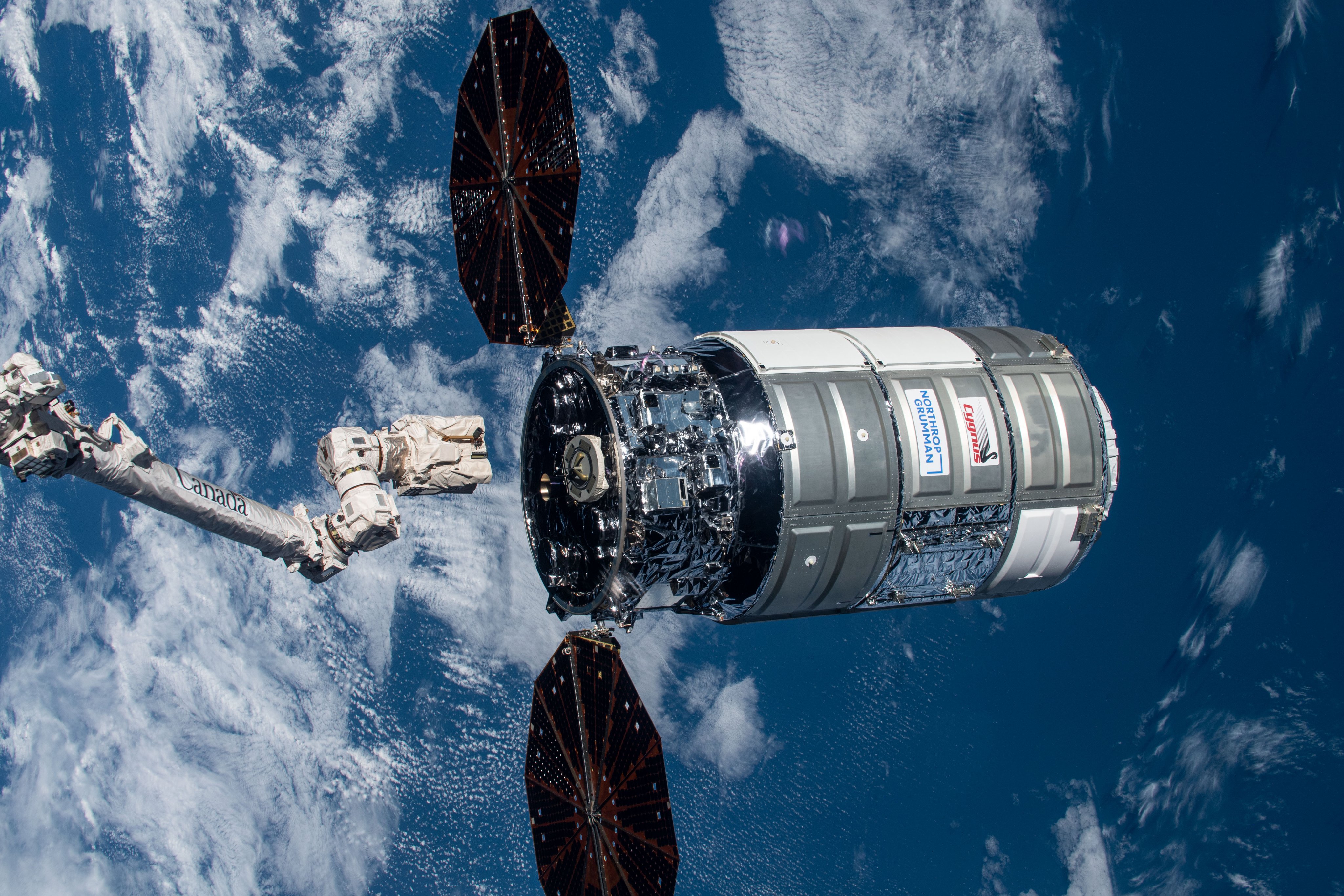
The Philippines on Sunday marked another historic moment with the launching of its second cube satellite (cubesat) Maya-2 to the International Space Station (ISS) aboard the S.S. Katherine Johnson Cygnus spacecraft at 1:36 a.m. Philippine time.

Science Secretary Fortunato T. de la Peña said the Department of Science and Technology (DOST) is “very proud of this achievement.”


The satellite was powered by Antares launcher as it rocketed into orbit from the Eastern Shore of Virginia, deploying a Northrop Grumman Cygnus supply ship carrying nearly 8,400 pounds of cargo to the International Space Station, the the most massive collection of payloads ever flown to the research outpost on a U.S. commercial freighter.

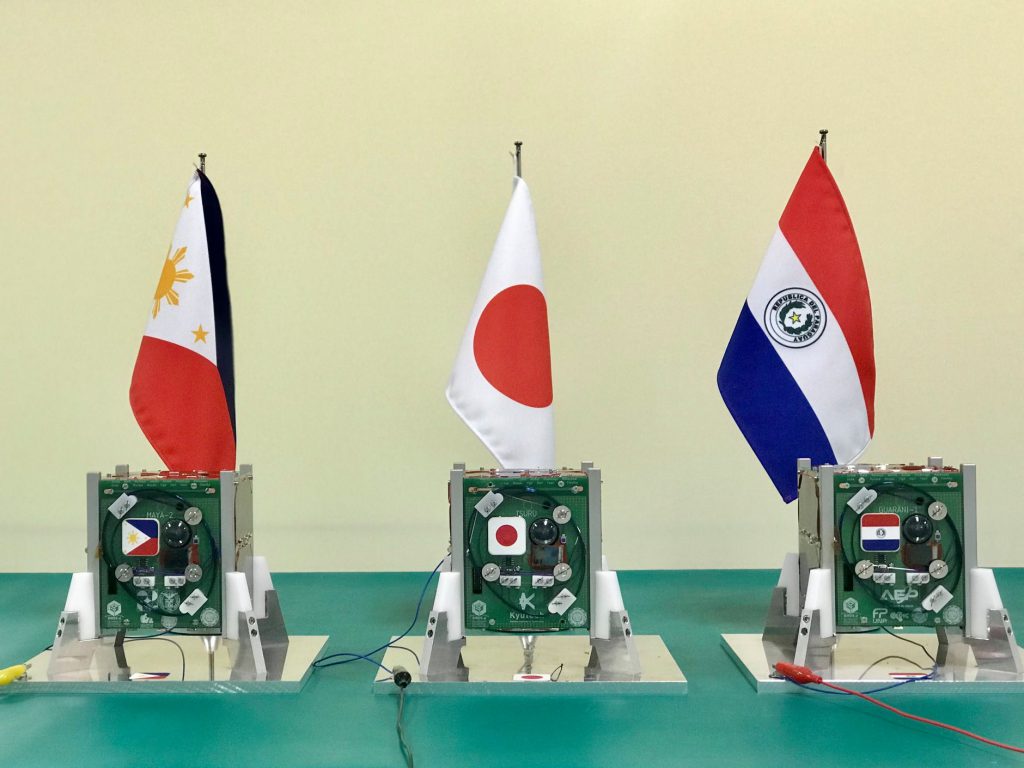
The Joint Global Multi-nation “BIRDS-4 Satellite Project” is a cross-border interdisciplinary CubeSat (cube satellite) project  hosted at Kyushu Institute of Technology in  Japan, in collaboration with the development of satellites of three (3) nations: the Maya-2 CubeSat of the Philippines, the GuaraniSat-1 CubeSat of Paraguay, and the Tsuru CubeSat of  Japan). 

The Maya-2 CubeSat, which weighs 1.3kg, and is 10cm on each side, is meant to stay in low earth orbit (at an altitude of 400km and orbit inclination of 51.6 degrees) and has radio and imaging payloads similar to its “sister” satellites. 

Maya-2 was developed by Filipino students coming from different Philippine universities, and will follow the earlier satellites Diwata-1 and Maya-1 launched in 2016 and 2018, respectively. 

Maya-2 is one of the Satellite Projects under the Stamina4Space Program by the Department of Science and Technology (DOST) and University of the Philippines Diliman.

Philippines Launches Second Micro Satellite

DIWATA-2 Launches 

29 October 2018


The Philippines will launch today the DIWATA-2 microsatellite (Small Demonstration Satellite-2), marking the country’s third venture into space under the P840-million PHL-MICROSAT Program of the Department of Science and Technology (DOST).

The microsatellite that will orbit the Earth every 90 minutes and pass over the Philippines up to four times per day is carried as a secondary payload of the H-IIA F40 rocket and will be launched from the Tanegashima Space Center, Japan between 12:08 p.m. and 12:20 p.m. today, Philippine Time.

This is the second experimental microsatellite developed by the University of the Philippines (UP) in collaboration with Hokkaido University and Tohoku University of Japan. The DIWATA-2 continues the heritage of DIWATA-1, the country’s first microsatellite deployed on April 27, 2016 from the International Space Station (ISS).

Under the PHL-MICROSAT Program, the two microsatellites are initially designed to capture images of the Philippines for environmental monitoring, disaster response and management.

Due to technical and operational issues plaguing the DIWATA-1 program, it has failed to fully deliver on its promise of using space technology for public service. The DIWATA-1 has covered only around 32 percent of the land area of the Philippines since 2016. It is unlikely to be able to cover the rest of the country with its remaining orbital lifetime of less than two years.

DIWATA-2 will have a lifespan of five years as compared to DIWATA-1 which will orbit at a higher altitude of 620 kilometers for an increased lifespan and a sun-synchronous orbit, which will enable fixed revisit intervals that would make repeated environmental monitoring of specific areas possible.

Both microsatellites carry the High Precision Telescope and the Spaceborne Multispectral Imager as payloads. It will also carry a Wide Field Camera (WFC), Middle Field Camera (MFC), High Precision Telescope (HPT) and Spaceborne Multispectral Imager (SMI) with Liquid Crystal Tunable Filter (LCTF).

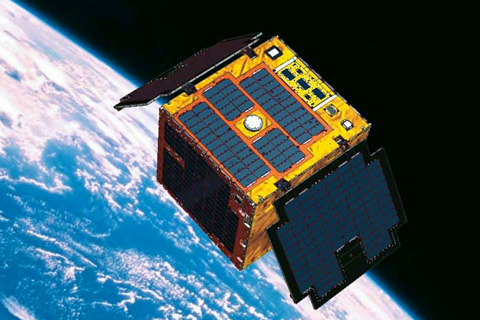
Diwata-2 will have deployable solar panels as compared to DIWATA-1 for increased power generation output and an Enhanced Resolution Camera (ERC), for increasing the resolution of images taken by SMI. Furthermore, it will feature two locally made experimental modules: An Amateur Radio Unit for emergency communications and a Satellite Orientation Module for increased pointing accuracy and future satellite development initiatives.

The satellite was monitored by the DOST-Philippine Council for Industry and Emerging Technology Research and Development (PCIEERD), and done through the collaboration between the University of the Philippines Diliman, the DOST-Advanced Science and Technology Institute (ASTI), Hokkaido University and Tohoku University.

The DIWATA-2 will be launched together with six other satellites, including GOSAT-2 of Japan and Khalifasat of the United Arab Emirates as the primary payloads.

Both Diwata-1 and Diwata-2 are Earth-observing microsatellites capable of capturing images of Earth for environmental assessment. The satellite control, operation, and acquisition of experimental data will be done at the Philippine Earth Data Resource Observation Center (PEDRO), which is housed by DOST-ASTI.

First PH-Made Satellite Launched

Visits International Space Station Before Deployment 


23 March 2016

The Philippines has launched its third satellite Wednesday at Cape Canaveral, Florida, a first among two that is expected to be orbited soon. It was flown into space at 10:00 a.m. Manila time. The spacecraft carrying the satellite is expected to arrive at the International Space Station (ISS) on Saturday where it will be delivered to the Japanese Experiment Module before it will be released into orbit between April 4 and 7.

The micro satellite named Diwata, is the first Filipino-made and co-developed weather satellite, officially called the Philippine Scientific Earth Observation Microsatellite (Phil-Microsat). Diwata also caused the creation of Philippine Space Agency.


The Philippines launched its first communication satellite named Agila 1 into space in 1996. It was acquired from Indonesia, which launched it from Cape Canaveral in 1991. The second Philippine communication satellite was Agila 2 launched from Sichuan, China, in 1997. It was subsequently sold in 2009 and now carries the name ABS-3, after Mabuhay Satellite Communications, a subsidiary of Philippine Long Distance Telephone Co., sold it to Bermuda-based Asia Broadcast Satellite Holdings Ltd. for P400 million.

The satellite was developed by Department of Science and Technology (DOST), University of the Philippines (UP), together with Tohoku University (TU) and Hokkaido University (HU) of Japan, which handed-over the project to Japan Aerospace Exploration Agency (JAXA) following the completion of the assembly and testing of the 50-kg Philippine Earth Observation Microsatellite.

Science Secretary Mario Montejo said Diwata was part of around 3,375 kilograms of science and research, crew supplies and vehicle hardware that would be brought to the International Space Station (ISS) by Orbital ATK’s Cygnus spacecraft as part of the National Aeronautics and Space Administration’s (Nasa) fifth resupply mission to the ISS.

Carlos Primo David, executive director of the Philippine Council for Industry, Energy and Emerging Technology Research and Development, said that once Diwata has been released into orbit, Philippine scientists will have full control over it.

David said that control of the satellite will be done first by Filipino Engineers who are stationed at Tohoku, Japan after which command will be transferred later to the Philippine Earth Data Resources Observation (Pedro) in Subic, Zambales province, which will receive and store data sent by the satellite. Agila 1 and Agila 2 were also being controlled at Subic Space Center.

It is expected that Diwata, which will stay in orbit for around 20 months, will take an average of 3,600 high-resolution images of the Philippines daily using its four cameras.

According to Phil-Microsat program head Joel Marciano Jr., Diwata is equipped with a high-precision telescope capable of determining the extent of damage from disasters; a space-borne multispectral imager with liquid crystal tunable filter that could monitor changes in vegetation and ocean productivity; a wide-field camera that could observe cloud patterns and weather disturbances; and a middle-field camera, an engineering payload that would be used to assist in determining the location of each image captured by the other optics.

Part of the three-year program is the development of a second microsatellite (DIWATA 2) to be launched in 2017.  More details of the program here.

Philippines Get Back To Satellite Age

As New Philippine Orbital Satellite Slated For Launch


11 March 2015

The Philippines has announced that it will be launching the next generation satellite into orbit next year.

Department of Science and Technology (DOST) said the country will also send another micro satellite into orbit in 2017 to be carried into space by Japan Space Exploration Agency. The project has a price tag of 840 million pesos, 500 million pesos of which are funded by Japanese Universities.

The first micro satellite after 20 years will be named the Philippine Earth Data Resource and Observation or “PEDRO.” The next micro-satellite to be launch in 2017 will be nicknamed “Diwata.”

A data receiving station is slated to be put up in Subic at a former communications facility used by the United States of America.

Diwata will be used for disaster-mitigation efforts, agriculture, forest cover monitoring, among other possible applications while the first satellite is intended for security surveillance purposes.

Possible satellite applications are being coordinated by the University of the Philippines with technical and research support from the Hokkaido University and Tohoku University of Japan.

Europe-based firm acquires Mabuhay Satellite

By Mary Ann LL. Reyes

September 14, 2010
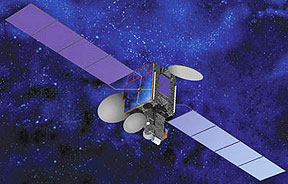

Agila-2 satellite (ABS)Manila - A company backed by the Permira funds, along with the Asia Broadcast Satellite (ABS) management team, has reached an agreement to acquire Kingsbridge Ltd., the holding company for ABS, one of the fastest growing premium satellite operators in the world.

The Permira funds will become the majority shareholder of ABS.

Permira is a private equity firm with a European heritage and a global reach. The firm advises funds with a total committed capital of approximately 20 billion euro ($26 billion). Its funds, raised from pension funds and other institutions, make long-term investments in companies with the ambition of transforming their performance and driving sustainable growth.

ABS completed last July 1 its acquisition of Mabuhay Satellite Corp. (MSC) business and facilities in the Philippines, including Agila2, now renamed as ABS-5.

Founded in 2006 by CEO Thomas Choi, ABS supplies bandwidth connectivity to broadcasting and telecom customers, serving over 80 customers in around 30 countries. ABS currently operates three satellites in orbit under the ABS brand, one under co-brand with a third party and two additional satellites in the pipeline including the new state-of-the-art ABS-2 scheduled to be launched in early 2013.

ABS’ prime orbital locations cover four fifths of the world’s population, targeting high growth markets in Asia, Russia, Africa and the Middle East.

Officials announced that the acquisition of ABS is entirely equity funded. The Permira funds support ABS’ ambition to become a leading satellite operator in its target markets. One of its key near-term initiatives is to build and launch the new ABS-2 satellite, which will be one of the largest fixed service satellites to be launched over the Eastern Hemisphere.

The Permira funds have significant experience in the satellite sector, having previously made successful investments in Inmarsat, a leading provider of global mobile satellite communications services, and Intelsat, the leading provider of fixed satellite services worldwide.

At Inmarsat, the Permira funds backed substantial investment in technology through the financing of the design, launch and manufacture of the I-4 fleet of satellites, the most advanced commercial mobile communications spacecraft of their kind while at Intelsat, the funds facilitated the successful acquisition of Panamsat and the pursuit of new growth opportunities.

Citigroup Venture Capital International Proprietary Investment Partnership L.P. and Citigroup Venture Capital International Co-Investment L.P., which have been the majority shareholders of ABS since 2006, agreed to sell their respective interests in the holding company of ABS, along with ADM Capital and certain other shareholders, subject to the terms and conditions of the share purchase agreement dated September 9, 2010.

Terms of the deal were not disclosed. The acquisition of ABS marks the Permira funds’ third investment in Asia since 2007.

“We are delighted to be working with the Permira funds, one of the world’s most experienced satellite investors. Their team understands the industry and its immense opportunities and shares the management’s growth ambitions. This made them the obvious choice for ABS as we embark on our next stage of development,” Choi said.

For his part, Richard Sanders, head of TMT at Permira, said ABS is one of the world’s fastest growing satellite operators, with prime orbital locations serving markets with strong fundamentals. “Tom Choi and his team have achieved a tremendous amount in the past four years from start-up and, with the Permira funds’ backing, have the opportunity to continue growing in their target markets in Asia, Russia, Africa and the Middle East,” he said.

Meanwhile, Ji Min, managing director and head of Asia for Citi Venture Capital International (CVCI) said: “We had a very positive experience as a majority shareholder of ABS. We applaud the management’s efforts in contributing to the company’s strong growth and in developing good relationships with its customers. We value the close-knit relationship that we were able to form with Tom Choi and his team and are pleased to see the company enter the next phase of growth. We wish them a great future.”

Henry Chen, Head of Permira’s Hong Kong office, added: “This is an example of Permira displaying its competitive edge - combining strong global sector expertise with extensive local reach to capture attractive investments. This is Permira funds’ third investment in Asia and we will continue to focus on attractive opportunities in sectors in which we have deep insight and can bring significant value.”
Satellite firm goes to Subic


Transfers Control Centre

January 31, 2010

by Jeremiah F. de Guzman

Agila-2 satellite (ABS)Asia Broadcasting Systems, a major satellite operator in Asia, is transferring the control of $800 million worth of equipment to its Subic facility this year.

ABS chief executive Tom Choi said in a statement that the company would beef up its workforce by over 50 percent in two years and train staff for the transfer of the control operations to the Subic center from the southern part of Hong Kong.

“In short, an $800 million worth of satellite equipment will be controlled in our operating center in Subic,” Choi said.

The Subic center, he said, would control five of the company’s satellites—ABS 1, ABS 1-A, ABS 2, ABS 5 and ABS 6.

The satellites serve the firm’s markets in Asia-Pacific, Russia, Africa and the Atlantic. ABS recently acquired Mabuhay Satellite Corp. of the Philippines, which operated the Agila-2 satellite, now renamed ABS-5.

Choi said ABS would invest over $5 million for training and additional infrastructure in its ground facility in Subic, adding that the firm would hire a minimum of 20 new employees this year.

“The investment will include new control equipment, new software, big antennas and satellite control equipment that will all be located in our Subic control center,” he said.

Choi added the company would spend an additional $300 million for another satellite to replace Agila 2 in preparation for its retirement in five years.

“Our investments in the Philippines will be long term,” he said.

ABS, whose control operations are in Hong Kong, said its main clients in the Philippines are telecommunication and broadcasting firms, including Philippine Long Distance Telephone Co., Bayan Telecommunications Inc., GMA Network Inc. and ABS-CBN Broadcasting Corp.

ABS in November signed an agreement for the purchase of Mabuhay Satellite’s business.

“ABS will maintain all of Mabuhay’s operations in the Philippines and the staff will be integrated with the ABS team,” Choi said.

He said revenues from the Philippines would account for 15 percent to 20 percent of the total after the merger.

Philippine's one and only orbital satellite sold


Asia Broadcast Satellite To Acquire Agila-2

N0vember 8, 2009

Manila - Philippine Long Distance Telephone Company (PLDT) said yesterday that it has agreed to sell all its 67- percent stake in Mabuhay Satellite Corp. to Asia Broadcast Holdings Ltd. (ABS), a Bermuda-based company engaged in the satellite business.

PLDT said in a disclosure to the Philippine Stock Exchange that the purchase agreement would become effective after the completion of a due diligence and regulatory approvals in the Philippines and the US, a separate joint statement said.

Agila-2 satellite (ABS) MSC's Agila-2 satellite is a Space Systems/Loral FS-1300 spacecraft that was launched in August 20, 1997. The satellite has a payload consisting of 24 Standard C- and 6 Extended C-band transponders covering Asia from India to Philippines, Japan to Indonesia, and a C-band spot beam over Hawaii to provide connectivity to the USA. The satellite also has 24 Ku-band transponders covering the Philippines, Coastal China, Taiwan, and Hong Kong, providing capacity for TV distribution, DTH and VSAT services.

The MSC Subic Space Center is a state-of-the-art satellite communications facility in the Philippines providing full satellite operations, payload and client monitoring, tracking, telemetry and control services, and a f
ull Network Operations Center (NOC) managed 24/7 by highly trained professionals since January 1, 1998.

“The transactions between Mabuhay Satellite and ABS involve the wholesale lease by ABS of the Agila-2 satellite from Mabuhay Satellite and, upon the satisfaction of various conditions precedent, the purchase of ABS of the business of Mabuhay Satellite,” says Gabriel Pimentel, MBC CEO.

“ABS, while one of the youngest satellite operators in Asia, has been very progressive with the recent procurement of ABS-1A and ABS-2 satellites as part of its fleet’s expansion,” Pimentel said in a statement.

He said the acquisition ensured the future continuity of Mabuhay Subic Space Center and its growth “as this facility is further expanded to support ABS’ growing satellite operations needs.”

Since then, MSC has successfully positioned itself in the competitive international satellite communications arena by offering video, Internet protocol and telecommunications solutions for clients in Asia and in North America.

Tom Choi, chief executive of ABS, said the purchase was “very strategic” for the company because of the many synergies it created in combining Mabuhay Satellite’s range of applications, operational expertise and business relations with his company’s future growth and long-term objectives.

“ABS will maintain all of Mabuhay’s operations in the Philippines and the staff will be integrated with the ABS team. We feel that this is the perfect complementary marriage of the two companies,” Choi said.

According to PLDT, Asia Broadcast would lease the Mabuhay Satellite facility pending regulatory approval of the sale, with current president and chief executive Gabriel Pimentel operating and managing the business on behalf of the prospective buyer.PLDT did not disclose the purchase price.

PLDT was earlier in talks with two companies engaged in satellite business after it found that its former partner has filed for bankruptcy.

Bermuda-based ProtoStar Ltd. was supposed to provide service for PLDT on five C-band transponders on its ProtoStar 1 satellite from 2011 to 2017. ProtoStar has already received from PLDT some $27.5 million as prio-rity deposit under the agreement.

But news broke out that ProtoStar and its affiliates ProtoStar Satellite Systems Inc., ProtoStar I Ltd., ProtoStar II Ltd., ProtoStar Development Ltd. and ProtoStar Asia Pte. Ltd. each filed for voluntary petitions for relief under Chapter 11 of the US Bankruptcy Code. The cases are pending before the US Bankruptcy Court in the District of Delaware.

Mabuhay Satellite Corporation (MSC), incorporated in November 1994, is the first Philippine company to own and operate a communications satellite.

The Philippines host two orbital satellite slots with the country hosting its first satellite Agila-1 (Palapa B2P) launched in Cape Canaveral Florida, USA on March 20, 1987 but is controlled by Indonesia's Pelumtel until 1996 when it was sold to PLDT for $3 million. It was de-commissioned on December 31, 2007 and replaced with Agila 2 .With the impending sale of Agila-2, the country loses the only satellite it controls. In the meantime, the Agila-3 project is scheduled be launch soon.