NAIA Terminals Connected

May 31, 2012 


The Manila International Airport Authority (MIAA) is connecting its Terminals 1, 2, 3, and 4 by September after acquiring 10 brand-new shuttle buses to ply exclusively between terminals for the convenience of passengers in a drive to improve its image and services.

“There will be 10 new free shuttle buses in four months,” says MIAA Head Jose Angel Honrado. 

Honrado said the brand new buses would ply the loop that goes through the service road inside the airport compound, expediting its travel time between terminals by passengers wishing to transfer and catch flight from one terminal to another.

The airport chief said there is a need to connect the terminals to transfer passengers from one terminal to another and its cheaper and efficient to connect them by bus shuttles than rails.

Previously, MIAA fielded 4 shuttle buses, free of charge, complemented by 4 other privately operated buses that charge P20 per passenger. These shuttle buses follow a loop that go around the perimeter of Naia Terminals 1, 2 and 3 and 4.

The problem according to Honrado was that these vehicles most often are caught in traffic when traversing Terminal 3 and 4 together with other vehicles in the road.

“To expedite passenger transfer we need to operate them inside” Honrado adds.
“Shuttle services between passengers terminals are a common sight in many advanced airports in the world,” Honrado said.

The upgrade calls for the phaseout of the present bus shuttles and the introduction of a “jeepney-inspired” Cobus shuttle service.

A Cobus is an infield shuttle bus designed specifically for use at airports.

According to Honrado, operating inside airport premises will improve passenger security and avoid shuttles mingling with regular vehicles in congested roads as well as enable efficient passenger transfer from one terminal to another.


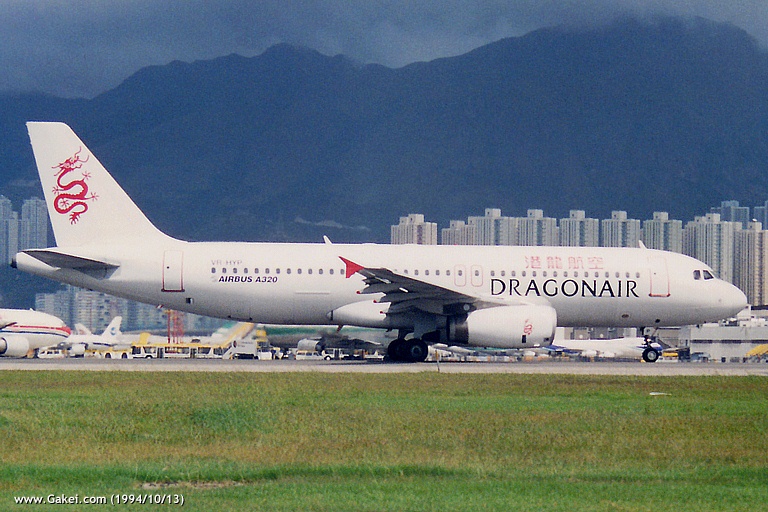
Dragon Air adds Clark

May 29, 2012


Cathay Pacific Airways wholly owned subsidiary Dragonair, began its daily flights from the Clark International Airport (CIA) to Hong Kong Today Tuesday departing with 183 passengers aboard its Airbus 320.

The flight that took off at 11:20 a.m joins Asiana Airlines of South Korea to fly from the former US airbase.

Other international low cost operators are Jin Air, and  Air Asia joining local operators Cebu Pacific, Airphil Express South East Asian Airlines (SEAIR) and Air Asia Philippines with flights to Seoul, Hong Kong, Macau, Singapore, Bangkok, Kuala Lumpur and Kota Kinabalu.

The Clark International Airport expects to serve 1.5 million passengers at the end of 2012.

DOTC allots additional P2 billion for Bicol airport


May 29, 2012

By Rainier Allan Ronda

The Department of Transportation and Communications (DOTC) has approved an additional P2-billion budget for the new Southern Luzon International Airport (SLIA), which is due for completion in 2014.

DOTC Secretary Manuel Roxas II approved the realignment of P2 billion from the unspent funds of the Public-Private Partnerships (PPP) budget in 2011.

Albay Gov. Joey Salceda said he expects another P2 billion to be allotted in 2013.

Salceda said the international airport is expected to accommodate 650,000 foreign tourist arrivals in 2016, as estimated by the Albay-Sorsogon-Masbate Tourism Alliance.

Salceda spearheaded the organization of the alliance of Bicol’s three southernmost provinces as a novel tack in tourism marketing as chairman of the Bicol Regional Development Council.

The Legazpi domestic airport is only serving 11 flights daily and could not accommodate new landing system instruments.

Sundown restrictions also curtail flight options. Experts have long abandoned the expansion of the Legazpi airport due to its close proximity to Mayon Volcano.

SLIA is strategically situated to serve both Luzon and the Visayas and is projected to help boost tourism in Bicol and the entire country in the long term.

French aircraft manufacturer enters PI

Eurocopter, Dassault jet store opens

By Recto Mercene

May 24, 2012

THE Philippine economy must be performing well, gauging by the decision of Eurocopter Philippines and France’s Dassault Falcon to jointly sell the seven-seater helicopter and the eight-seater Falcon jet as complimentary package for the country’s top 500 corporations, including chairmen and chief executive officers of multinational companies and conglomerates.
 
There is a family of Falcons to choose from—six distinct aircraft to suit the company’s budget—while the helicopter needs no further introduction, having been introduced in the Philippine market since 1970.
Jussi Hoikka, commercial director of Eurocopter Philippines, said the company has locally sold 60 Eurocopters, at $3 million to $3.2 million per unit, representing a 60-percent share of the market.
Its most exclusive feature is the Fenestron tail rotor, which is enclosed and not exposed like most helicopters. This prevents personnel or passengers from being cut accidentally when the rotor is turning.
The Eurocopter T3 is also equipped with an “active vibration control system,” vibrations being a natural curse of all helicopters owing to its design. This helicopter, however, senses the vibrations and a damper removes this bone rattling sensation, lessening the noise to give passengers comfortable ride, devoid of nausea.
The Falcon costs $30 million, excluding the 12-percent to 25-percent tax. So far, only one has been sold locally, compared to the 25 percent to 30 percent that Chinese billionaires had gobbled up so far.
However, as Hoikka pointed out, they aim to sell about six to 10 Falcons for the next two years, and in five years, be the leading executive jet supplier in the country.
He said a busy executive can jet to any point in the Philippines, and still afford to make it on time to any remote locations by hopping to a waiting Eurocopter, which would be the favorite chariot of choice by mining executives, oil and gas barons and politicians hot on campaign trails.
The helicopter can be also be used for emergency medical evacuation and to enter the remotest jungle or reach any isolated islands.
Eurocopter Philippines has a 95-percent Filipino staff, mostly industry professionals, serving customers that include the Coast Guard, the Navy, the National Police, charter operators, corporate operators and other private owners.
The Falcon 2000LX, the latest in the lineup, has enough headroom for tall persons, and offers 5-percent additional range, which would be 4,500 nautical miles, over the 2000EX EASy model.
It can land and takeoff on 1,500 meters of runway.
At the cockpit, cutting-edge technology includes two onboard computers, a fully digitalized cockpit, a trackball like in a computer game, where the pilot places the cursor in on a map, and pinpoints the runway locations anywhere in the world. The map could be enlarged to see the airport’s layout and all information needed for navigation.
Instantly, the pilot is provided with any particular runway’s length, configuration, navigational aids, frequencies to tune in and all related data.
Not many airplanes, even commercial ones, have this computerized cockpit.
Capt. Frederick Lascourreges, the check-pilot, shows how, by the turn of the trackball, he can avail of any information at his fingertips, having done away with the “Flying Kit Bag” a bulky black leather bag that used to contain all the maps and the pilot’s survival kit.

Airline helps World Heritage Site preservation


Asiana Airlines support the UNESCO World Heritage Sites
May 23, 2012


Following its preservation project with Angkor Wat in Cambodia and housing projects for the Aeta in the Philippines, the airline has set its sight on central Vietnam. Asiana has unveiled a grand entrance guidepost at Hoi An Center for Cultural Heritage Management and Preservation in Da Nang, Vietnam.

The center preserves the Hoi An Ancient Town, a well-preserved town representing a Southeast Asian trading post of the 19th century; and the My Son Sanctuary, tower temple ruins that embody the religious center of the Champa Kingdom in what is now Vietnam.

Aside from the grand entrance guidepost, Asiana will remodel the Hoi An Tourist Information Center, print information brochures and leaflets in Vietnamese, Korean, and English, and erect 30 solar-powered street lamps. The project aims to develop tourism infrastructure near the sites and help boost the local economy.

“On the 20th anniversary of Korea-Vietnam diplomatic relations, we hope that our initiative contributes to better relations between our two countries, and we plan to continue to expand our preservation efforts as all of humanity must protect our world heritage,” said Young-doo Yoon, Asiana Airlines president and chief executive. He was joined at the event by Taeck-Soo Chun, the Secretary General of the Korean National Commission for Unesco, Nguyen The Hung, the Head of the World Heritage Site Management Center, and Pham Cao Phong, the Secretary General of the Viet Nam National Commission for Unesco.

Asiana Airlines flies three times a week from Incheon International Airport in Korea to Da Nang, Vietnam. The airline flies to Incheon from three points in the Philippines: Manila, Clark and Cebu.

Ex 2P Execs jump to Zest ship

May 23, 2012

After San Miguel bought Philippine Airlines (PAL) and its low-cost subsidiary Airphil Express, four of its top executives has been hired by low cost rival Zest Airways holding the same position they previously held in the former airline.

Heading the pack is Alfredo Herrera who was hired as Zest Air's chief marketing and sales officer, the same job he performed with his former airline, while LCC operation adviser Brian Hogan was hired as Chief Executive Adviser. Also hired were Steve Allen as Chief Commercial Adviser and Rick Laig as Chief Financial Officer.

The four were instrumental to the success and rapid growth of the Airphil Express platform of low cost operation besting Cebu Pacific strategy and consequently eating and catching up its market share it held for four years.

Air Philippines was the country's fastest growing Airline in 2011 and perhaps the fastest growing airline in 2012 based on the number of passengers carried in the first half as compared to the previous year.

PAL Flies 3rd 77W Down Under

Upgrade starts June 30

May 22, 2012

Philippine Airlines will fly again its Boeing 777-300ER on all Australian services from June 30, 2012 onwards.

The new Boeing 777 will replace the Airbus A340 currently used by the airline on flights from Sydney and Melbourne.

Philippine Airlines previously used a Boeing 777 on the Sydney-Manila route from 2010, before the aircraft was swapped unto PAL's Vancouver services.

The new aircraft sports 42 seats in Mabuhay Class (business class) in a largely 2-3-2 layout.

Designed by Recaro, each is 20 inches wide with a 78 inch seat pitch. The lie-flat seats recline up to 150 degrees.

In economy or Fiesta Class there are 328 seats of 18.5 inch width and a pitch of 33-34 inches.

A Panasonic inflight entertainment system offers audio and video on demand in every seat, with USB ports for keeping your smartphone or tablet powered up during the flight.

CAB ends domestic overbooking

Suspends airline privileges

May 22, 2012

The Civil Aeronautics Board (CAB) has issued an order Monday prohibiting airlines from overbooking flights anywhere in the Philippines.

In a statement, CAB Director Carmilo Arcilla said  they ordered domestic airlines to stop overbooking of flights, which often results in bumping off passengers and consequently raised the minimum penalties paid by airlines when they bump off passengers. 

From P150 per passenger bumped off or denied booking, CAB now imposes a P5,000 minimum fee per passenger against each erring airline.
Under a 1972 rule, the compensation for denied boarding stands at P150 for domestic and P1,500 for international flights, plus 100 percent of the value of the first remaining flight coupon. 

Arcilla said they are major issue in the Philippines as they received numerous complaints for bumped passengers, particularly from low cost carrier Cebu Pacific.

The Board also suspended the application of the provision on overbooking contained in Section 3, Economic Regulation No. 7, as amended, 'Boarding Priority and Denied Boarding Compensation, except for some international flights.
“all tickets, regular or promo shall be rebookable and refundable. The general conditions of carriage shall be amended accordingly,” CAB executive director Carmelo Arcilla said in the order. 
Small print in airline tickets for domestic flights does not provide for rebooking or refund.

In an order dated May 4, the CAB suspended the privilege of local airlines to overbooked flights and decline rebooking or refund from passengers that request it, especially when their flights are delayed or cancelled.

“all tickets, regular or promotional shall be revokable and refundable," the Board said.
The practice of overbooking is an international business strategy adopted mostly by transportation and communication companies.

This strategy allows telephone and internet operators, airlines, trains and cruise ships to ensure that all of its telephone/internet lines, seats or rooms will have maximum returns since all subscribers don't use the service simultaneously,  or in airlines, it reduces the chance for their plane to take off with empty seats.

Airlines usually oversold tickets in a flight based on previous years' passenger statistics of how many travelers have cancelled at the last minute for the route. 

In a disclosure by Cebu Pacific's Candice Iyog, she declared that a certain percentage of passengers are expected to be "no-shows" at some domestic points, particularly early morning flights, and none cancels to resort destinations like Caticlan during summer.

"In some other days, travelers change their travel plans but do not cancel their reservations". Iyog explained.  

Notorious for cancellations are businessmen who cancel travel at the last minute when their business meetings take more time than planned but they usually travel in full service carriers.