PAL beefs up domestic operations despite job cut


By Darwin G. Amojelar
August 29, 2009
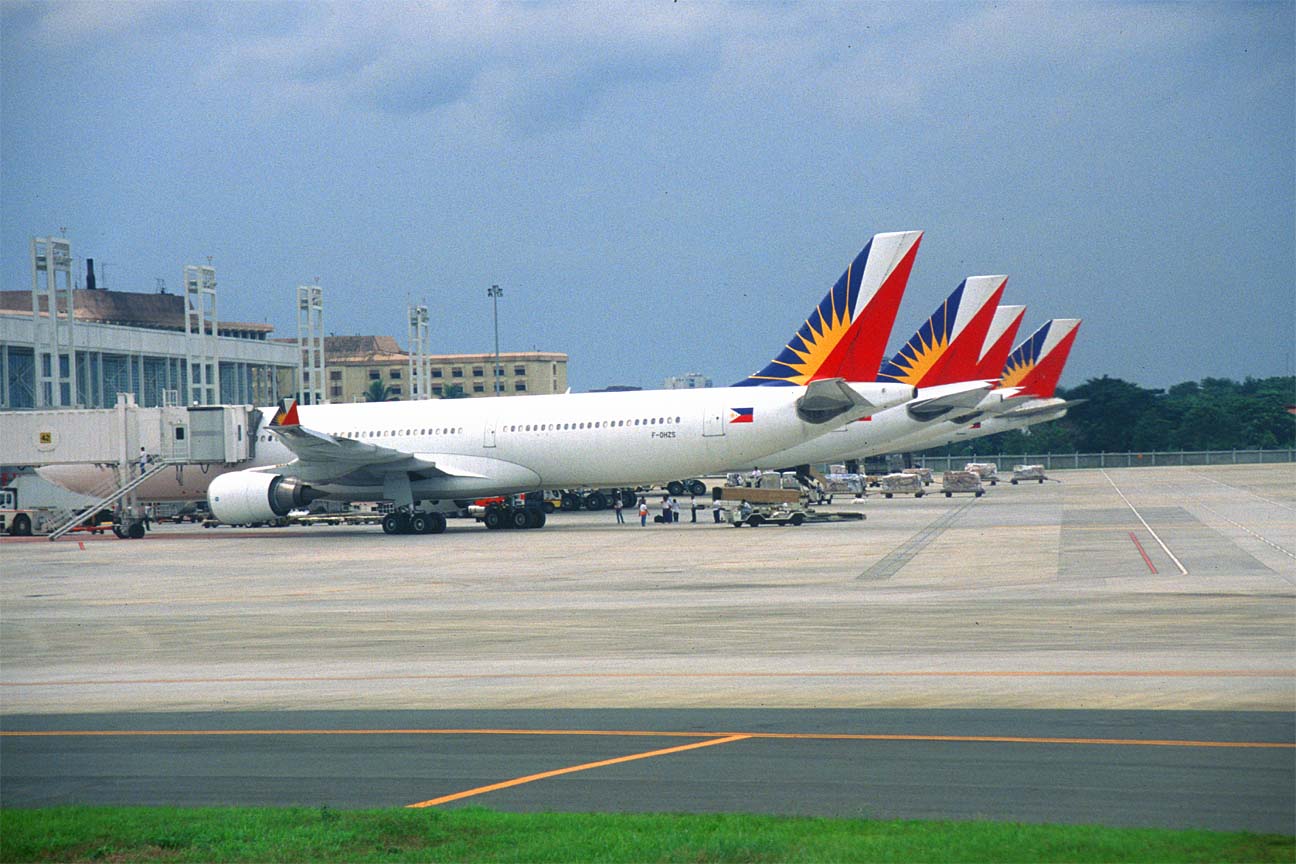
DESPITE the company’s plan to cut its workforce, Philippine Airlines (PAL) on Friday announced it will beef up its domestic operations with new routes and destinations.

In a statement, the Lucio Tan-owned company said it will introduce a new Cebu-Davao and Davao-Cebu service using the wide-body Airbus A330 starting September 1.

Its budget airline, PAL Express will add another daily Cebu-Iloilo-Cebu flight using the 76-seater Q400 turboprop aircraft.

Surigao and Naga are also being added to the PAL Express network with daily flights to Surigao and twice a day service to Naga.

Earlier, Jaime Bautista, PAL president and chief operating officer, said it would cut its workforce and flight capacity abroad to cope withJustify Full the global economic slowdown.

“We are currently reviewing our entire organizational set-up,” Bautista said, adding that the crisis has changed the face of the industry which is among the sectors hardest hit by the global crisis.

“We don’t know yet how many will be affected. For now, we don’t have a target. I talked to the union about the plan yesterday. In a few weeks, we will know how many will be affected,” he added.

At end-March, PAL had a workforce of 8,052. Of the total, 472 are pilots and 1,593 are cabin crew.

Bautista said the airline’s cost-cutting measures will not infringe on its safety compliance and standards.

PAL will reduce flight capacity to the US, Canada, Australia, Japan and Hong Kong, he said.

About 7 percent of the airline’s total capacity would be reduced effective this month until March 2010.

At end-March, PAL’s route network covered 29 points in the Philippines and 31 international destinations.

The company reported a net income of $35.5 million from April to June, down by $9.6 million over the same period last year.

Revenues dropped by 12 percent to $394 million compared with $446.9 million for the same period in 2008.

PAL blamed the lower revenues on the 25-percent decrease in passenger revenues of $95 million as passenger traffic and yields continued to decline.

For its fiscal year ending March, PAL posted a net loss of $301 million from a net profit of $30.6 million in the fiscal year ending March 2008.

The company’s total expenses for the first quarter amounted to $358.5 million, 11 percent better than the previous year’s $401.8 million. Fuel comprised 44 percent of its operating expenses.

PAL to axe 3,000 jobs!

Starting with airline subsidiary Air Philippines

August 28, 2009

Legacy carrier Philippine Airlines intends to slash more than a third of its 8,000-strong workforce, reduce its international flight frequencies, and outsource parts of the airline business to cope with a sharp decline in travel demand coupled with higher than expected operating cost despite registering modest net profit of $35 million for the first quarter of 2009, regarded as peak period for the airline, its president said on Thursday.

Jaime Bautista said its profit is expected to dissipate in the next 3 quarters as its yield continue to decline amidst dwindling traffic despite reporting lower fuel bills as recorded during the same period last year. PAL incurred a $301.4 million net loss for its 2008-2009 fiscal year ended March and Bautista said the carrier "will be happy" if it breaks even in the current fiscal year.

"But based on the results of operations for the first three months, traffic remains weak," he said. The airline reported lower yields particularly to its bread and butter destinations in the United States, Canada, and Australia.

To trim costs, Bautista said the airline is planning to transfer several operations to third parties and sell the remaining Boeing 737 they owned to raise some $8 million to $10 million.

"We are considering outsourcing the non-core business of PAL ... like catering, reservation, just like what other airlines are doing," he said saying further that they are one of few Asian carriers that still do their own catering and ground handling. The airline will likewise hold plane purchases except for Boeing 777-300ERs due for delivery this year.

PAL has reduced its total international flight frequencies by 7 percent and plans to cut further flight frequencies to the United States, Canada and Australia to match demand on said route.

Flights to Los Angeles are now down to seven per week from nine, San Francisco down to seven from eight per week, while Vancouver flights will have five per week from daily starting next month. Flights to Japan, Australia and Hong Kong will also be trimmed to reduce the cost of operations.

”We were really affected with the long haul, instead of the medium haul flights,” he stressed, adding that "the airline would rather add more domestic flights in several destinations because of higher traffic volume.” Bautista added.

Meanwhile, as the number of international passengers slipped by 8%, the airline's domestic passengers rose by 17% in the first quarter prompting the airline to upgrade service to some key destinations vacated by its subsidiary low cost airline Air Philippines, which decided to suspend flight operations effective September 1 as part of the organizations operational realignment plan. Air Philippines is managed by Philippine Airlines, and both airlines are owned by Lucio Tan, the second wealthiest man in the Philippines based on the Forbes magazine list.

For this reason, all flights of Air Philippines will be serviced either by PAL and PalExpress starting with daily flights from Manila to Iloilo and for Cebu-Davao and Davao-Cebu destinations that will also be added to PAL's domestic schedule using the wide-bodied Airbus A330 on a triangular route while Surigao will be serviced with Airbus 319 later. PALExpress will handle daily flight to the Cebu-Iloilo-Cebu sectors using the 76-seater Q400 turboprop aircraft and which will grow to twice daily before yearend, while twice-a-day service to Naga will be re-introduced on the Q400. Daily flights to Surigao will be temporarily service by PAL Express in the meantime.

Kalibo airport adds Taichung, Taiwan to its list

Mandarin Airlines sets more flights to Kalibo

By BERNIE CAHILES-MAGKILAT
August 28, 2009

More Taiwanese tourists are expected to visit the Philippines this year as Taiwanese carrier Mandarin Airlines is set to offer direct charter flights from Taichung to Kalibo starting on Oct. 16, one of several new charter flight offerings from Taiwanese carriers. The airline also flies to Kaohsiung in Taiwan.

Antonio I. Basilio, Manila Economic and Cultural Office (MECO) managing director and resident representative, said the new flights will benefit the Philippine travel and tourism industry as charter services are proving to be a driver for tourism growth.

Mandarin Airlines is not the only Taiwanese carrier that has introduced direct charter services to the Philippines top holiday destinations.

China Airlines (CAL), Taiwan’s No. 1 carrier, launched charter services to Cebu from Taipei and Kaohsiung last April and July respectively.

This month, CAL launched regular charter services to Kalibo. The carrier flies to Aklan from Taipei every Tuesday and Friday.

“These charter services are expected to bring in thousands of Taiwanese visitors to Boracay, one of the Philippines leading destinations. It’s a win-win for the community and the industry,” said Basilio.

Basilio said MECO in Taiwan is targeting four consumer segments for its tourism offerings: “Double income with no kids households, honeymooners, diving associations, and group tours.

“Although the honeymooners market may not be as big as the other market segments, it remains a potentially lucrative business for our industry suppliers and Taiwan’s destination management companies. This is a low-volume but high-yield market for us,” said Basilio.

MECO Tourism Center Representative Rene Reyes said that Taiwan’s double income no kids households or DINKS is another sub-segment that is driving the travel market.

“DINKS are comprised of young couples, usually between the ages of 30 and 40.They have both the means and the time to take overseas leisure breaks,” said Reyes who adds that Taiwan’s vibrant dive travel consumer market is another priority segment for the Philippines.

“There are about 400,000 licensed divers in Taiwan, not to mention the hundreds of other consumers who want to sign up for diving lessons. The Philippines is a good diving destination because of its mild tides. During the last quarter of the year and during the winter months, Taiwanese divers look for alternative diving sites. That’s an opportunity for us since the Philippines offers excellent year-round sites for divers,” said Reyes.

Package group tours remain the Philippines top market segment according to Reyes.

“This segment relies heavily on the quality, price and the popularity of the destination being marketed,” said Reyes. “Fortunately, our industry partners from tour operators and airlines to destination management companies “offer value-for-money products to Taiwan’s holiday travelers,” said Reyes.


Turbulence hits PAL


Reeling from losses, cuts flights, personnel

by Lenie Lectura
August 27, 2009

Philippine Airlines is taking drastic steps, such as laying off employees and reducing international flights to save on costs following the huge losses posted in fiscal year ending March and the lower earnings in the first quarter.

“Extraordinary times call for extraordinary measures,” said PAL president and chief operating officer Jaime J. Bautista in a statement.

When pressed for details, Bautista told the BusinessMirror in a phone interview, there will be a reduction in the airline’s flights to the US, Canada and Australia as well as seat capacity to Japan and Hong Kong destinations.

“We normally have a full-year lineup for our flights. Starting August up to March 2010, we will reduce the capacity by 7 percent. Our international destinations are not doing well. The fares are going down. We still fly even if the aircraft is not full. But our domestic routes will not be affected,” said Bautista.

Also, PAL’s union was already informed about the planned layoffs. Bautista said he could not yet say how many will be affected. “This is part of our rationalization program. We just talked to our people [on Wednesday]. For now, I still don’t have a target number of affected employees but we will have something in a few weeks,” added Bautista.

PAL also plans to outsource some of its operations including ground-handling services. “The union was also informed about this as well. Our arrangement with them is that we will be transparent. It is a bitter pill but all of these [efforts] will save PAL,” he said.

Early retirement packages for PAL employees are also being offered not only to reduce costs but to enhance productivity. “We are currently reviewing our entire organizational setup. We want to make PAL lean and mean so it will be agile and flexible enough to adapt to the new economic climate. Clearly, the crisis has changed the face of the airline industry which is among the sectors hardest hit by the recession,” Bautista said.

PAL shareholders approved a quasire organization plan, reducing the par value of PAL shares to P0.20 from P0.80 per share. It will also increase its authorized capital stock from P16 billion to P20 billion divided into 100 billion shares at P0.20 per share.

Bautista said the airline relies on the strength and backing of its principal shareholders, unlike state-owned airlines which enjoy support from their respective governments in times of crisis. “PAL must not always rely on its stockholders; it must do its part and look internally to overcome this new challenge,” he added.

PAL also reported paying $165.4 million in principal and interest to creditors, bringing to $2.4 billion the total paid from March 1999 to March 2009. Total assets decreased by $60.6 million to $1.971 billion, while total liabilities rose by $239.5 million.

Bautista said PAL will continue to realign capacity to match demand especially in the domestic front due to increasing traffic. However, this is tempered by the weakness in PAL’s long-haul sector particularly the US market where the sub-prime crisis began.

When the global crisis led to a travel slump in the latter part of last year, PAL’s passenger load factor fell to an average of 76.2 percent, three points lower than the previous year. The airline posted a $301.4-million loss for its fiscal year ended March 31. This prompted PAL to take decisive steps like rationalizing its workforce, realigning operations to match demand, among others.

Zest Air Opens Cebu and Zamboanga Hub

Expects 2 more A320 Delivery by October

August 25, 2009

Zest Airways. The airline is scheduled to receive 2 more brand new Airbus 320 and 3 additional MA-60 this year as initial part of the company's $150 million capital investment program.
Budget airline Zest Airways Inc. (Zest Air) announces the opening of Mactan-Cebu and Zamboanga hub this October as it recommence Visayas and Mindanao services as well as re-introduce flight to Sandakan.

The airline expects to receive its 6th MA-60 from Xian Corporation of China to serve the southern routes of Surigao and Siargao, and from Cebu hub with routes to Bacolod, Iloilo, Davao, Cagayan de Oro, and Zamboanga hub with onward connections to Sandakan.

Meanwhile Zest Air will start flight from Manila-Clark to Hong Kong in October 24 (September 21 originally) to formally make DMIA its hub for its international flight operations with Seoul, Shanghai, Singapore, Macau, and Bangkok to be added later when two more brand new A320 join the airline fleets in October. The opening of the Hong Kong route is a part of the airline’s expansion program to Southeast Asian regions after acquiring its third Airbus 320. It will have the airline operating 5 A320 by yearend.

The introductory one-way fare to Hong Kong is $70 USD inclusive of taxes and surcharges but exclusive of international charges and country travel tax.

"With our plans to expand our operation to the Southeast Asian region, it becomes necessary to grow our fleet size" says
Alfredo M. Yao, President and CEO of Zest Air.

Donald Dee, Zest Air chairman, however said that the new fleet acquisition would be serving new domestic destinations as well as existing trunkline routes in the meantime while it weathers the aviation slump in Asia-Pacific region.

Zest Air’s intends to fly Boeing 767-300 which will arrive next year to Kuwait and Abu Dhabi while its request is being processed for approval by Kuwaiti and Emirates governments. It is also applying for rights to fly to Australia also with the use of Boeing 767 slated for delivery next year which will culminate its $150 million investments.

Asiawide Airways controls Zest Airways of the Philippines which is a subsidiary company of AMY Holdings controlled by Alfredo Yao.

SEAIR Plane swerves off-runway at RPLL

Blames sudden Crosswind for incident!
August 24, 2009

Courtesy of GMANews.TV

An Aircraft of South East Asian Airline suffered landing glitch Sunday noon after it veered right off runway 13 while landing at Manila's Ninoy Aquino International Airport.

The 32 seater Dornier Do-328-100 with registration RP-C6328 was performing flight DG-024 from Caticlan to Manila when wind shear forced the plane to veered off course to the right and stopped on soft ground abeam taxiways N4/D3.

The plane carried 32 passengers and 3 crew. No injuries were reported. Passengers were subsequently brought to the domestic terminal by bus where medical examinations were taken to the passengers before they were cleared to go says Avelino Zapanta, president of Southeast Asian Airlines (SEAIR).

Seair said that the Do-328 had landed and slowed normally and was about to taxi off the runway, when it caught a sudden gust of wind causing it to veer off the runway ending up on soft ground.

Zapanta said he does not see the incident to affect the airline's business.

“It is a natural phenomenon. There was wind crossing. The aircraft is ok," he said.

Also known as wind gradient, a wind shear affects air speed during landing and taking off.

SEAIR’s Dornier 328 also suffered a heavy landing at Caticlan airport sometime in July this year causing its tire to burst on touchdown due to the same wind condition.

Tawi-Tawi airport runway upgrade completed

Prepares to Welcome Major Airlines!

August 21, 2009

The country's southernmost airport in Tawi-Tawi kicks into high gear Monday the 17th of August as it open its door to accommodate bigger aircraft on its runway.

The airport situated in Barangay Sanga Sanga to which it was named from has its runway upgraded and extended from 1,608 meters to 1,920 meters aimed to accommodate narrow-bodied jets such as Airbus 319 and Boeing 737's. Its landing strip was also widened from 18 to 30 meters sufficient to upgrade its aerodome classification to 3C.

The project cost was financed by the United States Agency for International Development (USAID) through its Growth with Equity (GEM) Program amounting to P100 million while the Philippine government chipped in P92.2 million as its counterpart.

US Ambassador Kristie A. Kenney graced the airport opening aimed to improve the province’s air links with the rest of the country, and should help strengthen the local economy.

"We are happy to be part of the development of this island province," said Kenney, who was the guest of honor on the inauguration of the extended runway.

Abdelnooh K. Hadjirul, president of the Tawi-Tawi Chamber of Commerce and Industry, said the airport upgrade will give Tawi-Tawi’s emerging aquaculture and eco-tourism industries a competitive advantage.

“There is great potential in eco-tourism here, especially if air links to neighboring countries are established,” said Abdelnooh Hajirul, president of the Tawi-Tawi Chamber of Commerce and Industry.

On the same tone, Undersecretary Virgilio Leyretana, Sr., chairman of the Mindanao Economic Development Council (MEDCo) is optimistic of its growth potential. Mr. Leyretana oversees the implementation of the GEM Program.

“These improvements will ensure safer airport operations and higher-capacity air linkages as well as open up more trade, tourism and investment opportunities in the region.” he said.

According to Carlos Canda Tan, GEM’s deputy program manager for infrastructure, the airport will also have new passenger terminal facilities soon and it will be equipped with baggage conveyors and x-ray machines for efficient, effective, convenient and reliable aircraft operations.

Meanwhile Philippine Airlines’ Flight Technical Division Manager Selino S. Jalalon has inspected the facilities at Sanga-Sanga airport to update flight plans and landing and take-off procedure of the airline when they start operating at the airport.

Jalalon said that they would fly the Bombardier Q300 to the airport on a thrice a week service should passenger traffic to the airport becomes economically viable considering that its still very thin today because of its peace and order situation, but entertained the idea of bigger aircraft when there would be demand for it mostly from domestic or foreign tourist. The airline is still evaluating traffic projections to determine what type of aircraft to be used in opening a route to Tawi-Tawi.

At the same time, Cebu Pacific manifested its intention to fly the route with its ATR 72-500 aircraft and possibly preempting PAL on a thrice a week service when new aircraft arrives to join their fleet. Lance Gokongwei, Cebu Pacific CEO, said that 2 ATR turbo prop planes are expected to join their fleet this year.

Cebu Pacific is preparing a hub in Zamboanga for services to Tawi-Tawi, Jolo, Cotabato, Cagayan de Oro, Sandakan, and Kota Kinabalu for connections to Cebu, Davao and Manila.

Zest Air which previously operated at the airport using YS-11 aircraft has also plans to re-introduce Zamboanga as its Mindanao hub for destinations such as Jolo, Tawi-Tawi, and Sandakan.

Presently, Seair is the only airline that serves Tawi-Tawi airport utilizing 19-seater LET plane.

Turkish Airlines lines up and wait for Manila departure


20 August 2009

ISTANBUL, Aug 20 - Flag carrier Turkish Airlines (THY) is lining up and waiting for the approval of the Air Service Agreement between Turkey and the Philippines this year as it announces plans to introduce new destinations in the far east.

"We are definitely flying to the Philippines next year" says CEO Temel Kotil. "This month we already started flying five times a week to Jakarta via Singapore, and hopefully we can arrange a deal with the Philippines for rights to Thailand" he said, as the airline intend to service Istanbul-Manila via Bangkok at the initial stage of their operations. "We probably fly direct if got no choice." he added.

The airline which is Europe's fourth-biggest airline in terms of passengers carried, is expanding its fleet, especially long-haul wide-body aircraft, and aims to increase its European market share by one-fifth to 10 percent next year. It is aggressively pursuing the transit passenger traffic by transforming Istanbul to become a major hub between Europe and Asia in competition with gulf-based carriers.

At present, Turkish Airlines serves points in Thailand, Singapore, South Korea, Hong Kong, Beijing, Shanghai and lately Jakarta. It plans to resume service to Kuala Lumpur together with new services to China, the Philippines and Vietnam. It has also plans to make Bangkok its Asian hub for flights to Australia by 2011.

Kotil added that the carrier intends to double its frequency in Asia within the next two years, starting with Tokyo Narita from four-weekly flights to daily operations, to Bangkok which will have an equipment upgrade to double daily triple seven in December 2009, with 4 flights extension probably to Saigon while the additional 3 flights intended as flight extension either to Manila or Guangzhou, depending on the services agreement that will be discussed later between the Philippines.

As a back up plan in case the Philippines would not agree to open up Bangkok, the airline intends to fly the Airbus 330-200 which will join the fleet in February and April next year to fly straight from Istanbul. The actual launch date was not however disclosed.

Turkish Airlines this week confirmed the contract for the purchase of additional seven Airbus A330-300 aircraft that was signed in Paris during Le Bourget Airshow in June 2009. The aircraft that is due for delivery from September 2010 will be powered by Rolls Royce engines and will carry 289 passengers in a two-class configuration.

Meanwhile, its Boeing order for seven extended range 777-300s worth $1.9 billion at list prices was finalize last July that adds to an order for five 777-300ERs placed in April this year or a total of 12 triple seven orders. Its delivery date starts from October 2010. The airline currently operates a fleet of 65 Boeing planes.

The airline publicly disclosed that passenger numbers increased to 9.7 percent in the first seven months of 2009 to 13.7 million, reflecting ambitions to grab market share from European rivals.

"Despite many problems in the industry, we grew at 9 per cent in the first half in terms of passenger numbers both domestic and foreign. However, our yields dropped due to lower demand from premium passengers," Kotil said.

Turkish Airlines flew 21.3 billion RPKs during the first seven months of 2009, up 12.4% over the year-ago period. Capacity rose 19.7% to 30.6 billion ASKs and load factor fell 4.5 points to 69.5% as the company increased capacity.

Its financial results for 2008 reported a net profit of US$874 million, up a strong 26% compared to 2007 figures. Gross Revenue was also up to US$4.719 billion, with proceeds from international traffic accounting for 78% of total revenue, while 22% was from domestic traffic. Shares in the state-run carrier also rose 3 percent to 2.72 lira as of this date.

Dr Kotil credited the company’s very careful oil-price hedging policy as one of the reasons why it was able to grow its 2008 net profit by 328% to USD874 million while other heavy weight world airliners slump.