14 June 2019
February 11, 1911 - February 11, 2011. First Red Devil biplane was flown in Manila with James C. Mars as its first pilot.
Showing posts with label Aquino Sangley. Show all posts
PAL, CEB Commits Turboprops To Sangley
PAL To Provide Fastferry To MOA-Sangley Transfer
14 June 2019
Cebu Pacific (CEB) and Philippine Airlines (PAL) has agreed to Operate Turboprop flights in Sangley Airport once the infrastructure is ready.
The decision was reached after Department of Transportation (DOTr) Secretary Arthur P. Tugade assured the construction of additional facilities in Sangley Airport to meet the November deadline set by President Rodrigo Duterte.
Cebu Pacific is expected to be the first airline to operate at the airport in November as it transfer its freighter flights operated by four ATR 72-600s, says Michael Ivan Shau, Cebu Pacific Chief Operating Officer.
![]() |
| Micheal Tan of Philippine Airlines (left), DOTr Secretary Arthur Tugade (middle), and Michael Shau of Cebu Pacific (right) |
Philippine Airlines would be the first passenger airline to use the airport with flights to Basco, Busuanga, Siargao, and other turboprop destinations.
PAL passengers will be transferred by Mabuhay Maritime Express fast ferry, a PAL subsidiary, from Mall of Asia Terminal to Sangley Airport. Airport transfer time is 30 minutes.
The plan was confirmed by Michael Tan, President and COO of the Lucio Tan Group Inc., and Director of Philippine Airlines in Sangley airport this morning. (See interview here)
Tugade identified the possible location for the landing berth of the PAL ferry that will transport passengers to Sangley Airport.
He noted that the final location of the landing berth will have to be determined by the Philippine Navy based on safety and security considerations.
“National interest is primordial. The Philippine Navy will decide and maintain security, as no amount of commercial interest shall be prioritized over national interest,” Secretary Tugade expressed.
Cebu Pacific, Airswift, Soriano Aviation and other turboprop airline operators are expected to use the airport next next year.
![]() |
| Sangley Passenger Terminal Building under construction (18% complete) |
![]() |
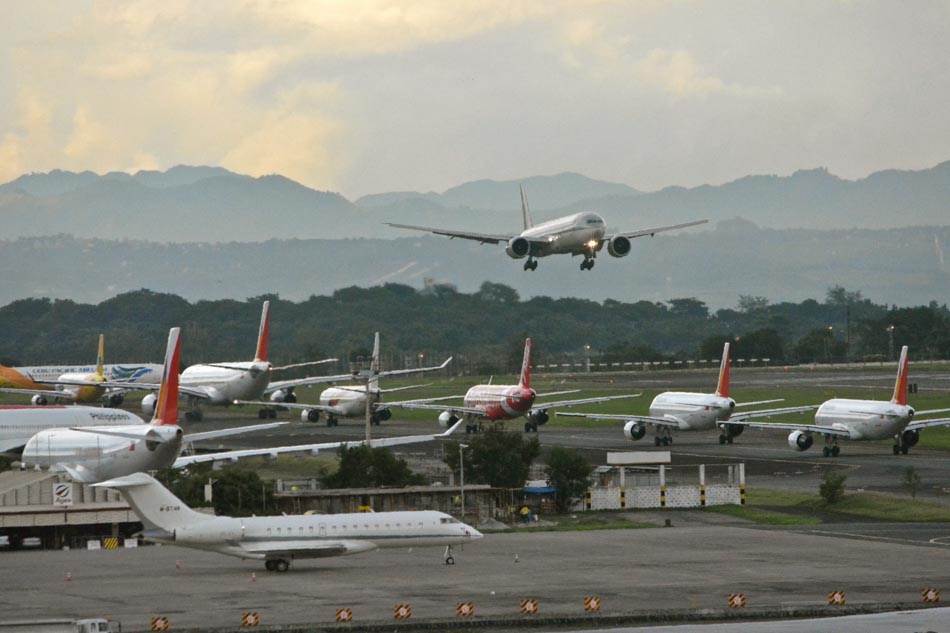
| A view from Sangley Airport runway, similar to London's City Airport, which handled turboprop traffic. |
DOTr is setting up Sangley airport to accommodate 30,000 aircraft movements per annum or about 8 aircraft movements per hour, and about 2.1 million passengers from airlines operating DHC-8-400, ATR72-600 and other similar aircraft.
Sangley Airport Expressway For DOTr Consideration
14 June 2019
Metro Pacific Tollways Corp. (MPTC) will be submitting proposal to the Department of Transportation (DoTr)to construct the ₱20 Billion four-kilometer 4 lane Sangley Expressway to Manila.
The project proposal is a viaduct with an approximate length of 4.63 km. via a reclaimed road which intends to connect Cavitex to Sangley airport in Cavite City.
MPTC is the tollway operator of Cavite Expressway (Cavitex), a unit of Metro Pacific Investments Corp. (MPIC).
Cavitex Infrastructure Corp. (CIC) President Luigi L. Bautista said they have completed the feasibility study for this road together with the 7.6-kilometer segment 5 road project and would submit the unsolicited proposal under Public Private Partnership (PPP) program of the government to the Toll Regulatory Board (TRB), an Agency under the DOTr.
Bautista said the Sangley airport expressway is not covered by the approved concession agreement. Construction period will be two years from approval. Upon completion, it would reduce travel time to Sangley - Makati from 1 hour to 15 minutes.
"If amendment to the concession agreement is made to include this project, then it will be ready in 2022 before Duterte steps down from Office," says Bautista.
CIC disclosed that they already submitted to TRB the feasibility study for Segment 5 of CAVITEx which is an extension of the expressway from Kawit to Rosario, and may be extended up to Tanza and Naic.
Opening of Sangley airport is expected to generate additional 130 vehicular traffic to Cavite City per hour increasing to 400 vehicles by 2025.
Airlines Agree To Use Sangley for Turboprop Operations
13 June 2019
Airlines in the Philippines operating turbo propeller planes has agreed to relocate to Sangley airport once the infrastructure is in place according to the Transport Department (DOTr).
“Airlines expressed their willingness and commitment to support the government’s thrust to utilize Sangley Airport. This is a solid demonstration of their trust and confidence in the administration of President Duterte,” Sec. Arthur Tugade said Thursday.
DOTr Secretary Tugade met with airline officials earlier today together with Manila International Airport Authority (MIAA) General Manager Ed Monreal, Civil Aviation Authority of the Philippines (CAAP) Director General Jim Sydiongco, and Civil Aeronautics Board (CAB) Executive Director Carmelo Arcilla.
They were joined by Michael Tan of Philippine Airlines, Lance Gokongwei of Cebu Pacific, and Capt. Dexter Comendador of AirAsia.
Tugade said that airlines agreed and fully support the use Sangley Airport for general aviation, freight turboprop operations, and commercial turboprop operations as soon as the required infrastructures are ready.
MIAA GM Ed Monreal said general aviation users will be notified to fully relocate in a year’s time to Clark International Airport (CRK) in Pampanga and Sangley Airport.
Monreal said the vacated 10 air traffic movements (ATM) will remain unfilled for the time being to free up space in the four terminals of the NAIA to allow for major terminal improvements and later increased capacity to the main gateway.
"NAIA will soon become an all-jet airport," Monreal said.
NAIA saw an increased of 45 million passengers to its airport in 2018 from 36.5 million handled passengers in 2016, or an upsurge of 8.4 million passengers (23.08%).
The number of flights also grew during the same period by over 14,000 (5.75%), and airport slots per hour have increased from 36 to 44 (22.22%).
To address the growing number of passengers, Sec. Tugade said that DOTr is working on a basket of solutions to decongest the NAIA, through airport infrastructure developments in Clark, Sangley, and the construction of the New Manila International Airport in Bulacan.
“We have to have a basket of approaches, not only one solution because we have so many passengers,” the transportation chief said.
“Right now, the combination of three airport is not enough” Tugade adds, referring to NAIA, Clark and Bulacan airport projects considering the volume of projected passengers.
The DOTr team of Sec. Tugade will visit Sangley Airport tomorrow with airline representatives to inspect the progress of its construction, as well as show to the airlines the landing berth for the ferry operations between Sangley airport and Mall of Asia, which together with the bus transfer, will take only 30 minutes.
Another point to point bus route between Manila, Makati, Alabang, North Edsa, and NAIA to Sangley will be established by DOTr early next year to service the airport. Airport services between NAIA and Sangley will be provided free by DOTr to connecting passengers.
Transfer of Turboprop flights to Sangley A Matter of Time
CEBgo to be the Biggest Loser at Sangley Transfer
13 June 2019
The Transportation Department (DOTr) will not be forcing airlines to transfer their turboprop flights to Sangley Airport in Cavite for now.
Transportation Undersecretary for Aviation Manuel Antonio L. Tamayo said the airport is not yet ready to handle commercial traffic at this time but once they are airlines has to move.
"Once the facility is ready to accept domestic flights, then that decision to stay at NAIA might change." said Tamayo.
The passenger terminal building (PTB) at Sangley airport will initially have capacity of 160 passengers per hour on opening date and can serve 2.1 million passengers per annum. It will be expanded later on to accommodate 510 passengers every hour by 2025 equivalent to 5 million passengers per annum.
Manila International Airport Authority (MIAA) management has been ordered by DOTr to cancel slot allocations and landing rights to all general aviation and turbo-propeller flights at Ninoy Aquino International Airport (NAIA) once Sangley airport opens.
"That is the instruction of the President," said Manila International Airport Authority General Manager Ed Monreal.
Currently, NAIA allows 2 slots every hour for general aviation traffic, and 6 slots for turboprop traffic out of the 40 aircraft traffic movements (ATM) from 6AM to 6PM.
Cebu Pacific subsidiary Cebgo in a statement to DOTr Tuesday said that they support the governments plan to use the Sangley airport for general aviation and domestic flights.
Cebgo will be the biggest loser of airline slots once Sangley is open to commercial flights as it is the biggest turboprop airline operator at NAIA followed by Airswift, Soriano Aviation and Balesin, all ATR operators.
Among the commercial flights affected are those going to Basco, Busuanga, Balesin, El Nido, Legaspi, Masbate, Naga, and Siargao.
PAL Express which uses the Bombardier turboprops does not use NAIA for its flights but uses Clark as its hub. The airline earlier manifested to be the first operator at the airport when it opens.
DOTr will meet all turboprop airline operators today to fast-track airline operations in Sangley Airport as soon as the facility is ready.
The Transport department also clarified that there will be no replacement flights of the removed general aviation traffic and turboprop flights out of NAIA.
"The intent is to decongest NAIA. There will be no jet replacement flights," adds Monreal.
The clarification was made after AirAsia Philippines chief executive officer Dexter Comendador commented to add international and domestic jet operations in NAIA out of the lost slots.
Sangley Not Ready For Commercial Flights
12 June 2019

Department of Transportation (DoTr) has disclosed that Sangley airport in Cavite is not ready to receive commercial traffic in December due to operational constraints. (See project here)
Transportation Undersecretary for Aviation Manuel Antonio L. Tamayo said they might be able to start handling general aviation flights by November but commercial flights operated by turbo propellers (turboprops) will have to be deferred for at least one year because of some concerns valid only for airline operations.
Operational constraints include among others the installation of runway lights and associated navigational equipment necessary for it to operate at night and bad weather. DOTr is scheduled to install them next year.
“We’ll be setting up a new control tower together with the night rating of the airport,” he said.
DOTr is setting up Sangley airport to accommodate 30,000 aircraft movements per annum or about 8 aircraft movements per hour, and about 2.1 million passengers from airlines operating DHC-8-400, ATR72-600 aircraft, which is the biggest passenger aircraft allowed to be operated at the airport.
“We are currently working on the drainage, and the hangars for general aviation aircraft. They will be completed ahead of time. The ramp and passenger terminal building is also under construction,”Tamayo said.
A ramp is an area of the airport intended to accommodate aircraft for purposes of loading or unloading passengers. Four parking stands are being constructed to service passengers under a taxi-in/ taxi-out procedure similar to those employed in the provinces.
“Our timeline is originally December opening. Will do our best to have it open by November if that's what the President wants.” Tamayo adds.
President Rodrigo R. Duterte earlier ordered the Department of Transportation (DoTr) to immediately utilize Sangley airport in Cavite to help decongest Ninoy Aquino International Airport (NAIA), Monday evening during the 38th cabinet meeting.
Transport Secretary Art Tugade said it expects Sangley airport to start handling general aviation flights by December but Duterte said the timeline is too long and wanted it open a month earlier in November.

Tugade already ordered the contractor, Unimasters Conglomeration (UNIC), a Tacloban-based company, to add more men and work 24/7 to expedite the project.
Some 1,500 general aviation flights per month will be affected with the transfer according to the Civil Aviation Authority of the Philippines (CAAP).
Duterte Wants Sangley To Open By November
11 June 2019
President Rodrigo Duterte wants the Sangley Point in Cavite to begin handling domestic flights by November.
MalacaƱang on Tuesday said Duterte gave the green light to Transportation Secretary Arthur Tugade's proposal to use Sangley Point during a Cabinet meeting Monday evening.
"For implementation na 'yun... Gusto ni Presidente, masyadong matagal ang December, November na lang," Presidential Spokesperson Salvador Panelo said in a media briefing this afternoon.
"He's in a hurry. He wants to fix all these things." Panelo adds.
DOTr Confirms Sangley Opening by Yearend

11 June 2019
The Department of Transportation (DOTr) is set to complete rehabilitation works at the former military air base in Cavite by yearend. (See our breaking report here)
President Rodrigo Duterte has ordered its immediate opening as soon as possible to decongest traffic at Ninoy Aquino International Airport (NAIA).
Transportation Secretary Arthur Tugade said the plan to transfer general aviation and domestic propeller flights to Sangley Point will begin immediately after the Civil Aviation Authority (CAAP) completes its Airport Certification as early as November.
Transporation Undersecretary Manuel Tamayo said the opening of Sangley Point in December will help ease congestion at NAIA as general aviation and propeller flights are no longer be allowed to operate at the country's main gateway.
DOTr also said they already initiated the testing of fast ferries that can operate from Mall of Asia to Sangley within 18-24 minutes direct to the new Sangley Passenger Terminal building for use by passengers of affected airlines operating turboprop planes.
Philippine Airlines President Jaime Bautista said that they will transfer all of its turboprop operations to Sangley once the airport is open to civilian traffic this year. (see our earlier report here)
Sangley to Open Civilian Traffic In September
28 December 2018

Sangley International Airport will open to the public beginning September 2019, the Department of Transportation (DoTr) said in a statement Friday.
The airport will start handling general aviation flights from Ninoy Aquino International Airport (NAIA) after runway improvement projects, apron, and hangar constructions are completed.
The Transport Department(DOTr) has spent ₱552.87 million for runway rehabilitation and asphalt overlay of the entire stretch to prepare it to civil aviation traffic and domestic turboprop operations.
Transportation Undersecretary for Aviation Manuel Antonio L. Tamayo said that the government is almost done with its construction plan to develop Sangley airport for commercial operations targeted at general aviation.
“It will be operational by third quarter of next year,” Tamayo said.
DOTr disclosed that once Sangley is open to the public in September, general aviation and business jets are no longer allowed to land and depart at NAIA as they are already informed two years ago to relocate to Sangley airport in Cavite beginning 4th quarter of next year after completion of construction and repair works.
DOTr is currently lengthening Sangley airport runway to 2,300 meters and widening its base to 45 meters to comply with international standards. It is also building a 150 capacity passenger terminal building to process arriving and departing domestic and international passengers.
Another ₱200 million is earmarked for navigational facilities improvement to enable it to operate at night and in all-weather conditions.
NAIA's 25 Year Concession
And the Funding of New Mega Manila Airport
as Conglomerate Offers O&M
21 December 2017

The country's premier gateway Ninoy Aquino International Airport (NAIA) is proposed to have a new lease of life for 25 years as Consortium offers to expand terminal capacity to 50 million passengers per annum.
Aboitiz Infra Capital Incorporated, AC Infrastructure Holdings Corporation, Alliance Global Group Incorporated, Filinvest Development Corporation, JG Summit Holdings Incorporated, Metro Pacific Investments Corporation, and Asia's Emerging Dragon Corporation (AEDC) have agreed to form NAIA Consortium to bag the contract of the massive P75 billion ($1.65 billion) Public-Private Partnership (PPP) auction to rehabilitate, operate, maintain and expand the Ninoy Aquino International Airport (NAIA) Terminals.
The auction involves expansion, interconnection and modernization of Terminal 2 and Terminal 3 and building another terminal to accommodate 20 million more passengers in the next 10 years.
The consortium disclosed that they will work with foreign technical partners with proven world class track records and experiences in airport operations to improve, upgrade, and enhance the operational efficiencies of NAIA covering both landside and airside facilities.
The group said numerous foreign and local experts have highlighted the advantage of keeping an airport within city limits. Like other major cities in the world, experts recommend an in-city airport and another one outside the metropolis to complement it, like Manila and Clark.
Megacities that benefit from a two-airport set-up include New York (JFK and La Guardia), Tokyo (Haneda and Narita) and London (Gatwick and Heathrow) to name a few.
“The unsolicited proposal is intended to help accelerate the government’s ‘build build build’ program. Augmenting NAIA’s capacity is the quickest way to address airport congestion while other airports are being developed outside Metro Manila. This approach promotes greater economic benefit and sustainability for the whole country,” the consortium said.
In a separate disclosure, Philippine Airlines has manifested its intent to expand Terminal 2 and build another Terminal (Terminal 2 Annex) at the Nayong Pilipino Complex for its international operations with a price tag of P20.7 billion ($400 million).
Construction includes landside facilities and multi-level parking for 1,000 vehicles, a new cargo terminal and ground service facilities with the aim of consolidating its terminal operations under one roof.
PAL President Jaime J. Bautista said they already submitted the proposal to the Transport Department (DOTr) for evaluation and approval and once they get the go-signal they will start construction in 2018 to be finished by the end of 2020.

Bautista said the proposed 89,000 square-meter terminal could accommodate an additional 12 million passengers and will be connected to Terminal 2, which should help connectivity and ease congestion at the country's main international gateway.
PAL parent company is also part of the NAIA consortium through Asia's Emerging Dragon Corporation (AEDC).
Naia PPP was conceived under the Aquino administration and the project was approved by President Rodrigo R. Duterte in September 14, 2016.
Under the project, the private partner will improve, upgrade and enhance the operational efficiency of all existing terminals of the NAIA covering both landside and airside (except air traffic services), to meet the International Civil Aviation Organization (ICAO) standards and develop the main gateway airport of the Philippines, according to NEDA disclosures.
The government will make its announcement early next year relative to the NAIA consortium and PAL proposal
As of December 15, there are six other airport PPP projects under procurement for next year which include the five regional airports project: Development, Operations and Maintenance of Clark, Laguindingan, Bohol, Davao, Iloilo and Bacolod.
From the original plan, money that will be receive by the government for the O&M contract is expected to finance the further expansion of Sangley Airport, first to accommodate all turboprop and general aviation traffic that will be relocated out of NAIA, and second, to start building Manila's next international gateway.
The airport handled 39.5 million passengers in 2016 against its design capacity of 31 million passenger annually. NAIA is expected to breach 41 million in 2017.

The country's premier gateway Ninoy Aquino International Airport (NAIA) is proposed to have a new lease of life for 25 years as Consortium offers to expand terminal capacity to 50 million passengers per annum.
Aboitiz Infra Capital Incorporated, AC Infrastructure Holdings Corporation, Alliance Global Group Incorporated, Filinvest Development Corporation, JG Summit Holdings Incorporated, Metro Pacific Investments Corporation, and Asia's Emerging Dragon Corporation (AEDC) have agreed to form NAIA Consortium to bag the contract of the massive P75 billion ($1.65 billion) Public-Private Partnership (PPP) auction to rehabilitate, operate, maintain and expand the Ninoy Aquino International Airport (NAIA) Terminals.
The auction involves expansion, interconnection and modernization of Terminal 2 and Terminal 3 and building another terminal to accommodate 20 million more passengers in the next 10 years.
The consortium disclosed that they will work with foreign technical partners with proven world class track records and experiences in airport operations to improve, upgrade, and enhance the operational efficiencies of NAIA covering both landside and airside facilities.
The group said numerous foreign and local experts have highlighted the advantage of keeping an airport within city limits. Like other major cities in the world, experts recommend an in-city airport and another one outside the metropolis to complement it, like Manila and Clark.
Megacities that benefit from a two-airport set-up include New York (JFK and La Guardia), Tokyo (Haneda and Narita) and London (Gatwick and Heathrow) to name a few.
“The unsolicited proposal is intended to help accelerate the government’s ‘build build build’ program. Augmenting NAIA’s capacity is the quickest way to address airport congestion while other airports are being developed outside Metro Manila. This approach promotes greater economic benefit and sustainability for the whole country,” the consortium said.
In a separate disclosure, Philippine Airlines has manifested its intent to expand Terminal 2 and build another Terminal (Terminal 2 Annex) at the Nayong Pilipino Complex for its international operations with a price tag of P20.7 billion ($400 million).
Construction includes landside facilities and multi-level parking for 1,000 vehicles, a new cargo terminal and ground service facilities with the aim of consolidating its terminal operations under one roof.
PAL President Jaime J. Bautista said they already submitted the proposal to the Transport Department (DOTr) for evaluation and approval and once they get the go-signal they will start construction in 2018 to be finished by the end of 2020.
Bautista said the proposed 89,000 square-meter terminal could accommodate an additional 12 million passengers and will be connected to Terminal 2, which should help connectivity and ease congestion at the country's main international gateway.
PAL parent company is also part of the NAIA consortium through Asia's Emerging Dragon Corporation (AEDC).
Naia PPP was conceived under the Aquino administration and the project was approved by President Rodrigo R. Duterte in September 14, 2016.
Under the project, the private partner will improve, upgrade and enhance the operational efficiency of all existing terminals of the NAIA covering both landside and airside (except air traffic services), to meet the International Civil Aviation Organization (ICAO) standards and develop the main gateway airport of the Philippines, according to NEDA disclosures.
The government will make its announcement early next year relative to the NAIA consortium and PAL proposal
As of December 15, there are six other airport PPP projects under procurement for next year which include the five regional airports project: Development, Operations and Maintenance of Clark, Laguindingan, Bohol, Davao, Iloilo and Bacolod.
From the original plan, money that will be receive by the government for the O&M contract is expected to finance the further expansion of Sangley Airport, first to accommodate all turboprop and general aviation traffic that will be relocated out of NAIA, and second, to start building Manila's next international gateway.
The airport handled 39.5 million passengers in 2016 against its design capacity of 31 million passenger annually. NAIA is expected to breach 41 million in 2017.
DOTr Bids Sangley Airport Project
6 January 2017
Sangley Airport Development is rolling super fast as the Transport Department(DOTr)is bidding ₱552.87 million for runway rehabilitation and asphalt overlay of the entire stretch to prepare it to civil aviation traffic and domestic turboprop operations.
Phase 1A of the project also involves runway grade correction, ramp construction, drainage system, construction of four hangars with a floor area of roughly 1,600 square meters (sq.m.) each, and 150 seater passenger terminal building (PTB) construction with an area of 800 sq.m. along with offices and vehicular parking area and other building facilities.
Twelve firms expressed interest in bidding for the said Project when they attended the pre-bid conference yesterday.
Phase 1B of the project to bidded out next year has a price tag of ₱707 million (see our earlier report here). Sangley airport expressway that will connect NAIA in 30 minutes for international transfer is also now pending with the Toll Regulatory Board for approval.
The project when completed is expected to reduce air traffic congestion at the country’s main international gateway, the Ninoy Aquino International Airport (NAIA) when all general aviation services and domestic turboprops transfer to Sangley Airport.
Sangley Expressway Connects Airport
CAVITEX New Segment 5 Extends To Sangley Airport
3 January 2017
3 January 2017
The Public Works Department (DPWH) said it will connect Sangley Airport in Cavite when it opens to civil aviation traffic, its official said Tuesday.
Public Works and Highways Secretary Mark Villar said Sangley Airport in Cavite will be connected to the Cavite Expressway (CAVITEx) when it opens to the public in 2019.
The project is part of President Rodrigo Duterte's ‘Build, Build, Build’ infrastructure development program.
CAVITEx operator from Metro Pacific group has already submitted proposal to extend the expressway all the way to the Airport dubbed as the new "segment 5". DPWH has already taken segment 5 out of the toll road and now designated the Centennial Road.
Villar said Manila North Tollways Corp. (MNTC) has presented proposal for the new segment 5 road which is a 9.80 kilometers (km.), 4-lane divided expressway connecting CAVITEx to Rosario, Cavite and Sangley Airport.
The Sangley Expressway is already with the Toll Regulatory Board (TRB) for approval.
Duterte Signs Sangley Airport Development Project
23 December 2016
President Rodrigo Duterte has signed Thursday the first phase of ₱435.9-billion Sangley International Airport Development Project amounting to ₱707 million for air-side developments necessary to accommodate General Aviation, Turboprop, and Regional Jet Traffic (ICAO A&B aircraft category).
When completed in 2019, the airports runway should accommodate at least 25,000 aircraft movement annually, roughly equivalent to 8 traffic movements per hour on peak time, and should be able to handle 3 million domestic passengers per annum on a low cost modular terminal to be bidded out next under the expansion program slated for 2018.
The second phase which is expected to cover the new gateway project beginning with land reclamation, parallel runway and taxiway construction, PTBs, and other landside support services should be able to handle about 20 million passengers per year when it opens in 2028 revised timeline, which together with the existing NAIA terminals would be enough to meet Greater Manila Areas estimated traffic demand of 60 million passengers.
Meanwhile, The 2017 airport spending program includes ₱2.2 billion budget for Panglao Airport Project, ₱675 million Bicol International Airport Project (ILS), ₱341 million Cotabato Airport Development Project, and ₱200 million for New Communication and Navigation Airport Development Project (CNS-ATM) Phase III, among others with a total airport infrastructure price tag of ₱5 billion pesos, according to data from the budget department DBM.
Sangley Airport Opens in 2019
Start of Something Big
16 September 2016
Sangley airport in Cavite will be open to civilian traffic beginning 2019, top transport official disclosed Wednesday.
Transport Secretary Art Tugade said that budget for the Sangley airport improvement projects and Philippine Air Force (PAF) relocation has already been earmarked for next year paving the opening of the airport for civilian flights.
The airport is expected to cater general aviation and domestic turboprop flights from Ninoy Aquino International Airport (NAIA) that will be relocated to former Air Force complex beginning 2019. In the meantime, they will be relocated to Clark airport to minimize runway congestion.
Tugade said construction will begin next year which covers airside and landside developments to support the expected traffic flow. Runway upgrade, taxiway and apron provisions will form part of the first phase while hangarage, terminal building, and navigation facilities will comprise the second phase of development expected to commence construction in 2018.
Right of Way (ROW) acquisitions for road expansions leading to Cavite airport from Cavite Expressway is expected to be addressed in the emergency powers the Executive Department is preparing for Congress approval.
The airport facility is projected to be ready in three years time.
Meanwhile, phase 1 of Clark International Airport's new low cost terminal building that has projected terminal capacity of 8 million passengers per annum (ppa) when fully completed will begin construction this year with a budget of 2.1 billion pesos and should be ready in 2017. They are expected to cater overflow domestic and international passenger traffic out of NAIA.
Tugade said a railway component (Northrail) to support the development of Clark airport is already under construction through JICA assistance all the way to Malolos, Bulacan from Tutuban, and it only needs extension approval all the way to Clark for the project to be feasible. It should be completed in 2022 together with the new terminal project when approved.
National Economic and Development Authority (NEDA) earlier rejected the plan by Clark International Airport Corp. (CIAC) to build an 8 million passenger terminal designed by Aeroport de Paris (ADP) at contract price of 15 billion because it was “too ambitious” for eight million passengers who are expected to use the airport by year 2022. The board has instead decided to implement, on staggered basis, three phases for the anticipated 8 million passenger capacity, with the second phase available only when it should surpass the 5 million mark.
According to the master plan prepared by the French company, development of Clark airport will involve a P7.2-billion yearly investment to increase capacity to 80 million passengers annually by 2032. The plan assumes closure of Manila airport.
In 2016 however, the airport is expected to handle only less than a million passengers out of the existing 5 million ppa terminal capacity making it a white elephant project.
Japan To Fund Sangley Airport
28 October 2015
Manila's new international gateway will be build in Sangley airport in Cavite, with subway line component terminating in Roxas boulevard, leaked data disclosed. The project is keep under wraps by the Transport Department (DOTC) pending official announcement in November.
The $10 billion mega airport project and the subway commuter line will be funded by Japan International Cooperation Agency (JICA) and slated to be announce during the Asia Pacific Economic Conference meeting from November 16-20. Ground works are expected to start in 2017 and project completed in 2025.
The airport funding will come from Official Development Assistance (ODA) and is part of Japan Prime Minister Shinzo Abe’s commitment to President Benigno Aquino III made in June when he visited Tokyo for official visit.
The subway linking the airport spans 40 to 70 kilometer line with possible extensions to Bulacan, according to JICA project brief. It also stated that the final route and possible stations “still needs to be fleshed out.”
Japan also pledged to provide P89 billion in concessional loan for the North-South Commuter Railway Project, its biggest official development assistance (ODA) to the Philippines to date.
National Economic Development Authority (NEDA) confirmed the project proposal during a media briefing in Pasig City yesterday during the “Cooperation Roadmap” meeting.
“It is a collaborative undertakings by the Government of the Philippines and Japan,” Socioeconomic Planning Secretary Arsenio M. Balisacan said.
Transport Undersecretary for Planning Rene K. Limcaoco said the project will still need to be signed by Mr. Abe when he visits the Philippines for the Asia-Pacific Economic Cooperation next month.
"It's not cast in stone yet," says Limcaoco whose sentiment was echoed by Japanese Ambassador to the Philippines Kazuhide Ishikawa.
The Ambassador said that Japan will “decide project by project what kind of financing we will make.”
The first APEC Steering Committee Meeting pushes forward the “Cooperation Roadmap” signed by Mr. Abe and Mr. Aquino in Tokyo, and reviews the progress of infrastructure projects funded by Japan. The Cooperation Roadmap envisions a “modern and efficient” transportation network in the Metropolitan Manila by 2030.
JICA already submitted the Feasibility Studies for the two projects to DOTC and NEDA for approval and is set to finalize the details of the airport project by April next year.
Aquino Sangley International Airport
NAIA's Future
June 16, 2013
By Jerry E. Esplanada
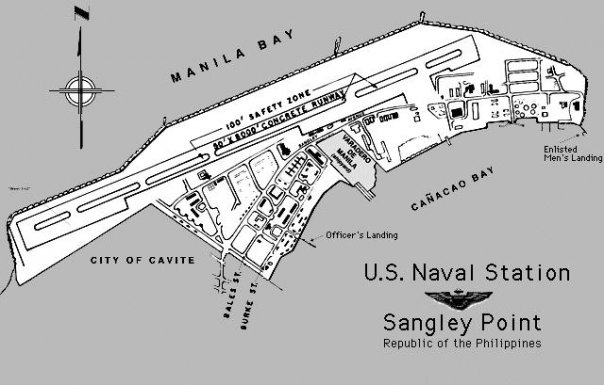
The ARRC is the local proponent of a proposed project to redevelop Sangley Point, the former United States naval station on the tip of the Cavite peninsula. The base was officially turned over to the government of the Philippines in 1971, ending 73 years as a US facility. It is now operated as a military base by the Philippine Air Force (the Danilo Atienza Air Base) and the Philippine Navy (the Heracleo Alano Naval Base).
By Jerry E. Esplanada
Amid the deflating news of the massive dumping of Philippine stocks by foreign investors last week come bracing words from the foreign partners of a local consortium proposing to build an international airport and seaport on reclaimed land off Cavite City.
“They’re (the foreign partners) bullish about the Philippines and its development prospects, particularly the development of the country’s newest international gateway, one that will be responsive to the nation’s booming economy and thriving tourism industry,” said William Tieng, chairman of Solar Group, the lead local partner of All-Asia Resources and Reclamation Corp. (ARRC) consortium.
“These foreign business entities have expressed in writing their firm commitment to participate in these modern and major job-generating projects,” Tieng said.
Tieng’s brother Wilson sits as chair of ARRC while Manuel BeriƱa Jr., former deputy director general of Public Estates Authority (PEA), is the firm’s president and CEO.
Tieng said their foreign partners, mostly Europe-based, include: Flugfahen Munich, operator of the Munich airport in Germany; Hamburger Hafen und Logstik, the biggest operator in the Hamburg port, also in Germany; the Italian rail company Ferrovie Circumvesuviana; power firm Isoluc Corsan; Deutsche Bank; COWI, Inros Lackner and GMP Architects; contractors Hochtief and Rizzani de Eccher; and Royal Boskalis Westminster, the lead reclamation contractor.
Sangley Pt. redevelopment
The ARRC submitted last Jan. 10 its letters of intent to undertake the twin projects to the Department of Transportation and Communications (DOTC) and the Philippine Reclamation Authority (PRA), the renamed PEA, the agency that acts as the clearing house for reclamation projects in the country.
The Inquirer has obtained copies of both letters, where BeriƱa proposed, among other things, naming their airport and seaport projects as ASIA and ASIS, short for Aquino-Sangley International Airport and the Aguinaldo-Sangley International Seaport, respectively.
He said the ARRC proposal was “in response to the need to develop premier international gateways in the country, as well as Executive Order No. 629, Series of 2007, directing the PRA to convert Sangley Point in Cavite City into an international logistics hub with a modern airport and seaport through an enabling reclamation component.”
The ARRC concept was “drafted in line with the vision of placing the Philippines in the forefront of international trade development. The concept project proposal will be undertaken in two phases at Danilo Atienza Air Base on Sangley Point,” BeriƱa said.
Proposed airport
Construction of Phase 1 of ASIA, or the airport project, is estimated to run from 2014 to 2018 (or up to 2020).
It calls for the “reclamation of 2,500 hectares on the flight line of the Atienza Air Base, development of a 50-million-a-year airport terminal and the first of two runway systems estimated to cost P56.2 billion and P45 billion, respectively,” the letter of intent read.
“The development of a 50-million-a-year passenger terminal is demand-driven based on the current 31 million annual passenger traffic in the Ninoy Aquino International Airport (Naia), the capacity of which is constrained by limited space,” it said.
Based on Manila International Airport Authority (MIAA) statistics, the four Naia terminals handled a total of 31.6 million airline passengers in 2012, an increase of 6.2 percent from 29.7 million passengers serviced in 2011. The 2012 figure is composed of nearly 14 million passengers who boarded international flights and 17.6 million passengers who took domestic flights.
Naia Terminals 1 and 2 have been operating way above their original designed capacities of 4.5 million and 7.5 million annually.
In 2011, Naia 1 was named the world’s worst airport by “The Guide to Sleeping in Airports,” an interactive website that gathers reports from various reviewers.
The ranking was based on reviews of travelers who complained, among other things, of safety concerns, lack of comfortable seating, rude staff, hostile security, poor facilities and general hassles of being in the airport.
In its letters of intent, the ARRC also proposed the “redevelopment of the Naia complex with the relocation of the Atienza Air Base to Runway 06-24 in the Villamor Air Base. It also called for redevelopment of Naia 1 into a “greenbelt mixed residential area” between 2020 and 2025.
Better than Clark
Touting the advantages of its proposed airport, the ARRC report said “the adjacent areas and approaches to the ASIA are largely over water and would allow airport operation on a 24-hour basis.”
It said there is space available for the expansion of the airport for a third runway, which would not be possible anymore in the Clark International Airport at the Clark Freeport Zone, which now serves as a budget airline hub and has been widely touted as a possible main international airport for the country.
“The availability of space for the expansion of the airport for a third runway is possible while this will not be possible in the Clark International Airport anymore. This makes investment in the development of Sangley a long-term strategic outlook that is driven by logic and not politics … As Sangley becomes integrated into the Greater Metro Manila Area, this will enable the metropolis to retain its bragging rights of being the seat of the premier international airport and capital of the Philippines,” ARRC said.
Seaport project
Meanwhile, Phase 1 of the ASIS project calls for the reclamation of 50 ha offshore of the Atienza Air Base with a budget of around P8 billion, and the construction of a 200-million-liter capacity bulk liquid port, estimated to cost P10.8 billion.
“The development of the bulk liquid port is demand-driven, resulting from the proposed relocation of the existing 83-million-liter capacity of the Pandacan depot (in Manila), which supplies 70 percent of the shipping industry’s needs, 90 percent of lubricant requirements, 75 percent of all aviation fuel needs, and 25 percent of the demand for chemicals,” the ARRC explained.
Related infrastructures
The twin projects will also require the “development of the connecting road, rail and water transport infrastructures to enhance accessibility and sustain passenger and cargo traffic growth.”
The ARRC proposed the construction of the 17-kilometer Sangley-CavitEx to link the projects to the Naia complex; a 32.5-km Aguinaldo Light Rail Transit, using the alignment of the Sangley-CavitEX link to the Naia complex and Tramo to connect to the Metro Rail Transit Line 3 Taft Station; and an 8-km, four-lane, snake-shaped cable-stayed bridge linking the twin projects to Boulevard 2000.
The bridge project alone is estimated to cost at least $2.3 billion, according to ARRC.
DOTC, PRA briefed
On March 19, ARRC executives briefed top DOTC and PRA officials on the “technical and economic justifications for the development of Sangley Point,” as well as the “global projects and consultancy services track records” of the firm’s foreign partners.
Those who attended the presentation included Transportation Secretary Joseph Emilio Abaya and Undersecretary Rene Limcaoco; PRA General Manager Peter Anthony Abaya; and PRA Chairman Roberto Muldong, among others.
On April 5, the company wrote both the DOTC and PRA, committing to “complete the feasibility studies (of the two projects) within six to eight months from the issuance of a PRA board resolution approving the reservation of the right to reclaim in the designated areas (off Cavite City) and a DOTC comfort letter, acknowledging receipt of the unsolicited conceptual proposal of the ARRC.”
Subscribe to:
Posts (Atom)