1.6 Billion International Airport to rise in Gonzaga

September 11, 2009

Sta. Ana, Cagayan - The Cagayan Special Economic Zone and Freeport (CEZA) announced Wednesday the 3 phase construction and development of Gonzaga airport worth P1.658 billion at the 54,000-hectare economic zone.

The project is awarded under a joint-venture agreement to Cagayan Land Property Development Corp. (CLPDC) headed by Basilio Rodriguez, CLPDC President. The company is composed of CAMJ Construction, Inc., LR Land Developers, Inc., airport designer TCGI Engineers, and aviation consultant Asesores y Consultores Aeronauticos S.L. (ACA) of Spain which will run the airport under a 50 years concession contract.

Under the joint venture agreement, CEZA will invest P691 million or 41.7 percent of the total project cost while its private partner CLPDC will contribute the remaining P966 million or 58.3 percent.

The whole project involves the construction of a 2,500-meter by 45 meters International Civil Aviation Organization (ICAO) standards runway designed to accommodate narrow-bodied aircraft such as Boeing 737NG's and Airbus 320's, which has a typical seating capacity of 134 -210 passengers.

The project will also include a terminal building covering a floor area of 1,000 square meters, paved apron and tarmac that can accommodate two aircraft simultaneously, and a control tower.

The first phase of the project which is the contract signing of the feasibility proposal, is set to begin within the month and expected to be completed in a years time says Ceza administrator and CEO Jose Mari Ponce, a nephew of Senator Juan Ponce Enrile .

“Once completed, the Ceza International Airport will complement the Port Irene Seaport, which is emerging as an international transshipment hub and tourism destination in the northeastern part of Luzon,” Ponce said.

“An international standards airport with international facilities and equipment is necessary to make Cagayan freeport a viable free-port and tourism destination in Asia,” Ponce said.

Cagayan Special Economic Zone and Freeport in Sta. Ana, Cagayan is the fastest-growing industrial, logistics and tourism hub in the country with 87 locators having actual investments of P13.826 billion as 0f December 2008. It was established in February 1995, by virtue of Republic Act No. 7922. CEZA manages the Freeport and attracts new locators into the economic zone.

Among the largest investments are three leisure-resort and casino as well as other gaming support service complexes whose operations are dependent on the opening of the airport next year. The nearest airport to Sta. Ana is Tuguegarao airport which is four hours away by land travel. Cagayan is 12 hours away via land travel to Manila.

In the Masterplan, the airport is envisioned by ACA to operate under the Global Transpark (GTP) system made famous around the world by Fedex when it was first established in Subic in 1992. GTP integrates on-time manufacturing and distribution facilities with multi-modal transportation, advanced telecommunications and materials handling system to facilitate fast, flexible linkages between GTP locators, their suppliers and customers globally. The phased developments for the new airport are as follows:

Phase 1 Development Features

  • Construction of 2C aerodome with 1,000m runway to accommodate large turboprop such as ATR72 and Q400 operated by local airlines;
  • A parking apron that can accommodate at least two large turboprop aircraft at any one time;
  • Single taxiway links between the runway and the parking apron;
  • A modular terminal and administration building, with a total floor area of 500 sq.m adjoining a 30 vehicle carpark facility;
  • A standard control tower for ATC services;
  • A fire and rescue building with Category 6 level;
Phase 2 Development Features
  • Gradual runway extension to 1,000 meters within the next 10 years to accommodate narrow-body jets such as Boeing 737NG's and Airbus 320's from Manila and other proposed international destinations;
  • Expansion of parking apron;
  • additional taxiway links between the runway and the parking aprons;
  • Expansion of terminal building for another 500 sq.m and car park extension.
Phase 3 Development Features
  • Runway extension up to 3,000 meters to accommodate wide-body aircraft such as Boeing 767's and Airbus 330's;
  • Expansion of airside facilities;
The P25.363 million(E360,340.11) Airport study and Master Planning is being shouldered by the government of Spain while the detailed engineering design and feasibility study was awarded to Getinsa Ingenieria SL, a Spanish Engineering firm, whose contract is scheduled to be signed in October 23, 2009.

The airport masterplan will cover the two-phased airport project which will eventually have a 2,500-meter runway. Construction of Phase I of the project will be under a joint venture agreement with Cagayan Land Property Development Corp. (CLPDC). Airport construction is scheduled to start next year.

Pacific Pearl Airways firms Subic hub


Starts flying in December

Written by Henry EmpeƱo

September 11, 2009

SUBIC BAY FREE PORT—A low-cost airline which has established its base of operations here has announced the start of its $10-million project to fly chartered planes to various tourist destinations in the country and abroad.

Pacific Pearl Airways (PPA), a private airline established in 2006, said it will begin flying out of the Subic Bay International Airport (SBIA) in December this year.

Airline president Kristoffer Jimenez, who signed the firm’s business contract with the Subic Bay Metropolitan Authority (SBMA) last week, said PPA will initially field two advanced Boeing 737-200 jets for international flights and some turboprop aircraft for local flights.

Jimenez said local destinations will initially be to popular tourism spots like Boracay, Bohol, Cebu and Davao. But as PPA begins to establish its presence in the local airline industry, the company will expand its local flight destinations.

According to the airline official, the Subic Bay Free Port has a “very strategic location.”

“A lot of tourists come here, foreigners and locals alike. It is also a booming place in terms of businesses,” Jimenez added, ticking off the advantages of locating in Subic.

To attract its potential market, Jimenez said PPA “will be offering competitive rates without sacrificing quality service costs,” an advantage he said was made possible by tax incentives and other perks offered by the SBMA.

He added that his company also intends to “eliminate stop-over hassles” with direct flights, thereby significantly cutting travel lag time.

This would allow Pacific Pearl passengers to gain more savings and more quality holidays, said Jimenez.

Meanwhile, SBMA Administrator Armand Arreza said during the contract-signing ceremonies that PPA’s $10-million investment pledge is “proof of Subic Bay’s economic resiliency.”

“What we have witnessed now proves that there’s still life after FedEx,” said Arreza, adding that the SBMA has been trying to attract more locators to the SBIA.

FedEx, the US courier giant that used SBIA as its Asia-Pacific hub since 1998, transferred its hub operations to China in February, bowing to realities of the expanding Chinese market.

Arreza, however, pointed out that because of its international airport, “Subic can host just about any kind of air-transport requirements.”

Arreza cited that the SBIA’s cargo-sorting capability has its edge over other airports in the country today.

1.6B Lal-lo Airport to Rise in Cagayan


By BERNIE CAHILES-MAGKILAT

September 9, 2009

Cagayan Special Economic Zone and Freeport (CSEZFP) awarded Wednesday the P1.658-billion contract to Cagayan Land Property Development Corp. (CLPDC) for the construction of the international airport in Lallo, Cagayan.

The project is a joint venture between the Cagayan Economic Zone Authority (CEZA) and the CLPDC as the private sector partner. The joint venture is good for 50 years.

CEZA Administrator and CEO Jose Mari Ponce and CLPDC President Basilio Rodriguez signed the joint venture Tuesday, Sept. 8. Construction of the project is expected to start within the month and be completed in a year.

CEZA is a government-owned and -controlled corporation that develops and manages the 54,000-hectare CSEZFP, an economic and tourism hub in the coastal town of Sta. Ana in Cagayan province.

Under the joint venture agreement, CEZA will invest P691 million or 41.7 percent of the total equity while its private partner CLPDC will contribute the remaining P966 million or 58.3 percent. CLPDC, established in 2008, is composed of CAMJ Construction, Inc., LR Land Developers, Inc., TCGI Engineers, and Spanish firm Asesores y Consultores Aeronauticos S.L. The Spanish firm shall be tapped to manage the operations of the airport, once construction is finished.

The project involves the construction of a 2,200-meter runway, with a width of 45 meters, following the standards of the International Civil Aviation Organization (ICAO). It will be designed to accommodate large aircraft such as Airbus A319-100, which has a typical seating capacity of 134 passengers.

It will also include a terminal building covering a floor area of 1,000 square meters, paved apron and tarmac that can accommodate two aircraft simultaneously, and a control tower.

“Once completed, the CEZA International Airport will complement the Port Irene Seaport, which is emerging as an international transhipment hub and tourism destination in north-eastern part of Luzon,” Ponce said.

As an investment hub, CSEZFP has become the preferred site of 86 foreign and domestic investors, of which 48 were already operational as of December 2008. These companies have committed to invest more than P13 billion.

“An international airport with international facilities and equipment is necessary to make CSEZFP a viable Freeport and tourism destination in Asia," Ponce said.

Data from the Air Transportation Office (ATO) show that there were 2,359 international visitor arrivals in Cagayan via the Tuguegaro City Airport from Macau and China alone in 2008. Chartered flights bring tourists to CSEZFP via Tuguegarao.

Cagayan Valley ranked as the 7th top regional destination for tourists in the country. In 2008, it generated P1.6 billion in tourism receipts from the arrivals of 670,000 visitors, including 32,000 foreign tourists.

Visitor arrivals in 2008 were up by 7.5 percent from around 623,000 tourists in 2007. In particular, the volume of foreign tourists rose by over 20 percent to 32,000 from only 26,000 a year earlier, as CEZA’s marketing campaign paid off.

A joint venture company will also be created and registered with the Securities and Exchange Commission (SEC) to manage the construction and operation of the international airport, which will cater to the locators, visitors and tourists in the bustling Freeport and economic zone.

Ponce cited the need to construct the airport in the vicinity of Barangay San Mariano and Dagupan in Lallo to provide faster connection to the rapidly growing economic hub from the rest of the country and the world.

Cagayan Freeport is at least 12 hours away from Manila by land travel. While it is accessible by air through a domestic flight to Tugueguarao City, the Freeport is still four hours away from the capital of Cagayan province.

Shenzhen Airlines introduces 3rd point to China


Flies Quanzhou, considers Kalibo and Cebu as next stop
September 5, 2009

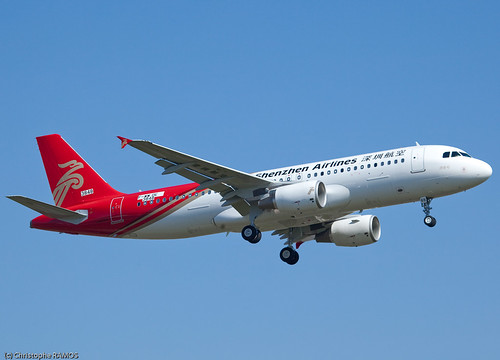
Shenzhen Airlines, the 5th biggest airline in China, announced the launching of its third point in China after Nanning and Shenzhen, to Quanzhou in September 21, 2009.

The airline controlled by Shenzhen Huirun Investment Co. and Yiyang Co. Ltd.,was launched in 1993 by the local government of Shenzhen before it was privatized in 2005.

Shenzhen Airlines started flying to Manila in October 2007. It will fly Quanzhou four times a week with departure at 11AM for Manila and return flight at 2PM.

The airline uses 115 fleets of boeing 737's and Airbus 320's that carried 15 million passengers in 2008 and employs more than 12,200 employees.

"With our national network in place we are now developing international flight routes in Northeast and Southeast Asia. We now fly to Seoul, Kuala Lumpur, Vietnam, Singapore, Osaka and the Philippines. There will be more coming. The international operations now are focused on Southeast Asia" said Li Kun, the airline President.

Li Kun, who spent 27 years at China Southern Airlines before joining Shenzhen in December 2005 said they will open Kalibo and Cebu as part of its route network expansion after CAAC granted them more rights to fly the Philippines from the latest Air Services Agreement with China.

"We will open more international routes from China to Manila and we are also considering flying to Kalibo and Cebu on regular flight" says Li on the launching of Jinjiang flight, Shenzhen Airlines first regular scheduled flight to the country.

More than 160,000 Chinese visited the Philippines last year, pushing China as a major emerging market just behind the United States, Japan and South Korea, according to the data provided by the Department of Tourism.

Tourism Secretary Ace Durano said the launch of direct air links reflects "a growing demand" from the Chinese market, a stable source of tourists in time of the global crisis.

Top Operating International Airlines

PHILIPPINE AVIATION DATA
TOP INTERNATIONAL AIRLINES IN THE PHILIPPINES
As of June 2009
RANK AIRLINE NAME CODE PASSENGERS
1 Philippine Airlines PR 1,740,143
2 Cebu Pacific 5J 797,521
3 Cathay Pacific CX 735,817
4 Singapore Airlines SQ 272,008
5 Asiana Airlines OZ 252,273
6 Northwest Airlines NW 233,670
7 Emirates Airlines EK 229,800
8 Qatar Airways
QR 212,798
9 Japan Airlines JO 215,746
10 Korean Airlines KE 196,507


TOP DOMESTIC AIRLINES IN THE PHILIPPINES
As of June 2009
RANK AIRLINE NAME CODE PASSENGERS
1 Cebu Pacific 5J 3,614,966
2 Philippine Airlines PR 3,207,060
3 Zest Airways Z2 433,576
4 Air Philippines
2P 254,244
5 Seair DG 83,132

Source: Civil Aeronautics Board
DOTC, Republic of the Philippines

September 3, 2009

The Civil Aeronautics Board (CAB) reported that a total of 6.26 million passengers flew in and out of the country in the first 6 months of the year. The figure is slightly lower than 6.29 million recorded in the same period in 2008.

There were more outgoing than incoming traffic. Incoming passengers stood at 3.01 million down from 3.02 million, while outgoing passengers stood at 3.25 million up from 3.03 million.

PAL heads the list with 1,740,143 international passengers down 9% from 1.92 million in the same period last year. The flag carrier’s incoming traffic stood at 821,658 from 926,377, while outgoing passengers reached 918,485 from 989,965.

Cebu Pacific registered positive growth after they carried 797,521 international passengers, higher than the 671,738 it carried last year, owing to additional frequencies in Hong Kong and Singapore during the period.

Cathay Pacific heads the foreign airlines category by carrying the most passengers (735,817) down -0.8%, followed by Singapore Airlines (272,008), -5.2% Asiana Airlines (252,273), +74.89% Northwest Airlines (233,670) -11.54%, Emirates Air (229,800) +4.15%; Qatar Airways(212,798) +19.98%; Japan Airlines (215,746) -3.08%, Korean Air (196,507) -13.67%, Thai Airways (147,947), China Airlines (141,781), and Gulf Air (141,399).

The CAB attributed the decline in passenger traffic to the global economic slowdown. Passenger traffic is expected to slow down further in the second half due to curtailed spending habits of foreign tourists. However, the Philippines registered the lowest decline in traffic reported in Asia Pacific region with other countries registering drop of 7.6% year on year basis.

There are 43 foreign carriers with operating permits to fly in and out of the country. But only 32 airlines operated during the period with the rest either suspending or ceasing operations indefinitely.

The CAB said Garuda Indonesia cut Manila as a destination in 1997 largely due to the Asian Financial Crisis. However code-share arrangement with PAL was entered in 1998 and 2001. Canadian Airlines, the precursor of Air Canada, stopped operating in 1999, while flights of Pakistan International Airlines were also suspended on the same year due to operating losses. Air Nauru and Vietnam Airlines ceased flying to the Philippines in 2001 but Vietnam maintains a code-sharing arrangement with PAL.

In 2002, British Airways suspended operations to London due to losses mainly attributed to the 911 New York bombing while Swissair filed for bankruptcy. Meanwhile Egyptair suspended flights in 2004 due to poor loads. P.T. Bouraq filed for bankruptcy and Air France rationalized operations with KLM also in 2004 when both airlines merged its Asian operations. The latest airline that left Manila was Lufthansa in April 2008 due to stiff competition by Mideast carriers.

New International Airline operators are also lining up to fly the Philippine skies among them Afriqiyah Airways of Libya scheduled to launch services this month to Tripoli on a thrice weekly schedule via Dubai.

CAAP to defer FAA Review Again

Lack of Qualified Flight Safety Inspectors or trying to hire own men?
September 3, 2009
WASHINGTON — The Federal Aviation Administration (FAA) said that the Philippines Civil Aviation Authority (CAAP) has officially requested the agency to defer again its Safety Assessment review scheduled in October for next year after failing to hire qualified flight safety inspectors for civil airliners.

"The safety assessment review for the Philippines is scheduled next month October 2009" says Les Dorr Jr., a spokesman for the FAA in Washington."But I think its not gonna happen anytime this year."
This is the third time the Philippine government asked for deferral of compliance verification pursuant to the FAA's International Aviation Safety Assessment (IASA) program after it found the country's aviation agency non-compliant with international safety standards set by the International Civil Aviation Organization (ICAO) in December 2007. The next assessment is tentatively scheduled in March 2010.

Philippine Transportation Secretary Leandro Mendoza invited the FAA to make the review in June 2008 but got a schedule set for November 2008 to give the Philippine aviation agency ample time to complete its deficiencies but only to be told later by the Philippine government to move the review date to October this year citing "failure to hire qualified personnel" which include among others flight safety inspectors otherwise known as the "Check ride" pilot examiners in the aviation world. The examiner is responsible for airline pilot's certification and rating.

The FAA's International Aviation Safety Assessment (IASA) program assesses the civil aviation authorities of all countries with air carriers that operate flights to the United States and determine whether or not foreign civil aviation authorities are meeting ICAO safety standards, not FAA regulations.

The Civil Aviation Authority of the Philippines is addressing the issues, including working with the FAA an action plan on how to correct the areas of concern so that their safety oversight system fully complies with standards and practices set by the International Civil Aviation Organization (ICAO).

But according to ICAO flight safety consultant James Hooker, formerly hired by the Philippine government to address the problem, told that he was not surprise of the numerous deferrals as CAAP officials had been very dismissive of ICAO recommendations in the past that they would probably be rejected by FAA if they come.

Consultant Peter J. Weiss from ICAO, who currently coordinates Flight Operations Quality & Safety Systems in CAAP, replaces Hooker on the post but share the same sentiment to the extent of disapproving outright unqualified applicants to the examiner position and his assent to some qualification issues remain a thorny subject against the world regulating body. CAAP has yet to fulfill the technical requirements in areas of certification because of his objections.

ICAO is the United Nations’ technical agency for aviation. It establishes international standards and recommended practices for aircraft operations and maintenance, which includes pilot rating and certification procedures from qualified pilot instructor.

A Category 1 rating means the country’s civil aviation authority complies with ICAO standards while Category 2 safety rating means that the country’s civil aviation authority does not comply with ICAO standards.

A Category 2 rating means a country either lacks laws or regulations necessary to oversee air carriers in accordance with international standards, or that its civil aviation authority is deficient in one or more areas, such as technical expertise, trained personnel, recordkeeping or inspection procedures.

The inspection aspect tied CAAP to the wall that unless they adhere to ICAO standards, the Philippines dream of Category 1 will just remain well a dream.

Legacy Jet for the next president?


No photoTAKIN' CARE OF BUSINESS


By Babe Romualdez

September 1, 2009

The P1.2-billion budget they were planning for GMA’s executive jet no doubt had bad timing because it came on the heels of criticisms regarding the president’s trips abroad and the lavish dinners in New York and Washington. At this time, it would be more practical and cost effective for the president to lease because she will not have to worry about the problems that have to go with maintaining an executive aircraft.

But perhaps when all the furor has subsided and when the effects of the global recession are starting to subside, people will not be so resistant to the idea of a private jet for the country’s new president – whoever he or she may be. For one, there’s the question of safety. No one will argue that the current fleet at the president’s disposal is composed of half-a-century old planes that are in dire need of some serious refurbishing – problems that afflict even the Philippine Air Force as a whole with their outdated fleet of choppers, fighter jets and other equipment.

An aircraft worth considering would be the Legacy Executive jet from Brazilian aerospace conglomerate Embraer, one of the world’s largest aircraft manufacturers. From the time the company was privatized in 1994, it has become one of the best known companies and a top exporter in Brazil. ATR Kim Eng Financial Corp. chairman Ramon Arnaiz has been quietly working through his Rako Trading Corp. to successfully acquire the exclusive distributorship of the Legacy Executive jet series in the Philippines. The new super midsize aircraft (with a $27-million tag price) on display at the Domestic Airport would be appropriate for the travel needs of the next president of this country.

Derived from the commercial jetliners ERJ-135 and ERJ-145, the Legacy Executive is configured with up to 15 seats, with a full glass cockpit that includes a Honeywell Primus 1000 digital avionics suite and color weather radar with turbulence detection. It also has a Global Positioning System and satellite communications capability. The interior cabin is built with fine-quality hardwood finishes. The cabin can be configured into a 12-seater with sideboard, tables and a three-seat sofa, and it would be perfect for any president who is not over six feet in height.

In 2004, Embraer delivered its first Legacy Executive jet in Macao through the Legend Development Company of David Chow, and Ramon is hoping the Philippines wills see its first Legacy aircraft in the next couple of years. Although the market for midsize jets may still be relatively small, they will try to market it aggressively and simulate the success of Embraer over the years. Although the flagship line is the popular Legacy 600 which began flying in 2002, Embraer has announced two new models, the Legacy 500 and the Legacy 450, which will enter service in 2010 and 2013, respectively. In November last year, the Brazilian conglomerate (with headquarters in Sao Paolo whose facilities boast of a 5,000-m runway that is said to be the third longest in the world) received a total value order of over $208 million for its Legacy series, including from Middle East customers.

While the Brazilian conglomerate’s closest competitor is Canadian manufacturer Bombardier, it has been cutting into the US market and is giving Boeing and Lear jets a run for their money. As a matter of fact, the company has maintenance and commercial offices in Fort Lauderdale in the US and in Paris, Singapore and Beijing. The market in the US however may be a little difficult at this time considering the global financial crisis, with American businessmen selling off their private aircraft. About two weeks ago, the US Congress also announced it was scrapping plans to buy four new executive passenger jets worth $550 million for the Air Force. It’s also dropping plans to refurbish jets for the use of government officials.

It can be recalled that some Congressmen almost went ballistic when automobile executives asking for government bailout money flew into Washington with their executive jets – prompting one irate lawmaker to comment that it was ironic for auto executives to fly to Washington with a begging bowl in hand. Early this year, Citigroup had to drop plans for the purchase of a $50 million Dassault Falcon jet it ordered in 2005 even though it would have to pay huge penalties due to severe criticism from legislators and ordinary Americans, with Barack Obama also commenting that buying jets was not the best use of money by companies receiving government bailout funds.

Embraer though continues to be optimistic with the future of the company, breaking ground for its first US assembly plant in December last year. According to former Embraer president and CEO Mauricio Botelho (who is credited for turning the flagging, state-owned company into the 4th largest aircraft manufacturer in the world), their strategy has been to take on the competition by “offering products with the latest technology and more competitive operating costs,” anticipating better profit margins in the area of executive aviation than in commercial aviation. There are now over 130 Legacy aircraft operating in more than 23 countries, including China and India – and hopefully soon, the Philippines.

THE AQUINO LEGACY

Its always been a business class trip!

August Special Edition

It can be said that Foreign Travels tells you what kind of leader your President was. Nothing can be more exemplary than President Corazon Aquino.

During the Eulogical speech of Feliciano Belmonte to his former boss last Tuesday, he spoke about how the President entrusted him on the management of some corporate cash cows. One of those prominent cash machines was Philippine Airlines. Its akin to one of the geese that lays the golden egg for the Republic yet an economic time-bomb by itself.

As I watched and listened the necrological episodes in tribute to Cory Aquino, I can't help but recall how her government earnestly tried to managed a growing monster inside the airline that bleeds it to eventual collapse in 1998.

Truly indeed, Cory Aquino, who inherited an ailing economy from the previous government, never dipped a finger on PAL despite her grip of control as Belmonte pointed out. Her brother, Pepeng Cojuangco attested to it. Although its a different story if we talk about her cousin's influence which she has nothing to do about, much so their wealth that goes with it.

Her first foreign travel after assuming office became a standard of what she truly is. A standard too difficult for other leaders to follow. And yet, its always been that way until she stepped down from power.

Cory Aquino traveled in style. A style far from the norm of her predecessor in a class befitting a Head of State. She insisted to travel on business class when first class could have been more better. With a status and power equivalent to today's Chief Executive Officer, she could easily do so on a whim to a company under her control.

But no, she acted like what Lucio Tan always did when traveling his airline. Be like an ordinary passenger just like any body else. Its more like leading by example. After all, as she always said, to Teddy Boy Locsin "its not our money."

While in business class, you would have thought the area where she sat be blocked to cordoned her, but you should be surprised that she sat with other business class passengers.

The Head of State of the Philippines and Philippine Airlines supreme boss insisted to be treated just like a normal business-class passenger.

When she first went to the United States as President in September 15, 1986 to address the United States Congress, She travelled on a tight budget going to Washington with only two suitcases and 15 cabinet officials in tow.

Its always been that way in a Boeing 747-200 during her Presidency, a far cry from her successors in Office and a mile away from her predecessor who on a 1982 visit chartered two 747s, blocked off one first-class section for a bedroom and the entire 747 for the exclusive use of the Presidential family, while another 747 carried the entourage of 300 people.

Few might know that Cory Aquino earned the distinction to be the only Philippine President to board Air Force One that ferried her from San Francisco to Washington, although the US 747 was coded as Air Force two because of the presence of Vice President George Bush. She was also the only Philippine President to board Marine One courtesy of Ronald Reagan.

Few Head of States are invited to address the United States Congress and fewer still are those invited to ride the US Presidential jet. Perhaps, the American people knew well what most of us never managed to know.

******************
Why arroz caldo is on PAL’s menu

By Gil Carolino

In 1987, MalacaƱang appointed me to be a member of The Committee on State Visits of President Corazon C. Aquino. I was then with Philippine Airlines and this unexpected appointment gave me the distinct privilege of going with Tita Cory on all her trips abroad. She made only a handful, less than a dozen (nothing compared to the more than 50 and 30 trips of two Philippine presidents), but they were more than enough for me to know Tita Cory up close and personal.

Tita Cory never gave the PAL crew any problem. She never demanded anything as far as service was concerned, like asking for special and elaborate meals. The only thing that she asked to be served was arroz caldo which, after that, became a standard feature of PAL’s inflight meals.

Tita Cory was very pleasant with the crew and everyone on the plane, including the regular passengers whom Tita Cory sought so she could have even a short conversation with them inside the plane. Everyone was awed by Tita Cory’s simplicity and pure heart.

Lunch at Arlegui

I am neither a close family friend nor an official of her administration, yet, very early on during her presidency, Tita Cory invited me and my wife to have lunch one Sunday with her children (Noynoy and Kris were not there) at the Arlegui residence inside the MalacaƱang compound. There we saw a fine lady, not the President of the land, but the loving mother to Ballsy, Pinky and Viel and their spouses, and the very doting lola (grandmother) to her apos (grandchildren).

And, how could you not be forever grateful to Tita Cory if she showed genuine concern for your safety and welfare of your family?

A few weeks before the outbreak of the 1991 Gulf war, I was all packed up to be based in Dubai, UAE, to be PAL’s regional vice president/GM for the Middle East. As a matter of respect, I called up the Office of the President and told Tita Cory’s eldest daughter Ballsy to inform the President about it. Before I could even hang up, Tita Cory was already on the line and asked me, “O, gusto mo ba yan?” to which I answered in the affirmative. She might have felt differently because a few minutes after we talked, then PAL Chair and now Quezon City Mayor Sonny Belmonte called me to his office and told me, “O, tumawag si Tita Cory, ayaw ka niyang ma-assign don kasi may guerra daw don.”

Out of harm’s way

I could not describe my feelings. I was simply overwhelmed because, to me, it was unimaginable that the President of the Philippines, who had far more important things to attend to, would personally go out of her way to do that.

Napakahalaga ng buhay ng tao sa kanya. She showed it again when she, subsequently, directed PAL to operate special flights to evacuate her countrymen who had no way out as they were stranded in the region during that most critical period. Tita Cory personally followed up the developments and actual operations of the special flights
which, I thought, she could just have assigned to her Cabinet and staff to coordinate with PAL.

Tita Cory is gone. However, our spontaneous outpouring of grief and sadness is solid proof that we fully embrace the ideals and aspirations she wholeheartedly and endlessly fought for. Let us keep the fire brightly glowing until another Tita Cory comes, though I feel sad realizing the fact that that time will be beyond my lifetime.