Implications of winning Terminal 3


By Perfecto R. Yasa
y Jr.

August 4, 2010

I fully understand why President Aquino expressed intense delight when informed about the dismissal of the case filed by Philippine International Air Terminals Corp. (Piatco) against the government before the International Court of Arbitration (ICA) in Singapore. He saw what this unexpected break brings to the cash-strapped government he inherited as a result of the fiscal excesses of his predecessor.

To begin with, our hard-pressed taxpayers will not be burdened with the $1.1-billion payment that was sought by Piatco as a result of the cancellation by the government of the contract to construct the Naia Terminal 3 under a build-operate-transfer (BOT) arrangement. Furthermore, the President would be given the opportunity to pursue vigorously the prosecution of corrupt officials and their conspirators associated with the anomalous contract.

In 2003 the BOT contract for the terminal facility was invalidated by the Supreme Court because of terms that violated the Constitution, the law and public policy and also because of grave irregularities concomitant to its award. However, Piatco sought redress, invoking a provision in the nullified contract, through arbitration before the ICA of the International Chamber of Commerce. On the other hand, Fraport AG, the German partner in Piatco, filed suit before the International Court for the Settlement of Investment Disputes in Washington, D.C., for reparation of investment losses in accordance with a treaty between Germany and the Philippines.

But while two of the three main legal obstacles to the final takeover by the government of Naia Terminal 3 have been overcome, the third and most troublesome, which is the expropriation proceeding pending before the Regional Trial Court in Pasay City, can further delay the full operation and eventual privatization of the Terminal 3 project.

The expropriation of the facility, by itself, is another scandalous abnormality. The terminal building was erected on government land. As a general rule, a house or building constructed on real property belongs to the owner of the land. Naia Terminal 3 is no exception. Even the provisions of the BOT contract to build the facility make this unmistakably clear.

Expropriation is a judicial proceeding that allows the State, in the exercise of its Eminent Domain powers, to take private property (usually land) for a public purpose, upon payment of just compensation. Why then-President Arroyo allowed the expropriation of Terminal 3 is perplexing, although not surprising. But what is even more disturbing and unsettling is why the Supreme Court did not strike down this expropriation for being anomalous and prejudicial to the public interest.

Piatco is merely the builder of the terminal complex on government land. As such, its entitlement to compensation should be determined under the provisions of the Civil Code, with respect to the rights of a builder on property belonging to another, and not as owner.

The invalidation by the Supreme Court of the BOT contract for Terminal 3 and its award because of corruption makes Piatco a builder in bad faith. For this reason, it should only be compensated for what it deserves, just like anyone who builds on the property of another without the valid consent of the owner. A builder in bad faith can only be paid the actual costs of improvements made, less damages suffered by the owner of the land.

And yet, the taking by the government of private property in expropriation proceedings is different because payment for just compensation is made to the owner and not to a builder. Moreover, in determining “just compensation,” consideration is given to the market value of the property, its replacement costs including reasonable profits or opportunity losses to the owner.

Because of the expropriation of Naia Terminal 3, Piatco can still be paid a staggering compensation approximating $1.1 billion because Piatco is deemed the owner of the property when, in fact, it is not.

The two arbitral cases in Washington, D.C., and Singapore were dismissed by the International Center for Settlement of Investment Disputes and the ICA, respectively, on the findings of graft and corruption participated in by both Fraport and Piatco. But the expropriation proceedings over Naia Terminal 3 were purposely instituted by the government to cover up the anomalies that accompanied the BOT project.

According to some experts, the money plowed into the actual construction of Terminal 3 has not exceeded $200 million. The government already spent around $150 million to complete the project that was estimated to cost around only $350 million. Given this situation, Piatco deserves to be paid not more than $200 million, less damage that the government has sustained.

The President should not allow the payment of what would essentially be unjust compensation to Piatco if the expropriation proceeding prospers. He must order the Department of Transportation and Communications and the Solicitor General to withdraw immediately the case. It can still be done because Piatco has never agreed to be bound by determination of the expropriation judge.

Only then would our people see the proper closure of this scandalous BOT project and the opening of Naia Terminal 3 for full operation, hopefully in December 2010.

CX mulled to fly domestic again

August 3, 2010

Hong Kong based airline, Cathay Pacific is being eyed by the government again to cover the flight allotments of Philippine Airlines in the event it can't handle the surge of domestic travelers in the coming months.

"If it worsen then we are ready to re-allocate traffic rights to foreign airlines" says DOTC Undersecretary Dante Velasco who disclosed the plan after sensing that the meeting between the pilots association and PAL management is not the end of its trouble.

The government postponed the dialogue between the management and pilots of the Philippine Airlines (PAL) for tomorrow when no pilots other than its representative at ALPAP showed at the DOTC grounds in Ortigas.

June to October is the lean season for domestic flights. What the government foresee however is the inability of other local carriers to service passengers at peak season starting November.

"We have talks with other airlines like Cebu Pacific and Zest Air, and they said that the additional capacity they have is not sufficient to cover demand at that period" adds Velasco.

The government said that they have done re-allocation of traffic rights in the past citing the services of Cathay Pacific in 1998 when PAL was unable to fly its route and is not ruling out the possibility of calling them again in case of “worst-case scenarios.”

"This is a national interest issue. But of course we will offer this right to other domestic operators if they can fill the demand" Velasco said.

No-fly zone


Editorial
August 3, 2010


IT MAY be, as some of the employees of Philippine Airlines have started to suggest, that the untimely resignation of about two dozen pilots is a crisis that is the company’s own making. There will be space to discuss that, but first things first: Both the pilots and PAL management must recognize that the dispute affects not only the two parties themselves but the general public. The crippling of PAL, in other words, is a matter of national interest.

That is why former Sen. Ernesto Herrera’s press release circulated Tuesday, on behalf of the Trade Union Congress of the Philippines, strikes us as both misleading and unhelpful. PAL cannot force its pilots to fly or to stay, Herrera said. “professionals
are entitled to go wherever their skills will get the greatest reward. If employers or companies can invoke their need to stay profitable in order to justify indiscriminate job cuts, then surely professionals and other staff are also entitled to abandon their posts in favor of greener pasture elsewhere.”

No one disagrees with the basic principle that the pilots—13 captains and 12 first officers flying the airline’s workhorse planes—can leave for higher pay or better conditions abroad. Not even PAL management. “PAL doesn’t want to get in the way of its pilots’ dream of landing better paying jobs abroad, but they have contractual obligations with the company and a moral responsibility to thousands of passengers,” a management statement read.

The immediate issue is precisely those contractual obligations. Because commercial airplane pilots possess what are called “mission-critical skills,” they cannot simply resign. Government regulations require six months’ notice—surely a reasonable requirement, designed to ensure the traveling public’s safety by providing the airline enough time to train replacements. The pilots who left the company immediately after tendering their letters of resignation thus have some explaining to do—to the public at large.

But the long-term issue is squarely in PAL management’s court. And it is something that airline executives cannot simply explain away by saying that other airlines offer “two to three times” a PAL pilot’s salary. A higher salary, after all, is not always the main deciding factor in choosing a new job; work conditions come into play, including employee morale and the reasonable expectation of success in one’s chosen career path. The rumblings from PAL’s rank and file, therefore, form an ominous soundtrack: rumors about unsatisfactory secondment to affiliate companies; employee complaints about undermanned flights, resulting in overworked flight attendants; excessive downsizing. Even the improbably coincidental immediate resignation of the pilots is already a statement in itself.

If these issues remain unresolved, what is to prevent another mass resignation of pilots, or airline mechanics, or flight attendants, in the future?

The international repercussions, it bears belaboring, go beyond the economic. For instance, the Agence France Presse story on the resignations that the popular Yahoo News service carried used the following headline: “Philippine Airlines cancels flights as pilots quit.” Strictly speaking, this was an accurate description. But a reader abroad, who may not have the time to read the story and thus find out that the cancellations affected only a handful of flights and two dozen pilots, may think the entire airline has suspended all operations. In other words, the headlines alone can damage PAL’s reputation, and with it the country’s image, too.

The Associated Press decided to use a humorous lead in one of its stories on the PAL crisis. “Good morning, passengers, and welcome aboard. We’re expecting clear skies today, but we’re out of pilots.”

Funny, ha-ha. But in fact the joke’s on the country, which is part of the name of Asia’s oldest airline. Like we said, the impact of news like this, while it will be felt most sharply in business and tourism, goes beyond the economic.

Garuda makes an Emergency Landing

August 3, 2010

A Garuda Indonesia flight (GA883) from Osaka bound to Denpasar, Bali, made an emergency landing this afternoon at Ninoy Aquino International Airport.

Initial report disclosed that the Airbus A330-300 (Msn 138) PK-GPA plane suffered an engine trouble prompting the pilot to divert to Manila.

No one was reported injured in the incident.

Ormoc airport expansion on course

By Felix N. Codilla III
August 3, 2010

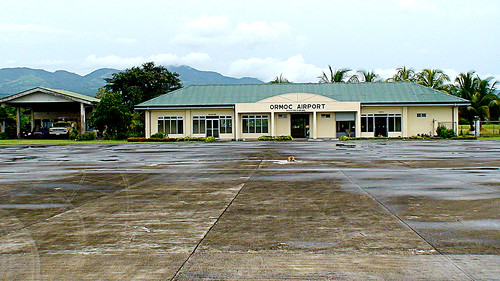
ORMOC CITY—Work on this city’s airport-development project will continue next month. This is the assurance given by contractor Eduardo Canlas to quell speculations that politics has stalled the project even if this will boost Ormoc’s image as a major tourist destination.

Rep. Lucy Torres-Gomez said in a radio interview recently that the airport project was halted because the work contract was not yet signed. The project is credited to former congressman Eufrocino M. Codilla Sr., as the special allotment release order was released on October 20 last year.

Canlas confirmed Gomez’s claim the contract is not yet signed, but said this had nothing to do with the work stoppage. The real reason, he said, was that funds for the acquisition of adjacent properties haven’t been released yet by the Department of Transportation and Communications (DOTC).

The five-year (2009-14) airport-development program is divided into three phases. Phase I, which was lobbied by Codilla, costs P80 million, with P15 million allotted for site acquisition. Despite the non-release of the P15-million fund, Canlas was able to gain access to one of the properties subject for expropriation.

He secured a permit to enter and work on the 11,062-square-meter property of Leonardo Sagales, where a new terminal will rise. But the permit is good only from June 1 to July 15, the reason he had to stop, he said.

Gomez’s claim that the contract has not yet been signed is also true, which Canlas attributes to the change of administration.

The project was bid out on February 23 and awarded in April to Tokweng Construction. That time, Transportation Secretary Anneli Lontoc had just been installed as replacement of Leandro Mendoza. Lontoc failed to sign the contract, as she was replaced on July 5 by Secretary Jose P. de Jesus.

Canlas is confident the new Transportation secretary will sign the contract before August, as it is highly recommended by DOTC officials, namely, Dante Lulu, area manager for Western and Central Visayas Regions; Abelardo D. Sore, head engineer and architect of planning division; and Geronimo V. Quintos, chief of legal affairs and research division.

The three officials were in Ormoc recently to inspect work progress and were pleased to see that the project is ahead of schedule. The contractor was able to pour filling materials on the site and put up a temporary fence and bunkhouse. Once the contract is signed, the notice to proceed is automatically approved and the contractor can continue the project.

Phase I involves site development and construction of security fence and a 1,350-sq-m terminal costing P64 million. The terminal facilities will include a check-in counter, arrival and predeparture area, and administrative office. Some 5.4 hectares are being prioritized for acquisition for Phase I at P200 per sq m. However, processing of documentary requirements by landowners is taking time.

The contract duration for the terminal is nine months, but Canlas is bent on finishing it in seven to eight months. Such is his commitment to the project that he has spent some P1 million of personal funds. If his schedule is followed, the airport will have a spanking new passenger terminal next summer.

Phase 2 will involve the demolition of the old existing terminal to give way to the extension and widening of the runway and apron, as well as construction of a turnaround pad. Other improvements slated are a new fire station, administration building, powerhouse and control tower.

Navigational facilities are also considered in the five-year plan, like precision approach path indicator lights, very high-frequency Omni range, as well as runway markers and lights. All these developments would require an expansion of the airport site from the present 17 to 41 hectares.

Canlas said the fulfillment of all these plans will depend on the aggressive lobbying of the new congresswoman. If the development plan is fulfilled, the airport’s category will be raised from the present principal class II, or secondary, to principal class I, or trunk line. --Business Mirror

Delta makes an Emergency Landing

August 2, 2010

A Delta Airlines flight (DL 280) from Singapore bound for Tokyo and Los Angeles made an emergency landing around 9 am at Ninoy Aquino International Airport this morning after one of its passenger suffered a heart attack.

The Boeing 777-200LR plane (N707DN) left Changi for Narita Airport at 5:45 a.m. and was expected to arrive Tokyo around 2p.m. when the captain decided to divert its flight to Manila on grounds of medical emergency.

NAIA air traffic controllers received the emergency call at around 8:50 a.m. from the pilot of Flight DL 280, telling them that one of their passenger, Australian Johanne Brons, 55, appeared to have suffered a heart attack and was being revived by a doctor on board.

A Japanese doctor who treated Brons told medical staff at the airport that the patient passed out in flight but was revived after a few minutes.

"The patient admitted to the Japanese doctor that he had been suffering from diarrhea during the last two days, and that he had not been eating properly, which might have caused him to lose consciousness,” said Dr. Caridad Nuas, airport's medical officer.

She added that Brons is taking medicine for hypertension. He was taken to the Makati Medical Center for treatment.

The flight continued to Tokyo at 10 am after dropping off the ill passenger and its baggage at NAIA's terminal 1. The plane arrived at Narita at 4:41 pm without further issues.

PIATCO Tried to dupe Aquino on Terminal 3

By Jarius Bondoc

August 2, 2010

No photoThe NAIA Terminal-3 scam spanned three administrations. It nearly tainted a fourth one, the just-inaugurated P-Noy team. This was just before last week’s victory of the Philippine government in the Singapore lawsuit filed by contractor Piatco.

Storm began to stir in 1996 under Fidel Ramos when Filipino-owned Piatco stole the deal from an existing proponent. Instead of erecting a facility in 30 months as contracted, undercapitalized Piatco trawled for a financier and snagged German airport builder-operator Fraport. The first thing Piatco-Fraport did upon partnering in July 1998 was to renegotiate onerous terms from the month-old admin of Joseph Estrada. In all, over the next two years, they wangled four major revisions to reduce their costs and increase potential incomes. Only then did a structure begin to rise, very shoddily. Within three months of Gloria Arroyo’s takeover in 2001 more bribes changed hands for approvals of yet lesser quality construction. Piatco-Fraport hired a three-month “PR consultant” for a “fee” of over a hundred million dollars that actually went to the latest officials. The shit hit the fan; domestic and overseas lawsuits were filed to free the Philippines from the lopsided contract.

Early last month word spread around that the International Chamber of Commerce in Singapore was about to rule in favor of RP. Reportedly a tycoon who wants to buy out Piatco frantically sent emissaries to the week-old Noynoy Aquino tenure. Their mission: to dupe the new admin into settling out of court. Time wasn’t on their side. The Aquino team was too busy familiarizing itself with an inherited mess to listen to carpetbaggers. Besides, it was steeped in its campaign vow of clean government. Still Mr. Aquino must be told of the double agents in his inner circle. Starting today state solicitors, once sidelined by co-opted superiors for striving to win RP’s case, will brief the new President on the 14-year-old scam. Perhaps the Truth Commission will also investigate the culprits. For, not only did billions of pesos change hands, but RP’s reputation in Europe also was blackened. Public officials and private lawyers had connived to cover up misdeeds via money laundering and document counterfeiting in Manila and abroad. Lives have been lost.

Bloodstains on the Piatco-Fraport scandal are among the Arroyo regime’s hundreds of unsolved murders of jurists, journalists and militants. Hendrick Guingoyon, the judge trying the Terminal-3 expropriation, was assassinated in August 2005 in the midst of talks for just compensation for Piatco. In December the following year Assistant Solicitor General Nestor Ballocillo and his son were shot dead on their way to work. Ballocillo had been arguing in court that Piatco-Fraport were entitled to recompense of only $144 million, based on their submitted incurred expenses. Piatco was trying to collect $540 million, and Fraport $425 million, but he insisted the difference had gone to bribes and thus non-reimbursable. After one such hearing a grenade was lobbed at Jose Bernas, lawyer of Terminal-3 original proponent Asian Emerging Dragons Corp. He survived the blast.

Extortionate government bosses had hindered the case from the start. Despite the odds, the state and private lawyers fought on to win five major battles. First was in the Department of Justice, which annulled the deal for technical, financial and procedural flaws. Then, they got the Senate Blue-Ribbon committee to gather evidence of fraud and recommend indictment. The Supreme Court upheld both findings. Fraport ran to the International Court for the Settlement of Industrial Disputes in Washington DC, to make the Philippines pay up, but the ICSID declined to rule after noting the German firm’s violation of anti-dummying laws. Lastly, Piatco pressed its own collection before the ICC-Court of Arbitration in Singapore, which also pointed up legal breaches. Perhaps the only time Piatco-Fraport scored was when the court ordered the government to pay an initial P3 billion for expropriating the unfinished terminal; but then, the money allegedly went to the fund releasers. MalacaƱang during Arroyo’s term kept signaling RP counsels to backpedal. Still Solicitor General Alfredo Benipayo persisted in having the deal voided. The US lawyers White and Case nearly resigned yet won the Washington lawsuit. Lead Philippine lawyer, retired justice Florentino Regalado, left the case midway. At one point Arroyo received an ultimatum from German Chancellor Angela Merkel to settle the issue; she ignored her.

Hopefully all this will come up in the briefings for P-Noy. It might sway him to include the Terminal-3 rip-off among the Truth Commission’s investigative assignments. Also, to include the 800 or so political murders under the Arroyo regime as priority.

RP to get US missiles

August 1, 2010

By Jocelyn. R Uy and Christian V. Esguerra

Manila —The United States has pledged to provide the Philippines with $18.4-million worth of precision-guided missiles this year to use in its fight against Islamist militants in the south, according to a military document seen by Reuters.

The missiles are being funded under a US Congress Act that allows the US Defense Department to train and equip foreign armies allied with Washington to fight terrorists across the world since 2006.

Troops in the southern Philippines have said they need unmanned drones to help hunt down Abu Sayyaf bandits and Jemaah Islamiyah militants on small remote islands.

National Security Adviser Cesar Garcia yesterday said he had yet to officially receive information on the reported assistance offer, “but on principle, we welcome it.”

“Accuracy and precision are important in any military operations to avoid civilian collateral damage. We have to learn from what has happened in Afghanistan,” Garcia told the Inquirer.

A Philippine defense official disputed the report, saying that what the US government had promised was $4-million worth of “enhanced precision capability” package involving software for aircraft of the Armed Forces of the Philippines (AFP).

The assistance will not involve precision-guided missiles, defense department spokesperson Eduardo Batac said.

War on terror

Reuters said the military document it had seen states: “Fiscal year 2010 assistance for the Philippines provides a precision-guided missile capability to assist Philippine armed forces’ counterterrorism efforts in southern regions to combat the activities of the Jemaah Islamiyah and Abu Sayyaf Group.”

The document was shown to Reuters by a defense department official on condition of anonymity, the British news agency said.

Precision-guided missiles are unmanned explosives directed against a target. They can be controlled from a remote location or have their own internal guidance system. Guided missiles can be launched from aircraft, ships, submarines, land vehicles, or even individual soldiers on the ground.

A US Embassy spokesperson confirmed there were funds available to the Philippines under the program, but did not comment on what they would be used for, Reuters said.

The Philippines has no missile capability. Most of its ships and aircraft are Vietnam War vintage. It spends about 1 percent of its gross domestic product (GDP) for defense and security, but 70 percent of the budget goes to paying salaries and allowances of its 130,000-member army.

Need for precision

Speaking to reporters at Camp Aguinaldo, Batac said the latest US grant to the Philippines, a Washington ally in the fight against terrorism, would involve merely an “enhancement” of the precision capabilities of the AFP.

“It is a project that will provide basically some software and other equipment which will allow the Air Force to perform enhanced precision capability,” Batac said.

Existing armaments of the AFP can be adjusted for the purpose, he said. “You can use any munitions ... It’s a matter of modifying, converting and providing the guidance system,” he added.

Groundwork on the platform for the new software started early this year, but there is no word yet if installation of the software is already being carried out, Batac said.

The Philippine Air Force’s OV-10 Broncos—which support ground troops in fighting Muslim extremists—have been lined up for the upgrade.

The OV-10s are normally armed with four 7.62 mm machine guns and also carry 2.75-inch rocket pods, 5-inch Zuni rocket pods or a combination of both. The aircraft can also carry 750-pound bombs.

“There is a certain number [of this aircraft] that is going to be equipped because we are talking of a finite amount that has been committed, so definitely we can only use that fund for a specific number,” Batac explained.

A check with the PAF showed that it actually has 16 OV-10 aircraft. But only 10 are currently operational, PAF spokesperson Lt. Col. Miguel Okol said.

Under US control

In a phone interview, AFP spokesperson Brig. Gen. Jose Mabanta Jr. discounted the prospect of the US government arming the Philippine military with precision-guided missiles.

“If ever this equipment will be used in the Philippines, the US themselves will deploy them, like in Afghanistan and Iraq ... These (precision-guided missiles) are never given to any local armies,” Mabanta said.

He added that the AFP at present did not need such a sophisticated armament in fighting Muslim extremists in Mindanao but it would “gladly accept” such a US grant if it would materialize.

“If it is in our hands, we will use it ... but what we need (now) is to just further improve on our intelligence collection,” Mabanta said.

Southern sanctuaries

Since 2006, the United States has allocated about $1.2 billion under the National Defense Authorization Act to help boost counterterrorism capability of about 35 allies across the world.

Including the funds for the missiles, the Philippines has received more than $73 million under the program. Indonesia and Malaysia have received smaller amounts to improve maritime border control.

Some islands in the southern Philippines have become training bases and a sanctuary for Southeast Asian Islamist militants. Intelligence reports say about 50 Indonesian, Malaysian and Singaporean militants have been hiding in mainland Mindanao and the nearby islands of Basilan and Jolo since early 2000.

Since 2000, Washington, through the State Department, has also provided about $500 million for military and development aid to help win over the Muslim minority in the mainly Roman Catholic country. -- Reuters, Inquirer Research