5J debuts biggest IPO in RP

Bags Worlds Biggest LCC Airline offer

October 27, 2010

Budget carrier Cebu Pacific debuted on the Philippine Stock Exchange (PSE) Tuesday as the country's biggest public offering since 2005 and the world biggest Low Cost Carrier listing, raising more than $539 million P23.3 billion) on its initial public offering (IPO).

The airline's IPO exceeded the value of Air Asia, that used to be the biggest, which raised only $220.3m, and Tiger Airways, $175.9m. Other LCCs with notable IPOs are U.S. based Southwest Airlines ($7.15 million), and Ireland's Ryanair ($159.60 million).

At least 70 per cent of the shares were sold to overseas investors by underwriters Citigroup, Deutsche Bank and JP Morgan.

Cebu’s shares closed up 6.4 per cent to P133 per share from its IPO price of P125 per share equivalent to P8.00.

84 percent of the proceeds for he IPO will go to a unit of JG Summit, its holding company while the remaining 16 percent shall be used by the airline to acquire additional planes to fly to more cities in south-east Asia.

The airline hopes to take advantage to an “open skies” deal among 10 countries of the Association of Southeast Asian Nations, due to enter into force by 2015.

Company CEO Lance Gokongwei foresees 30 percent growth in international business, looking to add new routes and increased frequencies to its 16 destinations in Southeast and North Asia.

"The Philippines itself is the closest tropical country to China, Korea and Japan, so we should take advantage of our geographical location by offering affordable airfare, air travel, to these North Asian markets" says Lance Gokongwei.

The airline CEO said that by next year they are going to do a double daily flight in Incheon, Kuala Lumpur, and Bangkok, as well as introduce new routes to include Busan in South Korea; Tokyo, Nagoya, and Fukuoka in Japan; three to four cities in China and Hanoi in Vietnam.

Gokongwei said they also intend to continue the 15 percent growth rate in its domestic operations.

Cebu Pacific is Asia’s second largest budget airline next to Malaysia's Air Asia with flights to just 16 international and 33 domestic destinations with hubs in Manila, Cebu, Clark and Davao.

Piatco sents notice of eviction to T3 tenants

Airlines, concessionaires unfazed

October 26, 2010

by Eric B. Apolonio

THE consortium that built the controversial Ninoy Aquino International Airport Terminal 3 is “evicting” all businesses operating in the facility.

The Quasha Ancheta Pea and Nolasco law firm, representing the Philippine International Air Terminal Co., said ownership of NAIA’s Terminal 3 “would only be vested to the government upon full payment of just compensation to Piatco,” citing a Supreme Court ruling.

An “eviction notice” that the law firm prepared has already been sent to the Gokongwei-owned Cebu Pacific.

Another carrier, AirPhil Express—a sister airline of Philippine Airlines—is also supposedly covered by the “eviction” since it relocated to Terminal 3 this year from the old domestic airport.

Cebu Pacific, which operates all its Metro Manila flight services from Terminal 3, started using the facility on July 22, 2008.

Small restaurants and shops inside the terminal including Jollibee, Ministop convenience store, and the Saint Cinnamon bakeshop are also being “evicted.”

“As you are aware, Piatco is the owner of NAIA Terminal 3 facilities. The writ of possession issued in 2006 did not transfer ownership of the facilities to the government,” the notice said.

Cebu Pacific had brushed off the “eviction,” telling Piatco lawyers to direct its concern to the Philippine government because its contract is with the Manila International Airport Authority.

For his part, MIAA General Manager Jose Angel Honrado told Manila Standard that “Piatco should direct its letters to the government and not to the concessionaires,” adding that there is an existing contract among the 30 or so concessionaires and the MIAA.

Piatco is a consortium composed of airport cargo handler Paircargo of the Cheng family and German airport developer Fraport AG.

It was awarded a build-operate-transfer contract for the construction and management of a new international passenger terminal in 1999.

In 2002, the Philippine government rescinded the BOT contract after it was found defective. The consortium sought arbitration from international courts to demand compensation.

The Washington-based International Center for Settlement of Investment Disputes or ICSID dismissed Fraport’s complaint.

In August, the International Criminal Court in Singapore ruled in favor of the Philippine government in a separate arbitration case against Piatco. With the Singapore ruling, the government will no longer have to pay $1.1 billion to the consortium.

In the wake of these legal victories, the government announced that it would privatize Terminal 3’s operation and maintenance once all remaining legal obstacles have been resolved.

Air Philippines Flies to Legaspi and Tagbilaran

Reintroduces Ozamiz and Catarman

By EMMIE V. ABADILLA
October 22, 2010

Airphil Express started its Manila-Legazpi-Manila flights Thursday.

The country's fastest growing low-cost carrier adds premier South Luzon destination Legazpi City to its growing roster of routes with fares starting at P850 one way (exclusive of taxes).

“This is in response to the unmet demand for air travel in the Bicol region," according to Maria Java, Airphil Express' Vice President for Marketing and Media.

"Buses to and from South Luzon are packed to the hilt, take a whole day and cost as much as an airline seat. Airphil Express addresses this demand by assigning its most efficient aircraft to the route, the brand new Airbus A320 that allows us to serve Legazpi in world-class comfort, safety and efficiency for as low as your bus fare.”

“With the delivery of the second of four Airbus A320's coming in this year, Airphil Express can now respond to growing low cost air transportation demand," she went on. "Today alone, we launch 4 new destinations simultaneously. Apart from daily flights from Manila to Legazpi, APX now flies out of Manila direct to Tagbilaran, Bohol. Out of our Cebu headquarters, we are launching direct flights to Ozamis. Lastly, we launch Cebu-Catarman as well.”

Airphil Express has started daily flights to Bohol for as low as P1,008 one way, exclusive of taxes, cheaper than the boat fare heading for Manila from Tagbilaran. Vacationers, mostly European tourists, favor Bohol especially at end of the year when the cold hits the west. Most go to Panglao island.

“Bohol is the professional vacationers favorite mini-break destination," according to Maria Java, Airphil Express Vice President for Marketing and Media.

Airphil Express APX flies Manila to Tagbilaran daily at 9:40 a.m. and leaves Tagbilaran back for Manila at 11:25 a.m.

In its efforts to remain consumer-focused and community specific in its approach to its aggressive expansion, the burgeoning low cost player is zeroing in the traditional bus and ship going market, essentially growing its own loyal base of passengers.

“Because we have remained dedicated to the individual passenger and his flight experience with us, Airphil Express is seeing a consistent return of passengers to its rosters. We expect to see Legazpi's bus going public flying with us to and from Legazpi.” Java added.

The choice of a larger aircraft servicing the Legazpi route will allow APX clients to load more baggage or cargo at considerably more reasonable rates. Airphil Express is still the only low cost carrier that gives 15 kilos free baggage. Beyond that, a minimal cost of P100 per kilo is charged.

APX flies to Legazpi, leaving Manila at 12:10 noon daily, arriving in Legazpi at 1:10 p.m. The return flight to Manila leaves Legazpi at 1:40 p.m. and arrives at Manila's NAIA Terminal 3 at 2:40 p.m.

Starting December 1, a second daily flight will ensue, flying out of Manila at 8:20 a.m. and leaving Legazpi at 9:50 a.m.

Jin Air to Start Flights at DMIA


October 19, 2010

CLARK — Starting October 27, 2010, South Korea’s budget carrier Jin Air will start its regular flights at the Diosdado Macapagal International Airport (DMIA), plying the Incheon-Clark-Incheon route five times weekly.

Clark International Airport Corporation (CIAC) President and CEO Victor Jose Luciano announced the entry of the newest airline at the DMIA signals Jin Air’s full operations at the 2,367-hectare Clark Civil Aviation Complex in the Clark Freeport Zone in Pampanga.

“We welcome Jin Air’s regular flights at DMIA that would not only bring in more Korean tourists to Clark but also give the people of Northern Luzon the opportunity to visit the beautiful country Korea,” he added.

Jin Air will operate five flights weekly at Clark utilizing the airlines’ 180-seater Boeing 737-800 aircraft for their Incheon-Clark-Incheon operations.

Jin Air is the sixth and latest addition to the international airlines operating at the DMIA and is the second South Korean commercial airline after Asiana Airlines that started operations in October, 2003.

On October 27, Luciano will lead a simple welcome ceremony for the Jin Air inaugural flight at the DMIA that is expected to arrive at about 1:00 a.m. At 6 p.m. of the same day, Luciano will host a cocktail for airlines and the tourism industry at the Mahogany Room of the Holiday Inn Clark in the Mimosa Leisure Estate.

Jin Air is a full subsidiary of Korean Air. Korean Air is the flag carrier and the largest airline of South Korea. Korean Air serves 130 cities in 45 countries around the world while its domestic divisions serve 20 destinations.

Korean Air is among the top 20 airlines in the world in terms of passengers carried and is also a top-ranked international freight carrier. The airlines’ international hub is the Incheon International Airport.

Jin Air began operations in July, 2008 with routes to regional destinations in Korea using their Boeing 737-800 and in October, 2009, began flights to Guam, Osaka and Bangkok.

“Since 2004, Korean tourists have immensely contributed to the local economy of Angeles City and the communities in the Metro Clark area as well as the rest of Central Luzon. There are an estimated 20,000 Korean tourists in the Clark and Subic areas,” Luciano said.

“The Korean tourists have contributed to the growth and development of Clark which in effect generated businesses and employment for the people in the area,” he added.

Luciano also said upon arrival in Incheon, Jin Air passengers can go to other destinations in the world.

“Travelers can go to other destinations in the world when you take Jin Air,” he pointed out.

Jin Air has five Boeing 737-800 aircraft in its fleet for their operations in the South East Asian region, including Japan.

Jin Air adds to the host of foreign and local carriers operating international and domestic flights at the DMIA that include Asiana Airlines that flies daily to Incheon; Tiger Airways that flies daily to Singapore; and, Air Asia that flies daily to Kuala Lumpur and Kota Kinabalu.

Also operating flights at the DMIA is local carrier Cebu Pacific Air, which flies to Hong Kong, Singapore, Macau and Bangkok as well as domestically to Cebu. The Spirit of Manila Airlines flies to Taipei while and South East Asian Airlines (Seair) flies via to Caticlan.

Jetstar to add Darwin-Manila


October 17, 2010


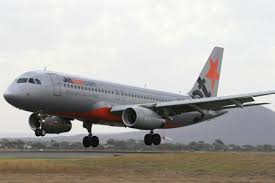
Qantas low cost carrier Jetstar Airways is set to fly Darwin to Manila on a thrice-weekly A320 services early 2011, as part of its pan Asia strategy.

The airline will fly on February 9 and every Wednesday, Friday and Sunday. Introductory fares to the Philippine capital is on sale at $99 each way. Thereafter, normal fares will start from $360, including luggage and taxes, and still below the $900 starting prices as charged by Qantas and Philippine Airlines for the route sectors.

Jetstar will also start four new services a week from Darwin to Bali, on top of its existing Darwin-Denpasar daily service and a range of non-stop flights to Ho Chi Minh City, in Vietnam which it served four times a week.

The airline intends to connect Darwin's Filipino community and those living in the Northern Territory with its home country and provide a transport pipeline for its foreign workers working in oil and gas exploration industry.

Jetstar plans to provide connecting services from Melbourne, Sydney and Brisbane via Darwin after the Qantas group resolved landing fee issues with Northern Territory Airports (NTA) in exchange to further develop Darwin International Airport into a long-haul and domestic hub.

"This announcement is closely aligned to Jetstar's pan Asia strategy and the continued sustainable expansion of Jetstar with a strong and even better connected route network between Australia and South East Asia," Jetstar Group CEO, Bruce Buchanan, said.

Jetstar's dispute with the airport had been two years running, during which time the airline had threatened to move its north Australian hub to Broome.

The new pricing agreement gives both the airport operator and Qantas Group “the certainty they need [to] grow their businesses and provides us with the confidence to proceed with our terminal expansion,” says airport Chief Executive Ian Kew.

The Qantas Group won't however disclose details about the new agreement with Darwin Airport but it is understood to cover amount Jetstar will now be charged on the use of the airport for international transit passengers as its hub into Southeast Asia.

Charges have been peg to more than $80 for a return passenger trip, that includes security fee which is highest in Australia.

"The proposed future linking of Darwin and Manila will see Jetstar's fledging Australian operations further connect in with Jetstar brand services from Singapore that operate multi-daily to the Philippines capital via our primary Asian hub at Singapore Changi Airport." Buchanan adds.

Following the agreement, the Airport Authority immediately unveiled plans to invest A$100 million (US$97.8 million) in airport facilities over the next 10 years, including a A$33.5 million terminal expansion.

Darwin intends to establish itself as the primary connecting hub for narrow-body operations between Australia and Southeast Asia. Its location on the north coast is ideal for a one stop hub from Melbourne and Sydney all the way to Manila.

Jetstar chief commercial officer David Koczkar said Darwin, interstate, and international flyers would benefit from more choice and service flexibility and greater access for flights into the Northern Territory capital.

"Our intention to operate a future Darwin-Manila service will greatly appeal in the Philippines and importantly locally in Darwin where a new direct link to Asia can support ongoing business investment and where the Filipino-Australian community is amongst the largest in the city," Mr Koczkar said.

Consuelo Jones, spokesperson for the Philippine Department of Tourism - Australia/New Zealand, was buoyed by the new services.

"The Philippines totally welcomes the increase in direct services from Jetstar - it will definitely boost our visitor numbers," Ms Jones said to e-Travel Blackboard.

"The Department of Tourism certainly sees Australia as one of the major suppliers of inbound tourism to the Philippines. In fact, Australian arrivals to the Philippines ranked sixth in the first half of 2010, posting a 10 per cent increase over the same period last year."

''The essence of making a hub work is for a hub to actually be a hub - to support the ability of people to transfer through and use Darwin as a stopover,'' says Simon Westaway, spokesman for Jetstar.

''The population of Darwin alone cannot support what Jetstar wants to do out of the top end of Australia. We need to be able to leverage the infrastructure, given the high level of investment we've made in the community. We've based the equivalent of four aircraft in Darwin. We have upwards of 200 personnel in Darwin - cabin crew, pilots, engineers and an airport workforce.''

Jetstar already announce that the twice-daily services from Darwin to Singapore will be reduced to once a day in December when the airline begins a Melbourne-Singapore service using 303-seat Airbus A330-200s .The Qantas Group also announced plans to reintroduce CityFlyer services between Melbourne and Darwin from May 2011, with an initial three return flights per week.

The Qantas Group accounts for 85% of the traffic at Darwin.

RBA ending codeshares with PAL

October 16, 2010

Bandar Seri Begawan - Royal Brunei Airlines (RBA) and Philippine Airlines (PAL) has assented to end their code share agreement on October 31, 2010 with the the last code shared flight scheduled on October 30.

Royal Brunei Airlines has decreased flights to seven times weekly to Manila amidst competition from budget carrier Cebu Pacific which started flying to Bandar Seri Begawan on August 21.

"Although both carriers have mutually agreed to end the code share arrangement, we still look forward to working with Philippine Airlines in the future and we wish them great success in their future endeavours." says Raiz Moiz, RBA Executive Vice President of Commercial and Planning.

Passengers with current bookings are directed to call both PAL and RBA for further inquiries as to how this termination may affect their future trip after October. -- with news from Borneo Bulletin

PAL realigning Australian operations

Temporarily suspends Brisbane

October 15, 2010

By Mary Ann LL. Reyes

Philippine Airlines (PAL) is realigning its Australian operations starting with the temporary suspension of flights to and from Brisbane effective Oct. 31, 2010.

Consequently, the flag carrier’s five times a week flights to Melbourne will be adjusted to thrice weekly, while flights to Sydney – one of PAL’s most popular Australian destinations – remains unaffected with five times weekly services, PAL spokesperson Cielo Villaluna said.

She explained that the decision to temporarily halt its Brisbane services was due to marketing considerations.

Passengers to be affected by the flight realignments shall be properly notified by PAL’s contact center and advised on the best options to proceed to their respective destinations, she said.

Villaluna stressed that Australia remains an important market for PAL, recognizing the route’s growth potential as a vital component of their long-term commitment to the island-continent.

However, market conditions and the onset of the lean season necessitated some changes in the number of destinations and frequency of flights the flag carrier mounts to Australia, she pointed out.

Meanwhile, airline passengers from the Philippines bound for the United States are now required to provide detailed personal information before taking their flight in compliance with the Secure Flight Program, a new security measure being implemented by the US Transportation Security Administration (TSA) and Department of Homeland Security (DHS).

Starting today, US-bound PAL passengers will be asked to give their complete name (as reflected in the passport), date of birth, gender, nationality, passport number, visa number and address at destination in the US.

These information will be asked when booking for a flight or buying a ticket either by phone through PAL Reservations, the PAL website, at any PAL ticket office or any accredited travel agent.

The information shall be transmitted by PAL through its Departure Control System (DCS) for matching against the US DHS database. Results of the data matching would be reflected in the PAL DCS when a passenger checks in for the flight.

The Secure Flight Program requires specific data from passengers of all flights (including code share flights) by US-based and non-US-based carriers that fly to/from/within/over the US, including Guam and Saipan.

The program seeks to facilitate passenger handling by screening out those tagged as inhibited/prohibited from entering the US, starting at point of origin.

Passengers who would be misidentified for someone else in the database and eventually cleared to take their flight should submit a Redress Control Number (RCN) issued by the US DHS. Affected passengers are advised to always give their RCN in subsequent bookings or ticket purchases to avoid any future mismatch and inconvenience.

According to the US TSA website, “Secure Flight is a behind the scenes program that enhances the security of commercial air travel through the use of improved watch list matching. By collecting additional passenger data, it will improve the travel experience for all airline passengers, including those who have been misidentified in the past.”

PAL is implementing the program starting Oct. 15 for flights beginning Nov. 1, 2010.

The company added that passengers who may experience being unfairly delayed or prohibited from boarding the flight due to the new security program, should direct their complaints to the US DHS Traveler Redress Inquiry Program (DHS TRIP).

The total number of passengers from Manila to the US, including Honolulu, on PAL flights for the fiscal year beginning April 1, 2010, reached 303,980 to date.

Tax killing Manila bound Long-haulers?

October 13, 2010


The International airline alliance is threatening to pull out operations in Manila should the Philippine government continue with its discriminatory tax policy against its members.

The Board of Airline Representatives, whose members include 30 air carriers that have international connections from the Philippines, have been up in arms against the government's discriminatory tax regime that favored heavily domestic carriers, says Steven Crowdey of Delta Airlines.

"No other country burdens foreign carriers with revenue taxes, taxes that are generally in excess of the wafer thin airline industry margins" said Crowdey.

International air carriers used to be covered by a 3-percent common carrier tax, but they are now also subject to a 12-percent value added tax.

"These taxes are not applied to Philippine carriers, meaning the operating cost playing field is far from level" Crowdey adds.

Foreign carriers have been complaining for the past 12 years of the Philippines discriminatory taxation regime saying that the common carrier tax and gross Philippine billings were a disincentive for airlines to fly through Manila.

The government has been collecting airline revenue taxes, not just on revenues generated in the Philippines but also on tickets sold in other counties too.

The group says the carriers that have stopped flying into Manila are British Airways, Air France, United Airlines, Alitalia, Swiss International, Aeroflot, Garuda Indonesia, Egypt Air and Pakistan International Airlines.

According to Crowdey only the Philippines charges such taxation system.

“By contrast, neighboring countries’ airports and agencies often offer incentives for carriers to fly into them.” he said.

The airline association also laments the Burdensome Customs, Immigration and Quarantine charges, where multiple airlines all pay for the same meal, same transport and same overtime for inspectors.

"Not having a 24/7 CIQ service and still incurring overtime charges for anything outside "normal" office hours belongs to a byegone era" Crowdey explains.

The government has been talking about tourism promotions, yet it has burdensome and costly processes to collect tourism taxes.

"Tourism has huge potential to provide ample and rewarding employment. Instead the only new flights to Manila are catering for the ever increasing needs of the OFW’s for which there is not employment in manufacturing and tourism at home with their families in the Philippines" says Crowdey.

The foreign airline sentiments has been echoed by no less than the government's Tourism Secretary Alberto Lim who admitted during the House Committee of Appropriations budget hearing of the 2011 proposed P1.3-billion budget for the Department of Tourism held at the House of Representatives.

Lim attributed the situation to the country’s limited tourists inflow because of the hefty Common carrier tax, Gross Philippine Billing Tax and CIQ overtime charges that the Philippines imposes on foreign airlines.

“We are the only country in the world that implements this system. This forces the American and European airlines to withdraw their flights because they found better opportunities in other countries” Lim was quoted as saying.

Meanwhile, KLM has threatened to pull out of the country late last month because of its dispute with the governments inland revenue on the common carrier tax.

The Dutch carrier is the only remaining airline to fly from Europe. Lufthansa, British Airways, Air France, Alitalia, Swiss International, and Aeroflot has already left the country.

The Philippine Chamber of Commerce and Industry (PCCI) has been pushing the Aquino government to rationalize tax policy and eliminate the common carriers tax and the gross Philippine billings charges that increase transport costs to the country.