PAL flies Toronto

Direct Flight Commences November 28


September 1, 2012

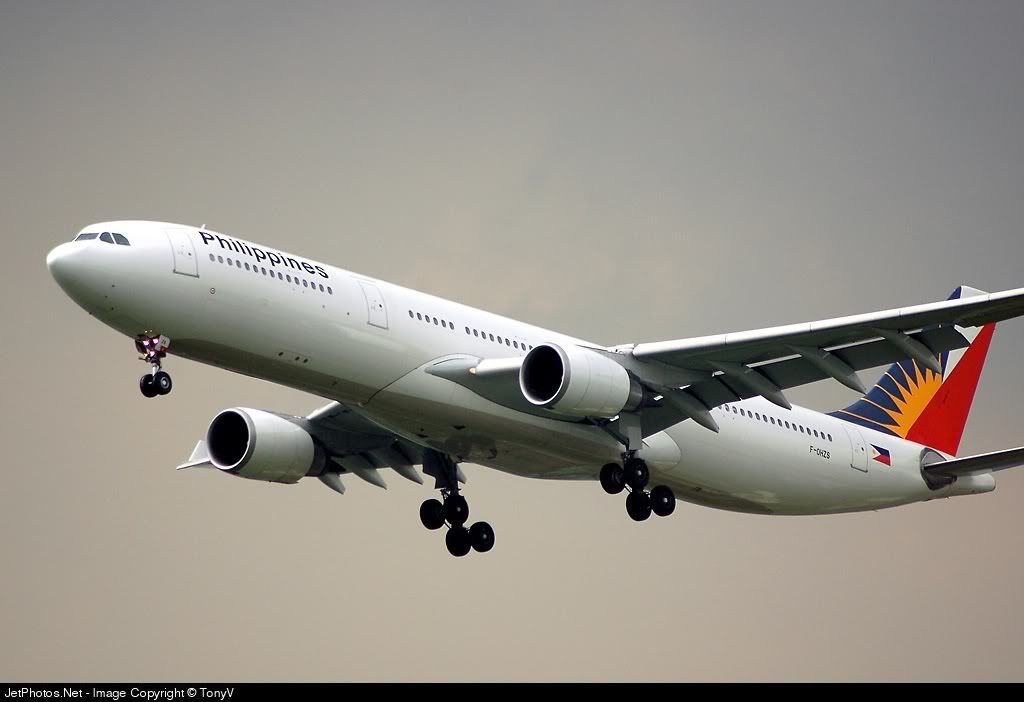
Flag carrier Philippine Airlines is re-introducing flight to Toronto direct from Manila starting November 28, 2012, says PAL president Ramon S. Ang.

PAL recently obtained authority from Canadian government to fly to Toronto, amidst FAA restriction down south of the border.

Toronto is Canada's largest City with a population of 2.6 million.

PAL will fly from Manila to Toronto thrice a week every Monday, Wednesday, and Friday, using its latest plane, the Boeing 777-300ER. Meanwhile, Vancouver will have its frequency reduce pending negotiations with Canada's Department of Transport for additional entitlements to the west coast good for daily flights. 

Vancouver will have direct flights four times a week every Tuesday, Thursday, Saturday and Sunday via Boeing 777-300ER from Manila while flights to Las Vegas will fly direct starting November 2012 thrice a week using Airbus 340-300 planes.

Ang also said that they will introduce premium economy seating and full-flat seats in its business class section of its upcoming 777 and 330s.  The Boeing 777 is intended for long-haul routes while Airbus 330 will be the airline's backbone in regional routes.

DOTC Bids Tacloban and Dipolog Airport

In a Contract worth 319 Million Pesos


August 31, 2012

Tacloban Airport to construct new apron for new terminal
The Department of Transportation and Communication (DOTC) is inviting Bidders for the improvements of Tacloban and Dipolog Airport in a contract valued at 319 Million Pesos.

Tacloban Airport was funded with an Approved Budget Contract (ABC) in the amount in excess of 251 Million Pesos while Dipolog Airport has an ABC valued at almost 67 Million Pesos. Total contract cost for Dipolog Airport Project amounts to 122 Million Pesos to include the P55. million construction of a new Dipolog Aiport passenger terminal building.

Improvement project at Tacloban covers construction of new 33,332.00 sq. m. apron and 17,098.00 sq. m. taxiway in preparation for the construction of new terminal building which will rise at  the 8th busiest airport in the country. Also for completion is the shore protection in the northeast side with 622 linear meters as well as drainage system. 

DOTC and City Engineers during actual survey for the 67 Million Dipolog Airport landside development project

Meanwhile, Dipolog Airport will see its apron expanded to more than 8,000 square meters, while its taxiway expanded by 23.00 m. to conform to international ICAO standards. The ramp will also be expanded by 2,673 sq.m. Also for construction is shoulder widening and river control protection equivalent to 164 linear meters as well as drainage system.

Tacloban registered 1,008,553 passenger traffic from Manila and Cebu. It is expected to handle flights from Iloilo later this year, while Dipolog registered a total of 165,163 passengers in 2011 from both Manila and Cebu, and is poised to reach the 200,000 mark this year, with the introduction of Davao as its third route.

Airphil Express to Take Over PAL Domestic

As PAL intends to build new airport


August 31, 2012

Philippine Airlines (PAL) is set to surrender most domestic operations to its low cost subsidiary in a major relaunch to be announce soon, says airline president Ramon Ang after the company’s stockholders’ meeting yesterday at the Century Park Hotel.

Airphil Express will be be re-branded to carry the airlines name. “It will be called PAL Express. There won’t be Airphil Express anymore,” said Ang at the press conference.

PAL Express will be flying all the routes of PAL effective October 29, except seven major points in the country. Dubbed as "Project winter", PAL will fly only to Cebu, Davao, Bacolod, Iloilo, Kalibo, Laoag, and General Santos from Manila.

He said the board has approved the rebranding of Airphil Express to PAL Express in consonance to the investment agreement with conglomerate San Miguel Corporation (SMC) which Ang heads.

The Airphil Express brand is owned by Air Philippines Corp., which used to be 99% owned by the Lucio Tan group before substantial shares were brought by San Miguel in April, while PAL Express is owned by Philippine Airlines. Both airlines used to be controlled by PAL Holdings of Lucio Tan before the entry of SMC. San Miguel paid $500 million for a management control 40-percent stake in PAL and 49-percent stake in Air Philippines.

The Board Resolution is awaiting regulatory approval from the Securities and Exchange Commission (SEC).

PAL AIRPORT

Meanwhile, the flag carrier has dropped its plans to move to Clark International Airport due to infrastructure inadequacies which when build now would be ready only in 2030 at the earliest possible time, thereby limiting the growth potential not only of the airline but to the entire aviation industry in an island archipelago with 105 million people.

To address the government shortfall, SMC contemplates plan to put up a new international airport in Bulacan faster than how Clark is being built to accommodate its massive fleet of 100 planes by 2020. The proposal will be submitted to the President by the first quarter of next year for regulatory approval.

The airline believes that relocating to another airport outside Clark International Airport, funded by them is a better option for the company' s growth as Clark suffers from arrested development brought by project delays and cancellations.

Ang said that their envisioned international airport would be situated in a 2,000-hectare property capable of four parallel runways with maximum capacity of 100 million passengers housed in the most modern designed terminal following the footprints of Incheon Airport in South Korea, voted as the best International airport in the world by Airports Council International (ACI).


It is projected to be finished within 3 years from regulatory approval and should be ready by 2016 with two  initial runways 4K in length capable of 62 landings and take-off every hour, or 31 landings or take-off at either runways. The terminal is expected to accommodate 30 million PAL passengers.

"The proposed international airports could handle 1,500 events per day putting the Philippines at par with the airports in Sydney, Australia as well as Heathrow in London." says Ang.

PAL said that NAIA will not be a better place by 2016 if the growth projections at the premiere airport continues. The airline exclusively occupies Terminal 2 which is already suffering from over capacity.

Ang clarified that the proposed international airport would co-exist with Clark and Ninoy Aquino International Airport (NAIA), saying it will be up to Department of Transportation and Communications (DOTC) how they make use of Clark after their proposal is approved.


Ang revealed that the company would spend US1 billion to put up just the airport alone with additional equity infusion of $500 million to be taken from existing shareholders which would be enough to raise the financial requirement of the project.

Ang hinted the financing of the airport to be funded by soft loan from the Export-Import Bank of Korea with Korean contractors preparing detailed engineering and building of the proposed international airport.

San Miguel Corporation operates Caticlan Airport, the country's busiest domestic airport by traffic movements. It is also the Philippines largest conglomerate with more than US$600 million in net revenues.

5J Slipping fast against 2P Onslaught

As Domestic Traffic grew 13% on First Half

August 28, 2012

The JG Summit controlled airline accounted for a total of 4.99 million people in the first half, up 17 percent over last year. San Miguel Corporation's Airphil Express is shadowing closer at a fast 29 percent surge in domestic passengers to 2.39 million with seat increase at 36 percent to 3.286 million.
Low Cost Carrier Cebu Pacific may be the market leader today but its dominance is being eaten slowly by its fiercest rival Air Philippines as both airlines define the future of Philippine skies.

Cebu Pacific airline CEO Lance Gokongwei is feeling the heat as shares of Cebu Air slid by 2.22% to P61.40 a piece after Philippine Airlines (PAL) up the tempo on domestic supremacy ordering 36 narrow-body jets for its subsidiary Airphil Express. They got delivery schedule as close as January 2013 while Cebu Pacific is withdrawing A319 on its fleet sold to Allegiant Air.

The airline said that it needs to rethink its strategy to secure more narrow body jets, a tactic it believes could be needed to defend its position against a resurgent PAL.

"Cebu Pacific will revisit its fleet plans to determine what additional lift it may need to supplement its existing orders,” CEO-advisor Garry Kingshott said.

Philippine airlines ordered 56 narrow and wide bodies from Airbus aimed to upgrade services amidst slot restrictions at Manila's Ninoy Aquino Airport. 

The number of passengers on domestic flights is expected to grow further and with slotting problems, upgrading the fleet is the only option to serve more amidst aggressive airline expansion that resulted to lower ticket prices.

The Civil Aeronautics Board (CAB) showed that there were 11.017 million domestic passengers using NAIA from January-June period of 2012, equivalent to 13.33 percent year on year growth. A total of 14.64 million seats were offered by airlines during the six-month period, up from 12.12 million last year.

Despite fierce competition domestic airlines manage to grow the market giving the industry an average load factor of 75 percent, which means three of every four seats on every flight was occupied.

Garry Kingshott expressed concern that they failed to grow with the market and is now rethinking its strategy as it may try to secure more narrow body jets, to defend its market share against Philippine Airlines low cost subsidiary.

While Cebu Pacific added 25 percent more seats in the first half of 2012 equivalent to 6.37 million their load factor fell from 84 percent to 78 percent. Its average ticket prices also fell 3.7 percent to P2,257 per person due to stiff competition among airlines.

Philippine Airlines meanwhile continued to lose market share as its passenger count fell 3.8 percent to 2.29 million in the six-month period. The company also reduced its number of seats to 3.046 million from 3.101 million. Load factors were also down 2 percentage points to 75 percent.

But PAL’s lower numbers resulted to positive return earning them $1.7 billion in gross revenues last year while Air Philippines hauled in $270 million. PAL passenger deficit was also offsetted by the tremendous growth of passengers served by its low cost subsidiary, Airphil Express in the first half of 2012.

The PAL unit reported a 29-percent surge in domestic passengers to 2.39 million as seats increased by 36 percent to 3.286 million.

On the other hand, Southeast Asian Airlines posted a steep decline in domestic passengers to 17,565 in the first half from 97,326 last year, mainly from turbo prop operations as it abandon non-profitable routes. Its services to trunk line routes in the second half is expected to go up with the arrival of three A320's for domestic run.

Zest Airways meanwhile had 1.26 million domestic passengers in the period, up slightly from 1.14 million last year.

AirAsia Philippines on the other hand carried 60,381 passengers in the first half after starting operations in March at Clark. CAB notes that AGP had the industry’s worst load factor at 45 percent.

PAL Orders Airbus

As Boeing Offer Crumbles


August 28, 2012

Philippine Airlines announced orders for 10 new generation Airbus A330-300, 10 new generation Airbus 321 neo jets, and 34 Airbus 321 in a deal valued at US $7 billion, Ramon Ang, President of Philippine Airlines said in a press briefing today.

"The aim is to purchase 100 new aircraft in total", PAL president Ramon Ang said. Ten new aircraft has been delivered to the airline with the latest addition being the Boeing 777-300ER. Another one is set for arrival in November and 2 more 777 will join the fleet in 2013.

The 54 aircraft orders are part of the first phase of a multi-year refleeting and modernization plans, which involve the purchase of up to 100 new planes.

"We still have about 46 aircraft to go, we have the option about whichever types of aircraft to go. The capacity of the initial 54 aircraft is already more than what Philippine Airlines and Air Philippines today's capacity" said Ang.

Another deal for twenty long range wide body jets are expected to be announce soon with both Airbus and Boeing tightly on a race between Triple Seven and Three Fifty.

PAL is currently looking at are the 777-300 ER and the upcoming 777-X as well as the Airbus 350-900 and 350-1000 programme.

"Our intention is to buy up to 100 aircraft, 26 of that will be long range wide body," Ramon Ang said.

The new generation 240-tonne A330-300 recently announced at the 2012 Farnborough Airshow will start delivery next year as Boeing failed to sell its latest plane, the Boeing 787 series planes due to delivery issues with the aircraft manufacturer.

PAL has been looking closely at the Boeing 787-900 which they intend to buy rather than lease but suffered setbacks on its waiting time. Boeing also failed to win orders for its Boeing 737-900 planes as Airbus jockeyed its position to convince PAL to buy its narrow-body jets instead.

A source inside the airline disclosed that Airbus secured delivery slots in 2013 for PAL and that spells a huge difference. Consequently, Ang announced the first delivery to be done in January 2013 consisting of 4 A330s and 6 A321s.

“We are extremely pleased that PAL has placed its confidence in our aircraft to meet its future requirements,” said John Leahy, chief operating officer, Customers, Airbus.

“This announcement demonstrates once again the popularity of both the A320 Family and the A330, which remain leaders in their size categories in terms of operating economics, reliability and passenger comfort.” says Leahy.

Airbus said the A320neo Family incorporates latest-generation engines and large wingtip device called the"Sharklet" to deliver 15 percent fuel savings as compared to its old model.
Philippine Airlines today inked with Airbus the biggest aircraft deal in Philippine history involving a firm order for more than 50 single-aisle and wide-body jets, with a list price of approximately US$7 billion. Photo shows PAL and Airbus officials during the signing ceremony at Century Park Hotel, from left, PAL vice chairman and treasurer Harry C. Tan, PAL Chairman Dr. Lucio C. Tan, Airbus Senior VP for Asia Jean Francois Laval and PAL President Ramon S. Ang.

Ang said that both Airbus and Boeing was in a tight contest until delivery schedule was laid in the table. The PAL CEO expects delivery of the airline's new order to be completed in three years with the new generation A330 joining next year. 

The A321-200 jets are expected to join the fleet of Airphil Express also starting in the second half of 2013 for trunk-line upgrade and regional destinations as Manila Airport closes airport slots for new aircraft. The A321 neo for PAL is expected for delivery in 2016. Engine selections for the aircraft is heavily favored on CFM International LEAP-X although have not been announced.

Meanwhile,  the new A330-300 will wear PAL colors to fly to "Hong Kong, Australia, Japan, Singapore, Thailand, The Middle East and India.

The carrier will start retiring its old Airbus wide bodies starting next year and replace them with a new fleet to compete more effectively on the long-haul markets. 

Listed PAL Holdings Inc.recently approved a capital increase that would allow it to issue new shares to raise 17 billion Philippine pesos ($403 million) for fleet acquisition. It re­ported a com­pre­hen­sive net in­come of P489.2 mil­lion. To­tal rev­enues for the first quar­ter of the cur­rent fis­cal year amounted to P20.8 bil­lion or 5.8 per­cent higher than last year’s P19.6 bil­lion.

PAL prods gov’t for Canada air talks


By Cliff Harvey C. Venzon
Reporter

August 22, 2012

The flag carrier aims to offer flights to Toronto by October and has asked for air talks to be conducted.


FLAG CARRIER Philippine Airlines (PAL) has asked the government to conduct air talks with Canada, firming up preparations for earlier announced plans to launch more flights to the North American country by October.

“PAL asked us as if we can conduct air talks with Canada,” Civil Aeronautics Board Executive Director Carmelo A. Arcilla said in a telephone interview last week, noting that the request was made by PAL’s representatives. “Well, Canada has always been a growing market for us.”

This, after PAL President Ramon S. Ang told reporters last month the airline is looking to launch more flights to Canada by October, which is one of the ways seen to revert back the company to profitability.

Already, the country has seven frequencies to Canada, which are used by PAL for its daily flights to Vancouver.

Air rights negotiations with Canada is not the regulator’s priority this year, Mr. Arcilla said, but it is possible to seek temporary additional frequencies.

“Our priority for this year is South Korea, Singapore, Australia, United Arab Emirates, Kingdom of Saudi Arabia, and Thailand,” Mr. Arcilla said. “We may conduct an air talks with Canada early next year.”

The government might instead ask for “extra section flights” from Canadian aviation authorities in the meantime, to give PAL temporary frequencies.

In any case, Mr. Ang had said that PAL might just adjust its offerings to four flights to Vancouver and three flights to Toronto per week in case frequencies will remain at just seven per week by October.

Aside from Canada, Mr. Ang earlier said that PAL will be launching more flights to US and revive flights to Europe, such as Paris and London by next year, as the company is upbeat that Philippines will soon regain its Category 1 status.

In January 2008, US-based Federal Aviation Administration (FAA) downgraded the Philippines to Category 2 from Category 1 following a safety audit on November 2007, thus prevented local carriers from expanding operations abroad, such as in the United States.

In the wake of the FAA downgrade, the International Civil Aviation Organization designated the country as “a significant safety concern” in December 2009. The following year, the European Union banned Philippine carriers from flying to Europe.

PAL had further said it will implement a massive aircraft-route realignment to match the aircraft capacity with the carrying requirements of various destinations.

The move, Mr. Ang said, is expected to result in $300 million worth of annual fuel savings particularly as the company aims to narrow its deficit by yearend.

For its fiscal year ending in March 31, PAL Holdings, Inc., the flag carrier’s parent, posted a P3.63-billion loss attributable to equity holders of the parent company, a reversal from a P2.533-billion income realized last year due to rise in fuel cost.

To prepare for the long-haul flights to key cities in the world, the company has acquired its third Boeing 777-300ER worth $247 million, while another will come in December and two more next year.

Shares of PAL Holdings fell by 1.41% to P6.95 each on Friday.

Rescuers Rescued

Navy chopper in search ops force-lands


By Florante S. Solmerin 


August 23, 2012

Engine trouble on Tuesday struck a Navy helicopter helping in the search for Interior Secretary Jesse Robredo, forcing its two pilots to execute an emergency landing at the shoreline in Buenavista village in Donsol, Sorsogon, Navy spokesman Col. Omar Tonsay said.
Diving helicopter. Fishermen help Navy servicemen salvage a Bulco attack helicopter that crashed into the waters near the shoreline in Sta. Cruz, Donsol, Sorsogon, while searching for the wreckage of the plane carrying Interior and Local Government Secretary Jesse Robredo. DANNY PATA

“It was a precautionary landing. The helicopter had some engine trouble,” Tonsay said.
The chopper was part of the aircraft deployed in the search for Robredo and Jessup Bahinting and Napalese Kshitz Chand, the pilots of the ill-fated  Seneca Piper plane that crashed on Saturday off Masbate.

“The two pilots and their passengers were unhurt,” Tonsay said.

“The chopper landed safely and remains intact. It was already inspected to determine the cause of the precautionary landing.”


Aviatour Piper Down

DILG Secretary Dead, Aide survive

August 18, 2012


A Piper Seneca PA 34-200 (RPC-4431) plane owned by Aviatour, a Cebu-based aviation company crashed Sunday off the waters of Masbate killing all but one passenger.

The plane was piloted by Jessup Bahinting, Aviatour chairman and CEO, and Kshitiz Chand, a Nepalese national, and was supposed to fly to Naga City frorm Mactan Cebu International Airport. The secretary’s aide, Senior Inspector Jhun Abrasado survived and was rescued.

The plane was on final approach to Masbate Airport before it fell short of the runway after declaring distress call and emergency landing around 4:30 PM.