Air Asia Barking Up Wrong Tree

Be Careful What You Wish For!

13 August 2014


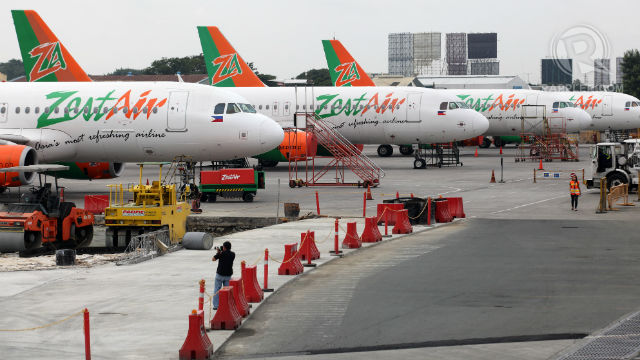
AirAsia Group Chief Executive Officer Tony Fernandes got a dose of his own medicine when he criticized Manila International Airport Authority (MIAA) in the Philippines for not letting them used Terminal 3 of NAIA.

"I don't think AirAsia is being treated fairly," Fernandes told ABS-CBN news in Kuala Lumpur during the launch of AirAsia's newest service, the Premium Flex.

Air Asia subsidiary in the Philippines operate at the Ninoy Aquino International Airport (NAIA) Terminal 4.

Fernandez argued that they were being discriminated in Manila as if they are being "blocked" from growing in the country.

But MIAA General Manager Jose Angel Honrado got the facts straight at him when he said that Air Asia being at Terminal 4 was the airlines decision and not of the Authority. 

Southeast Asia Airlines also opted to stay at Terminal 4 he said.

Honrado explained that Air Asia doesn't have a prime slots in Manila's Airport until they bought up Zest Air of Alfredo Yao which in turn provided them the slots.

"Maybe he should know that it was the former Zest Air who asked MIAA to allow them to continue to operate at Terminal 4 when they were offered Terminal 3 before," Honrado said.

A slot is a landing right granted by the airport authority to land and pick up passengers and cargo at the airport, usually at specific time frame. A busy airport has a coordinated landing slots to improve airport efficiency. 

Landing slot at NAIA is coordinated by Airport Coordination Philippines, an affiliate company of Airport Coordination Australia which coordinates arrival and departure time.

"The Airport authority does not have a say in airport slotting as they are handled by another company. If all the slots are full, you can't do anything about that other than buy those airline company that owns them" says Honrado.  

The manager said that Zest Air only has few slots in Manila and Air Asia cannot have more than what has been granted to Zest Air.

"A spring cannot rise from its source," says the manager."He should have bought Seair as well when they have the chance to get more slots in Manila"

 "I suggest he focus his attention in ensuring safe flight operations and sound financial management," Honrado adds, suggesting the numerous infractions his airline have with the Civil Aviation Authority (CAAP).

CAAP suspended Zest Air last year due to various safety violations, and is again being investigated for flying a defective plane in disregard of passenger safety rules.

The manager also suggested Fernandez to go back to Clark International Airport where slotting is never a problem.

"The airline has big plans in the past for the Philippines, yet left the very airport that does not have problem with slotting."

PAL Sends Two A330 To Europe For Mercy Flight

For The Love of The Filipinos
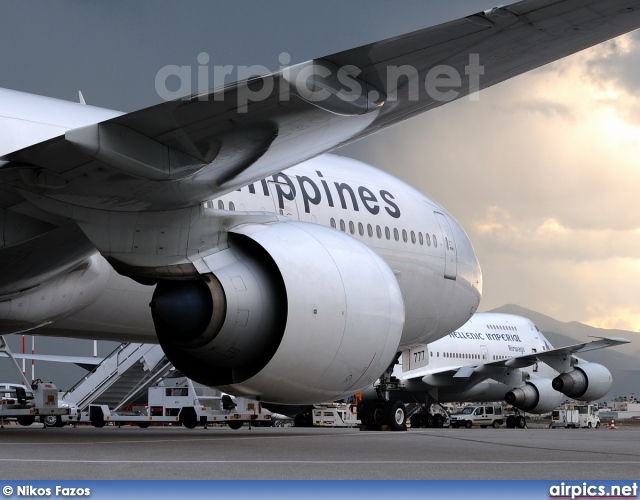
Philippine Airlines B777-300 (RP-C7777) at Crete International Airport in 2011. Images courtesy from Nikos Fazos.
9 August 2014

Flag carrier Philippine airlines PAL will send two Airbus A330-300 planes to Europe for mercy flight back home of stranded overseas Filipino working in strife-torn Libya.

The mercy flight is being chartered by the Department of Foreign Affairs (DFA) to the island of Malta, a European Union country in the Mediterranean Sea, on August 12.

The DFA was planning to charter both Boeing 777-300 from PAL but the airline said their new mono-class Airbus A330-300 carries more passenger at 430 than the Boeing triple seven at 350.  The government previously chartered two B777 flight to Crete, Greece three years ago.

PAL said its new A330 can fly fully loaded from Malta to Manila and it would take the airline about ten hours to fly there as earlier flown by the B777 to Crete in Greece but much farther. 

The DFA issued an order for the “mandatory” evacuation of all Filipinos in Libya last month, after the beheading of a Filipino construction worker abducted by unknown suspects in the eastern city of Benghazi.

That government said it would try to evacuate all of the 13,000 Filipino migrant workers in Libya but at present only 1,036 have registered to leave Libya and board a sea vessel capable of accommodating 1,500 passengers.

DFA said the transported passengers will be ferried to the Malta International Airport where charter flights from PAL will be waiting. 

The charter will last for three days and cost Filipino Taxpayer US$6,000 per passenger. But DFA spokesman Charles Jose said the national carrier has agreed to bring down the airfare cost to $1400 per person.


Sokol Helicopter Crashes In Marawi

8 August 2014

By Roel PareƱo and Alexis Romero


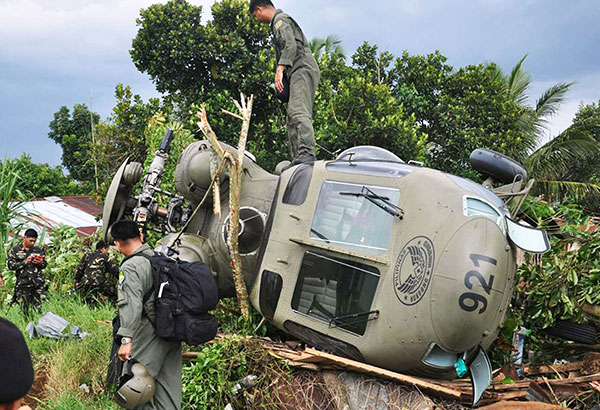
Two persons were hurt after a Sokol helicopter carrying an Army general and providing escort to Cabinet officials crashed in Marawi City yesterday.

Army division spokesman Capt. Franco Suelto said the pilot managed to maneuver the ill-fated helicopter and saved 11 passengers, including Maj. Gen. Ricardo Visaya, chief of the 4th Army Division; 4th Infantry Division Inspector-General Col. Alexander Macario, five staff members of Defense Secretary Voltaire Gazmin and four crew members, including the two pilots.

Injured were Staff Sergeant Darius Valdez, crew of the Sokol 921 and Santiago Savedra, a bystander who was hit by debris during the crash.

The helicopter crashed at 2:23 p.m. shortly after takeoff from the 103rd Infantry Brigade headquarters in Marawi City.

“The Sokol helicopter barely took off when the incident happened. It was fortunate that the pilot managed to maneuver and made a forced landing,” Suelto said.

The helicopter, a backup for another Sokol carrying Gazmin, Interior Secretary Manuel Roxas II and Energy Secretary Jericho Petilla, reportedly lost control after it was buffeted by heavy winds.

“As a result of the crash, one crew from the chopper was wounded in action while another civilian was injured,” Armed Forces public affairs chief Lt. Col. Ramon Zagala said.

The helicopters were en route to Cagayan de Oro City.

The other Sokol carrying the Cabinet officials arrived safely at the Langundingan Airport in Cagayan de Oro.

Armed Forces chief Gen. Gregorio Catapang has ordered Air Force chief Lt. Gen. Jeffrey Delgado to determine the cause of the accident.

Visaya said he was in Marawi City to accompany Gazmin, Roxas and Petilla as they try to solve the power problems in the area.

He said the helicopter appeared to have difficulty flying around two to three minutes after it took off, at about 15 meters above ground.

“The helicopter turned left and then crashed. It did not explode so no one among us died,” Visaya said.
Suelto added the helicopter that crashed was among the eight Sokol delivered in 2012 to the Philippine Air Force. – With Cecille Suerte Felipe, Edith Regalado

Leaving Too Soon

Saudia Misses Taxiway

6 August 2014

A Saudia Airlines Boeing 747-400 plane bound for Riyadh in Saudi Arabia was stuck in the mud after turning the plane too early as it prepares for take-off yesterday Evening.

The plane was ordered by air traffic controllers to hold short at Taxiway H1, a crossing taxiway heading to runway 24 around 7pm says the Civil Aviation Authority of the Philippines (CAAP) before it turned prematurely causing its left landing gears to be dragged to the heavily soaked grass after torrential downpours.

CAAP has already issued on Tuesday night Notice to Airmen (NOTAM) allowing only narrow body aircraft like Boeing 737 and Airbus 320 to use the blocked runway on the Ninoy Aquino International Airport (NAIA) for takeoff and landing.


Echo one was activated as holding point for runway 24 take-off says CAAP. 

The Saudia plane was cleared at the taxiway H1 after midnight, and was towed to Lufthansa Teknik for checks.
 

Several airlines operating widebody aircraft were diverted to Clark last night due to the incident and was allowed to fly Manila early this morning. Affected flights were Philippine Airlines, Cathay Pacific, Delta, ANA, Emirates, Korean Air and Singapore Airlines.

Terminal 2 Expansion Set


2 August 2014

After completing Terminal 3, the Transportation Department has formally announced that it will be expanding the Aeroports de Paris designed Ninoy Aquino International Airport (NAIA) Terminal 2 next year.

DOTC Secretary Joseph Abaya said on Friday they are already starting the groundwork of Terminal 2 expansion project by constructing the apron in front of the Philippine Village Hotel to accommodate the growing wide body fleet of Philippine Airlines.

Terminal 2 building expansion however has to wait for a year or so says Abaya who said there are still legal issues, primarily valuation and compensation, that needs to be resolve involving the Philippine Village Hotel building which is earmarked for demolition.

The Centennial Terminal expansion project would cover the north wing and the south wing expected to double the existing terminal capacity from 7.5 million to 15 Million passengers per annum.

Abaya said the south wing expansion project would also cover the demolition of the exiting fuel farm which will be relocated to the Nayong Pilipino grounds, and the construction of airway passenger bridge with 2 way walkalator facility similar to Hong Kong airport above the cargo terminal building connecting Terminal 1 and 2.

Also in the pipeline is the underground causeway and passenger walkway with walkalator facilities connecting Terminal 2 and 3 which PIATCO failed to construct when they amended the design contract of Terminal 3 in 1999.

The underground passageway is however dependent on the opening of the parallel 6-24 runway as it requires closure of the crossing 13-31 runway for the duration of the excavation and construction works.

Abaya adds  the construction of a second parallel runway requires the expropriation of about 600 homes adjacent to the airport boundary.

The Transport Department said the underground construction work may coincide with the future expansion of Terminal 3 to the north, instead of putting up new Terminal 5.

DOTC has been proposing a separate budget terminal similar to Clark Airport that will rise beside Terminal 3 to cater to low-cost carrier dubbed "terminal 5" but President Aquino was not receptive of the idea.

"There is talk of a low-cost carrier terminal 5, but are we better off doing it that way than expand Terminal 2 or 3?" says Abaya yesterday.

Abaya said the expansion project should cover passenger capacity shortfall between 2016 until at least 2025 when the new mega airport would have been built. Construction of the new airport is expected to commence in 2017. 

NAIA managed by the Manila International Airport Authority (MIAA), was the 34th busiest airport in the world with recorded passenger traffic of 32.8 million passengers in 2013.

Delta Axes Nagoya

 Manila - Tokyo - New York Stays

2 August 2014


Delta Airlines has announced that it will be axing one of its B747-400 flights DL629/630 from Manila to Nagoya on October 26 due to poor sales. 

Steven Crowdey, General Manager for Philippines, Australia & Micronesia said the airline is eliminating unprofitable routes and downsizing aircraft on other routes to stay competitive.

Crowdey said they are also cancelling Tokyo - Hong Kong on the same date as they significantly reduce the size of its Tokyo hub at Narita International Airport.

Delta will remove Boeing 747 service from three routes in Tokyo Narita starting September 30, as the airline downgrades Atlanta-Tokyo and Los Angeles-Tokyo as it will be operated by a much smaller Boeing 777-200.  On October 26, the Detroit-Nagoya run will also be downgraded to an Airbus A330-200 service but it will no longer proceed to Manila.

Services from Manila to Tokyo onward to New York on board B747-400 aircraft will not be affected.

Currently, Delta flies almost double daily Boeing 747-400 to New York from Manila through the Tokyo-Narita hub and  five times a week from Manila to Detroit via Nagoya out of NAIA Terminal 3. 

LT Group Offers To Buy Back PAL

At What Price?

1 August 2014

The alliance between the San Miguel conglomerate and Lucio Tan group in Philippine Airlines and its subsidiary PAL Express is over.

San Miguel Corporation (SMC) has confirmed that the Lucio Tan Group (LT Group) offered to buy out the 49% share of SMC in Philippine Airlines and its subsidiary PAL Express in a meeting held this morning.

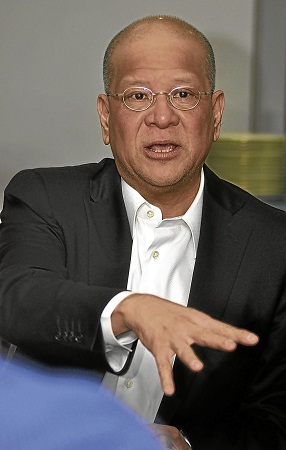
PAL President and Chief Operating Officer Ramon S. Ang said after the meeting that the LT Group presented its buyout proposal to SMC.

“They’re offering to buy us out. Talks are ongoing,” San Miguel President Ramon Ang said.

The LT Group has been pooling funds to reimburse SMC expenditures with PAL which according to them translate to about US$375 million in equity investment plus about $400 million in advances.

The estimates from SMC however showed a price tag worth more than US$1 billion that would be reimburse by the LT Group to cover the U$500 million equity stake plus $750 million advances for the 65 aircraft orders.

In a separate disclosure report to the Philippine Stock Exchange (PSE), both San Miguel Corporation and PR Holdings announced that they would complete the transaction with the LT Group within the third quarter of this year, although it is not yet known whether the LT Group has matched the price presented by SMC.

The disclosure stated that talks between San Miguel Corp. President and Chief Operating Officer Ramon S. Ang and Chief Executive Officer Lucio C. Tan on the ownership of Philippine Airlines, Inc. (PAL) are moving smoothly and is expected to conclude pretty soon.

PAL Holdings also stated in a separate disclosure that the expected net profit of $30 million “has not been taken up in the Board or passed upon by the Audit Committee” in the valuation of the shares to be sold.

 In April 2012, SMC’s wholly-owned subsidiary San Miguel Equity Investments Inc. acquired a 49-percent equity interest in Trustmark Holdings Corp. for $500 million in exchange for management agreement. Trustmark owns 97.71 percent of the airline’s parent firm PAL Holdings Inc., which in turn owns 84.67 percent of PAL through PR Holdings Inc.

SMC then embarked on massive re-fleeting program aimed at acquiring 100 new aircraft to replace its existing fleet. It has so far purchased 65 new aircraft consisting of new 135T A330-300's, A321-200, and A321NEO's, and made advances to the aircraft manufacturer close to a billion US dollars. 

The acquisition of new aircraft is expected to save the airline as much as $400 million from fuel and maintenance costs per year as they retire old planes and operate new ones.

Shoot out over control of PAL

1 August 2014

DEMAND AND SUPPLY
By Boo Chanco

For an airline that has had problems producing a decent profit in years, PAL is surprisingly the object of intense attention from the Lucio Tan Group and San Miguel. Any sane business executive would have gone out of his way to get rid of the airline at the first opportunity.

In a disclosure to the Philippine Stock Exchange early this week, San Miguel confirmed discussions with the Tan group regarding control of the airline. From the start, the partnership between the Lucio Tan Group and San Miguel had been rocky. There are elements within the Tan group staunchly against the partnership with San Miguel. That’s why concluding the deal took so long.

But the 80-year old Tan, known to his business associates as Kapitan, was getting tired of having to constantly recapitalize PAL, good money after bad, and having to deal with serious labor problems. Kapitan, however, loves giving out his calling card that says he is Chairman of PAL. He reportedly told a close associate that he likes the prestige PAL gives him.

But there came a point when the headaches the airline gave him started to get to him. Year after year PAL delivered record losses in the hundreds of millions. If it is not because of an abrupt rise in fuel prices, it is about the uncompetitive cost of operations because of an ageing fleet and high overhead in an era of budget carriers.

Ramon Ang of San Miguel who flies a plane himself, found the idea of running Philippine Airlines fascinating. In many conversations with him, he said he knows how to make the airline profitable. But he said it would take a minimum of $1 billion in fresh investments in a re-fleeting program. Savvy marketing is the other requirement.

For a while, RSA was torn between his desire to run PAL and the reality that it would require so much money to turn it around. He must have seen PAL like an alluring but high maintenance mistress. At one point, he told me he will no longer pursue the chance to get into PAL. Then, he turned around and struck a deal with the Kapitan.


I don’t know if the fact that Manny Pangilinan tried to make a deal with Kapitan on PAL and failed was the trigger for RSA to pursue a deal to a successful conclusion. There seems to be an unspoken rivalry between the two.

The GMA7 deal is another indication of RSA’s drive to win one over MVP. Well, the score is 2-1 in favor of RSA who won PAL and GMA7. But MVP bested him on Meralco, which RSA had to exit shortly after, albeit very profitably. MVP seems to have the upper hand in this contest given how much of a profit maker Meralco is.

Anyway, RSA struck a complicated deal on PAL. He realized how much Kapitan enjoyed being called PAL Chairman so he agreed to buy only 49 percent with Kapitan retaining 51 percent and the Chairmanship. But RSA got full management control of PAL. All Tan relatives including daughter, son and brother who held key positions in the airline exited when RSA came on board.

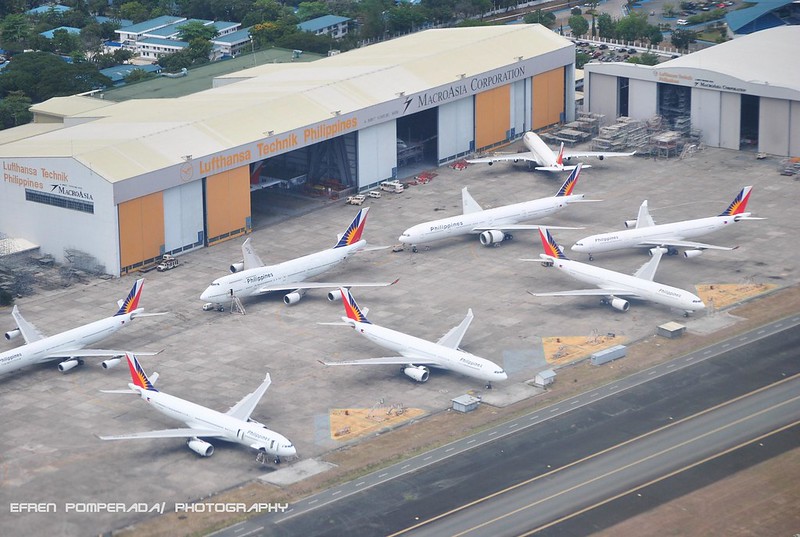
Other relatives, including a Tan son-in-law responsible for other companies that did business with PAL were not too happy. It didn’t help when RSA started to shift the maintenance contract away from Lufthansa Technik that is partly owned by Kapitan. Other services were likewise shifted based on costs and quality of service.

I understand many close associates never ceased whispering to Kapitan how the decision to give management control to RSA was wrong. A persistent story told to Kapitan, according to my sources, is how RSA received commissions from Airbus and Boeing for the re-fleeting program.

Suspected commissions on airplane purchases had always been a sore point in PAL. It will be recalled that similar gossip caused the break-up between Tonyboy Cojuangco and Kapitan shortly after PAL was privatized. Pure gossip led to loss of trust in that early partnership and made Kapitan the accidental airline owner.


When a similar gossip reached RSA, he acted differently from Cojuangco. According to sources close to him, RSA immediately wrote both aircraft manufacturers to send a certified history of commissions they have paid on PAL purchases from way back. The long and short of it is that none were paid to him.

The thing is… Kapitan had been ambivalent about what he wanted to do with PAL. About August last year, we heard that the LT Group wanted to sell its 51 percent to SMC. There was a face-to-face meeting which RSA confirmed to me when we last met. They progressed as far as the drafting of a Share Purchase Agreement.
But instead of signing the agreement, the LT Group submitted a written offer to buy the 49 percent of SMC instead. RSA immediately accepted the offer on the condition that the LT Group will also immediately pay SMC all the advances made for the re-fleeting. SMC’s equity contribution of $500 million when it bought into PAL plus another $500 million in advances all went into the re-fleeting program.

Some months later, or early this year, the LT Group, through UBS, offered to sell its 51 percent to RSA. After full agreement on the Term Sheet, the final draft was submitted to the LT Group early last month with signing being planned shortly thereafter.

But Kapitan vacillated again and advised RSA they would rather buy out SMC and requested for the details of the advances made for the re-fleeting. I heard they are trying to raise the $1 billion from among the various LTG companies.

The last time I talked to RSA a few weeks ago, he said he doesn’t mind it going one way or the other but would rather that a buy-out be completed as soon as possible. A delay is not good for the airline, its customers and staff.

Indeed, RSA said he prefers the shoot-out as agreed between SMC and the LT Group. The shoot-out right is an option in the shareholders’ agreement to resolve deadlocks in the management of the company. Each party can offer a price it is willing to buy out the other. The higher bidder must buy, and the loser must sell, the significant share in the company.

Using the $500-million price tag SMC paid for the 49-percent interest in PAL, Kapitan should get a little more than that for the 51 percent it now owns.  Given the uncertainties in the airline industry, it is difficult to see why the octogenarian Kapitan would want to put up $1 billion of his money to buy out San Miguel and pay SMC advances for the re-fleeting.

Some sources familiar with how Kapitan thinks told me it is likely that pride is keeping the taipan from making a purely business decision on PAL. I heard he also had some regrets giving up control over his tobacco business to Philip Morris. It isn’t just money that’s on the table now. We are about to see the monetary value of ego.

I guess the super rich are really different from you and me. Would you think the prestige of being known as the Chairman and owner of PAL, given its horrible profitability record and iffy prospects, is worth $1 billion? Or would you, specially if you are already 80 years old, rather cash in now while there is someone willing to buy your 51 percent?

The falling out between Tan and RSA must have been bitter because ANC reported last Wednesday that there are overtures for MVP’s MPIC to join LTG in buying out San Miguel. My sources told me it was Wash SyCip, who had always looked down on the unpedigreed RSA, together with a Tan son in law who suggested sounding out MVP.

Kapitan may not realize it but he is playing a high stakes poker game with RSA. He had better have nerves of steel to play the much younger RSA who seems to have more experience and indeed, thrives in competitive high stakes games like this.

Then again, the Kapitan may just do San Miguel stockholders a big favor and take back that albatross of an airline from continuing to depress earnings and future prospects for the diversified conglomerate. Speaking like a stockholder, there are after all, better ways of using that $1 billion to fatten up San Miguel’s bottom line than waiting many years for PAL to become a jewel, if it ever will.

If RSA is really itching to run an airline, it may be easier to put up a new airline the way John Gokongwei did and not be burdened by PAL’s heavy sins of the past.

Boo Chanco’s e-mail address isbchanco@gmail.com. Follow him on Twitter @boochanco