Showing posts with label Air Services Agreement. Show all posts

Turkey Expands Philippine Bilateral

 18 August 2026

The Philippines and Turkey has signed expanded Air Services Agreement (ASA) increasing flight frequency between Manila and Istanbul from 7 times weekly to 14 times a week.

The expanded Memorandum of Understanding was signed on Thursday in Turkey following talks in Istanbul between Türkiye’s Directorate General of Civil Aviation and the Philippines’ Civil Aviation Authority. 

Türkiye was represented by Director General Kemal Yüksek, while the Philippines was represented by Transportation Secretary Giovanni Lopez. 

The increase frequency is effective from the start of the northern winter schedule.

Transportation Secretary Giovanni Lopez said the agreement also calls for unlimited flights from Istanbul to secondary gateways in Cebu, Clark and Davao.

Air links between Türkiye and the Philippines began in 2015 with three weekly flights. The flight allocation was raised in 2022 to daily flights.  

 Currently, Turkisk airline flies daily to Manila using Boeing 777-300ER aircraft.

UAE Expands ASA With PHI


16 November 2025

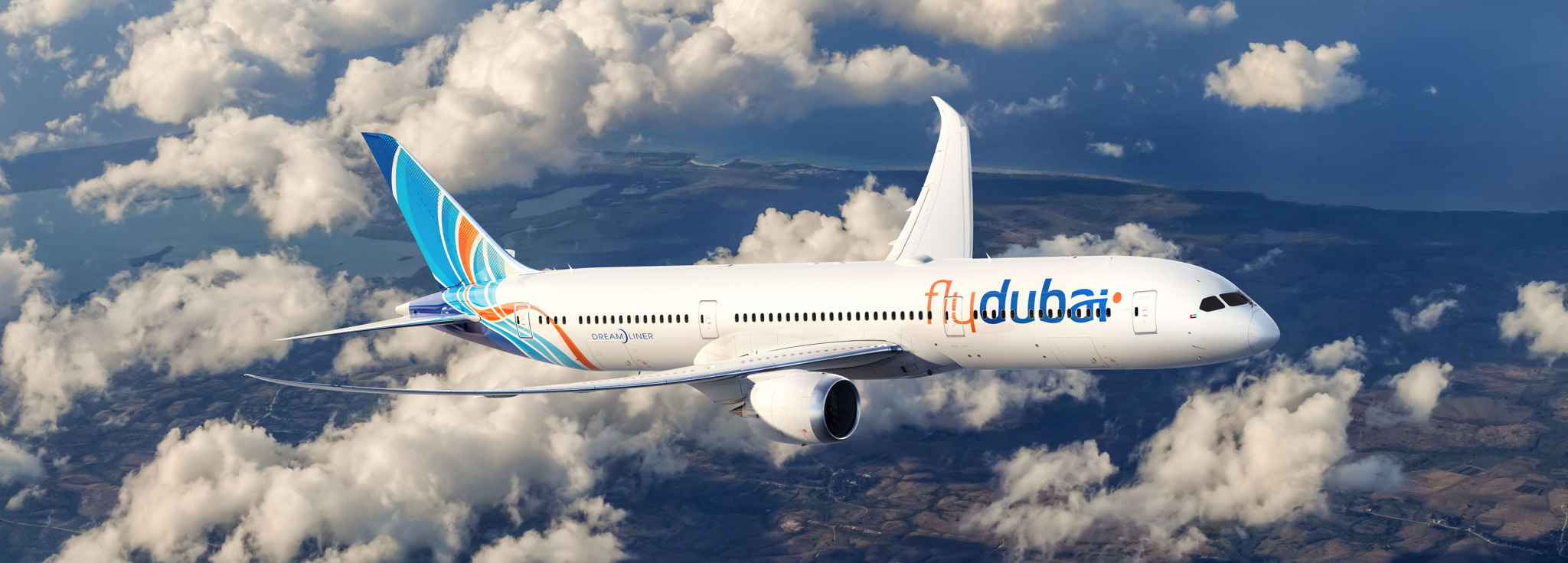
The Philippines and the United Arab Emirates has successfully concluded Air Consultation Talks held on the sidelines of the Dubai Airshow 2025, granting the UAE seven (7) additional weekly flight entitlements, allowing UAE low cost carrier Fly Dubai to operate flights to Manila beginning next year.
 
The airtalks was headed by The General Civil Aviation Authority (GCAA) of the UAE represented by Saif Mohammed Al Suwaidi, Director-General of the General Civil Aviation Authority, while the Philippine delegation was led by Undersecretary Jim C. Sydiongco of the Department of Transportation.
 
Also in the talks were Executive Director Carmelo L. Arcilla of the Civil Aeronautics Board (CAB); Philippine Ambassador to the United Arab Emirates Alfonso A. Ver, Assistant Secretary Edgar B. Badajos of the Department of Foreign Affairs; Assistant Secretary Judilyn S. Quiachon of the Department of Tourism; and Atty. Florence P. Daquioag-Bual of the Department of Labor and Employment. 
 
Representatives from CAAP, CAB, DOT, Philippine Airlines, Cebu Pacific Air, Mactan–Cebu International Airport Authority, and Luzon International Premiere Airport Development also joined the discussions.

 
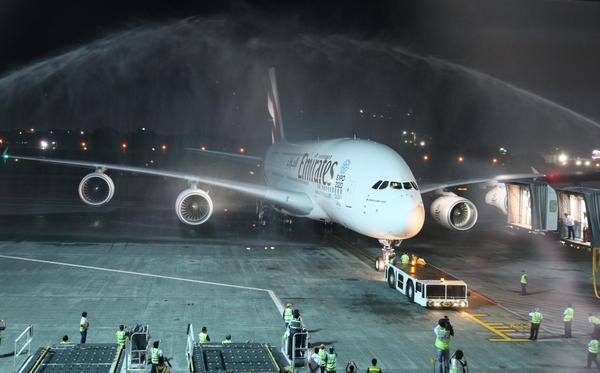
The Philippines previously granted 28 weekly flights, or about 22,700 weekly seats, between the Philippines capital airport and Dubai International airport from 2021 to 2025, and unlimited flights from Dubai to the Philippines major international airports. All flights were taken by Emirates Airlines.
 
The new flight entitlements shall become effective next year.
 
Air passenger volume to Dubai jumped by 21% in the first nine months, as international travelers surged by 40%, according to the Civil Aeronautics Board (CAB).

Data from CAB showed that overall passenger volume grew by 21.2% to 44.09 million for the January-to-September period, prompting Emirates Airlines which owns 4/5 rights from Dubai to  signed an interline agreement with Philippine flag-carrier Philippine Airlines (PAL) to boost seats and connectivity for both airlines through the sharing of networks. Qatar Airways made similar arrangements with PAL to boost seats and connectivity.
 
During the discussions, UAE wanted increase of additional 14 flights but the Philippine delegation approved only 7 more flights until 2029. 
 
The talks also covered broader issues related to bilateral air entitlements, operational coordination, and opportunities to streamline air transport arrangements in support of growing passenger and cargo demand.

Philippines Expands ASA with South Korea

Adds 10,000 seat entitlements between ICN and MNL

9 July 2024

The Philippines and South Korea have agreed to expand international air services between the two countries on July 4 allowing 10,000 seats more per week.

In a statement Monday, the Department of Transportation (DOTr) said the new memorandum of understanding (MOU) allowed an increase in capacity between Manila Ninoy Aquino International Airport (MNL) and Seoul Incheon International Airport (ICN) to 30,000 weekly seats. Previously, airlines between the two countries could operate up to 20,000 weekly seats on routes from Manila to South Korea.

After the two day consultation, limits on flights from Manila to other points in South Korea was removed. 


“The new agreement further liberalizes the third and fourth [freedoms of the air], without imposing limits on flights from Manila to all other points in South Korea,” the DOTr said.

South Korea is the Philippines’ main source of international visitors, with incoming Korean tourists reaching 1.4 million in 2023. 

According to the Philippine Department of Tourism, there had already been more than 680,000 arrivals from South Korea this year by May 2024, accounting for around one in four foreign tourists arriving to the Philippines.

DOTr said traffic between ICN and MNL has exceeded 25,000 per week, while traffic from South Korea has broken 28,333 passengers per week, and likely surpass the agreed seats before the end of the year.

The updated arrangement further liberalizes third and fourth freedoms, allowing more passenger traffic between the capital cities and increasing overall connectivity. Additionally, flights from points outside Manila to all points in South Korea remaining unrestricted should enhance regional connectivity and benefit local economies in both countries.

The Philippine delegation also proposed an amendment to the two countries’ air transport agreement that would allow the Philippines to designate its airlines based on the airline’s principal place of business and place of incorporation in the Philippines, which refers to AirAsia operations in the Philippines. They also plan to discuss South Korea’s proposal to permit third-country code-sharing arrangements, to accommodate Delta airlines request.

“Though an agreement on the matter was not reached, the two delegations agreed to further discuss the same, along with Korea’s proposal to allow third country code-sharing arrangements, in the next round of consultations,” the DOTr said.

Jeju Air is the largest provider of capacity between South Korea and the Philippines at present, accounting for a 20.4% share of all seats. Korean Air has a 14.9% share, followed by Philippine Airlines on 13.9%. Asiana Airlines (12.5%) and Jin Air (9.7%) complete the top five.

There are 11 nonstop routes currently operating in the market—five of which are from ICN to Cebu, Clark, Kalibo, and Tagbilaran under unrestricted flights, all flown by Jeju Air. While Asiana and Korean air flies Manila and Cebu.

On the other hand MNL is connected to two other points in South Korea through services from Busan and Cheongju which according to the latest bilateral is also unrestricted, being flown by Jin and Jeju Air.

Currently, there are 452,517 available seats between the two nations capital for July 2024, compared with 553,300 at the same time in 2019. More flights are recorded in secondary gateways by both countries.

The latest MOU replaces the previous agreement signed in 2017.


PH Amends ASA With Singapore

MNL Open Skies by 2028

13 May 2024

The Philippines and Singapore have signed a new Air Services Agreement (ASA) allowing for its respective airlines to offer up to 150 weekly services to carry passengers, and cargo between the two capital, up from the current limit of 35 weekly services.

The new ASA also allows Airlines from third countries to serve as code-share partners. This technically allows for example Jetstar Airways of Australia to Fly from Australian Cities to Singapore towards Manila by partnering with Singapore Airlines for servicing a slot allocation. Similarly, China Airlines may partner with Philippine Airlines from Taipei to Manila onwards to Singapore for similar rights.

The new limit of 150 weekly codeshare services will double by end-March 2026, and will be fully lifted by March the following year, allowing for unrestricted access to Manila by 2028. New Manila International Airport under construction in Bulacan is slated to open to commercial flights in March of 2028.

The ASA provides no limit on code-share services between Singapore and other gateway points in the Philippines, as well as between Singapore and any points in the Philippines involving airlines from members of the Association of Southeast Asian Nations (ASEAN) or the European Union.

The Philippines represented by DOTr Assistant Secretary for Aviation and Airports Enrique Antonio J Esquivel together with Singapore’s Deputy Secretary of the Ministry of Transport Yee Ping Yi signed the Memorandum of Understanding (MOU) on Thursday (May 9).

It upgrades the bilateral Air Services Agreement (ASA) between the two ASEAN countries, which was signed in 2010 and last amended in 2015.

The upgraded ASA also allows Philippine-based airlines, like Air Asia that are fully owned or controlled by nationals of other countries to access the traffic rights exchanged in the ASA, as long as their principal place of business is in the Philippines.

Previously, only airlines that were substantially owned and effectively controlled by Philippine nationals could do so.

PH-TK Grows ASA

 8 April 202

The Philippines and Turkiye have signed an amended air agreement that resulted in the doubling of air passenger service entitlements between the two countries, according to the Department of Transportation (DOTr).

Roberto Lim, DOTr undersecretary, and Dr. Kemal Yüksek, Turkish Civil Aviation acting director general, signed the memorandum of understanding (MOU) that improves the bilateral air services regime between the Philippines and Turkiye, following consultations between the two countries’ air panels last March 28 to 29 in Istanbul, Turkey.

The two countries first executed an air services agreement in 2010.

DOTr said in a statement the recent air talks resulted in a doubling of air passenger service entitlements for the Philippines and Turkiye on the Manila-Istanbul and vice versa route – from the previous seven flights per week on each side to 14 flights per week – that may be operated by the designated carriers of both contracting parties.

Pursuant to the government’s policy to develop the country’s other gateways, the Philippine Air Panel persuaded the Turkish side to operate half or seven of the total Turkish entitlements to Manila on a co-terminal basis with Cebu.

Starting this International Air Transport Association (IATA) summer season 2023, Turkish Airlines (TK) will be allowed to fly 12 times a week from Manila to Istanbul, five of which will also have a stop in Cebu as a co-terminal before flying back.

This will increase to 14 weekly flights in the IATA summer season 2024, seven of which TK should co-terminalize.

Philippine Airlines, the designated carrier of the Philippines, will continue to codeshare with TK on the latter’s flights between Istanbul and Manila.

To help stir the growth of direct traffic, both sides agreed to allow third-country codesharing, in which Philippine and Turkish carriers can put their airline code and sell flights on third-country carriers that have the right to operate and carry traffic on international routes that include the territories of the Philippines and Turkey.

Meanwhile, the MOU likewise looks to tap into Turkiye’s potential as a trading partner, improving the air services agreement’s all-cargo regime by removing the route limitation and increasing the entitlements.

From three flights weekly between Manila to Istanbul, the flights have been increased to seven between all points in Turkey and all points in the Philippines.

Finally, a proposal to update the air services agreement’s carrier designation provision to align with the Philippines’ amendment of the Public Service Act was also received by the Turkish Air Panel, which committed to advise the Philippine side after review.

The Philippine air consultation panel is composed of Lim as chairman, Civil Aeronautics Board executive director Carmelo Arcilla as vice chair and Foreign Affairs OIC-assistant secretary Roussel Reyes, Tourism undersecretary Shalimar Tamano, Trade assistant secretary Mary Jean Pacheco and Labor assistant secretary Lennard Serrano as members.


Dubai Strikes Back at MNL Restrictions


Qatar, Saudia Not Happy Too!

4 November 2021

Dubai Civil Aviation Authority (DCAA) has clamped down on Philippine-based carriers after the Philippine government imposed its flight restrictions into the country amidst covid19 pandemic.

According to source inside the Philippine's Civil Aeronautics Board (CAB), Dubai regulator wanted compliance to the UAE-RP Air Services Agreement, which means permitting entry into the country of at least 1,000 passengers a day from the Gulf State.

The Philippines has capped entry into the country to 6,000 passengers per day due to quarantine restrictions imposed by the National Task Force for Emerging and Infectious Diseases (IATF). 

Manila International Airport was limited to handle 3,000 passengers per day from the earlier 1,200 passengers, Mactan Cebu was doubled to 2,000, while the balance is distributed between Clark, Davao and Subic.

The CAB personnel said DCAA wanted 1,000 of this 6,000 daily allotments, which request was denied, as allocations into the country is distributed to different countries with substantial Filipino population. Dubai is merely one of them. Same request for exemption was also filed by Qatar and Saudi Arabia.

The Philippine response was not taken lightly by DCAA as it also restricted entry into Dubai to 140 passengers per flight, the same number allocated by the Philippines for entry to Manila airport.

DCAA directive has forced Philippine Airlines (PAL) and Cebu Pacific (CEB) to cancel and divert their flights to Dubai as it was not granting them entry for additional passengers beyond the allocation. The new restrictions took effect at the beginning of winter timetable on 27 October.

In an airline advisory, PAL has cancelled flights on October 31 and November 1 and 2, due to Dubai flight restrictions.

PAL spokesperson Cielo Villaluna said their flight for November 3, 4, and 6 from Dubai will be rerouted to Davao while the November 5 flights will be routed to and from Cebu, instead of Manila. 

“Using these alternate gateways will allow us to transport our passengers between the UAE and the Philippines in the coming days.” says Villaluna.

CEB said its Dubai-Davao flights have been in place since October 21, while its Dubai-Cebu flights started on October 29 after passenger restrictions were relaxed.

“We offer ex-Dubai straight to either Davao or Cebu so we can accommodate more passengers coming home,” said CEB spokesperson Pao Lim. 

“Then we provide free flights to Manila after they’ve completed their required quarantine. There are no passenger flights exiting Cebu or Davao to Dubai, only Manila-Dubai, ” adds Lim.

PAL and CEB is preparing flight diversion to fly to Sharjah, another Emirate, just a 30-minute drive to Dubai.

CAB said there is no flight restrictions from going outside the country, particularly Dubai. What IATF restricted is the inflow of passengers coming overseas sufficient to be handled by quarantine facilities in Manila, Cebu, Davao, Clark and Subic.

The CAB official said they are already talking with their counterparts in Dubai to resolve issue soon as the country prepares gradual opening on November 15.

CAB Shuts Down Emirates Request For More Flights


10 September 2019

The Civil Aeronautics Board (CAB) has denied Emirates Airlines request for more additional flights to Manila citing underutilized slots from the Philippine side and plenty of unused slots to international airports outside the country's capital.

CAB Executive Director Carmelo L. Arcilla said there are unallocated entitlements on the Philippine side, while the UAE side also has “unutilized entitlements.”

Under the expanded bilateral agreement between the two countries, both are given 35 flights on each side per week, and the UAE carriers are allowed unlimited flights to destinations outside Manila.

According to CAB, Emirates was allocated 18 flights to Dubai while Etihad got 17 flights to Abu Dhabi. On the Philippine side, Philippine Airlines, Air Philippines Corporation and Cebu Pacific got 7 entitlements each to Dubai while Philippine Airlines and Cebu Pacific got 7 entitlement each for Abu Dhabi.

Arcilla said only Emirates used all their allocations, while Etihad has not used its 3 new allocations. Meanwhile, Philippine Airlines and Cebu Pacific used up their allocations to Dubai while Air Philippines Corporation has not used the 7 entitlements they have. Philippine Airlines and Cebu Pacific also don't fly to Abu Dhabi making their collective entitlements unused.

“All in all, their are 24 underutilized flights to Manila. It must be flown first or most of it must be flown first before we entertain proposal to increase frequency,” says Arcilla.

Emirates Airlines Country Manager Satish Sethi admitted over the weekend that they have profitability problems on its operations outside Manila as all of their revenue, particularly taken from Business Class travelers, are all from Manila.

Emirates has flown Dubai-Cebu-Clark-Dubai route daily for 3 years now.

ASA To Morocco Agreed


9 September 2019

The Philippines and the Kingdom of Morocco agreed to provide seven flights a week from each other's territory beginning next year as the two countries negotiated and initialed an Air Services Agreement (ASA) last week at the office of Direction Generale de l’Aviation Civile in Rabat, Morocco.

The parties also signed the Memorandum of Understanding (MOU) granting full third and fourth freedom traffic rights for both passenger and cargo, and setting out other operational details for their respective designated carriers.

This is the seventh ASA of the Philippines in the African region. Designated airlines are Royal Air Maroc and Philippine Airlines.

Department of Foreign Affairs (DFA) Undersecretary Igor G. Bailen headed the Philippine delegation, comprised of Undersecretary Manuel Antonio L. Tamayo of the Department of Transportation (DOTr), Undersecretary Edwin R. Enrile of the Department of Tourism (DOT), Executive Director Carmelo L. Arcilla of the Civil Aeronautics Board (CAB), and Director Joan Karen A. Riola of the Department of Trade and Industry (DTI).

Meanwhile, the Moroccan delegation is headed by Director of Air Transport Tarik Talibi, together with Deputy Director of Air Transport Mohamed Hamidi, Mr. Otman Ait Madani, Ms. Nora Oustani, Ms. Wahiba Amara, Ms. Maria Ed-Dahri, Mr. Hicham Ouzine, Mr. Younes El Bouzidi, and Ms. Rihab Bencheckroun.

According to DFA Usec. Bailen, the Philippines will establish an embassy in Morroco next year.

PH Updates ASA with Switzerland

20 November 2018
*
Secures Fifth Freedom Rights to Europe

The Philippines has secured fifth Freedom Rights to Europe and an expanded landing rights after Switzerland and the Philippines signed new Air Services Agreement daily daily services between Manila and Zurich, its largest City.

The Philippines first entered Air Services Agreement with Switzerland on 8 March 1952 and was a transit point to Philippine Airlines twice weekly flight to Paris France.

The ASA was last amended in 1994 granting 4 times a week schedule with Swiss Air and Philippine Airlines flying via Bangkok.

PHI,AUS Expands ASA

27 September 2018


The Philippines and Australia has expanded its Air Services Agreement (ASA) by adding 700 more seats to Australia's major cities of Sydney, Melbourne, Brisbane and Perth from Manila during the two-day air consultation talks held on 25-26 September 2018 in Manila.

The existing ASA allows only 9,300 seating capacity per week. With the amendment capacity rises to 10,00 seats per week. Also agreed was the incremental increase of another 700 seats to 10,700 seats per week by the end of March 2019.

Unlimited capacity was also agreed to other airports in the Philippines and Australia with no restriction on capacity, frequency, and aircraft type.

The Philippines panel was represented by DOTr Aviation and Airports Undersecretary Manuel Antonio Tamayo, while Australia was represented by Executive Director Stephen Borthwick from Australia's Department of Infrastructure, Regional Development.

The new agreement will enable Cebu Pacific to add two more flights to Sydney and/or Melbourne and another two flights beginning 2019.

India Expands ASA


15 July 2018

The Philippines and India entered a new Air Services Agreement (ASA) on July 12 allowing both countries to fly 28 flights between New Delhi and Manila, in addition to three other major cities.

The new ASA allows airlines from both countries to fly more than seven flights after Cebu Pacific and Air Asia separately requested weekly pairs. Previously, only seven flights are allowed between two city pairs. Entitlements were taken by Philippine Airlines which secured seven each for New Delhi and Mumbai. Cebu Pacific intends to operate three times weekly Manila-Delhi flights beginning 2019 with A321Neo.

The renegotiated pact allows for flights to Mumbai, Kolkata, and Chennai, while India nominated Cebu, Davao, and Clark that will be flown to by Indian carriers. Philippine carriers will also be allowed unlimited flights between any Philippine gateway and 18 other destinations in India.

India and the Philippines last held air-services negotiations in 2005, allowing Filipino carriers to operate seven flights per week to Mumbai, Delhi, Kolkata and Chennai. The same entitlement was awarded to Indian carriers, which can operate seven flights per week “on each city pair” between the two countries. The first agreement was signed in 1949.

The two parties also retained 5th Freedom rights to Bangkok as a midway point for carriers of both sides, with the possibility of disembarking and taking on passengers not originating from or destined for their own territories.

The new accord makes it also possible for the operation of third-country carriers on behalf of the parties' carriers as long as the former have the route and traffic rights through their own countries granted under agreements with India and the Philippines.

A more liberal cargo provision completes the new package of air rights.

Undersecretary for Aviation Manuel Tamayo headed the Philippine Air Negotiation Panel, and was joined by Labor Undersecretary Jacinto Paras, Trade Undersecretary Rowel Barba, Foreign Affairs Asst. Secretary Leo Herrera-Lim, and Tourism Asst. Secretary Roberto Alabado III.

Philippine Airlines (PAL) used to fly to New Delhi in India via Bangkok in 2011, but suspended the route in 2013 due to poor sales.

This year, PAL will be launching direct flights to New Delhi and Mumbai using its medium haul narrow body aircraft, the Airbus 321Neo.

Fifth Freedom rights were also being reviewed by PAL from New Delhi and Mumbai to Tel Aviv, in Israel. Both Air India and El Al Airlines service the route from Delhi and Mumbai, respectively.

The PAL exploration prompted Air India to launch Tel Aviv which began its direct flight from New Delhi on March 22 using B787 preempting PAL flights. Both countries enjoy overflight rights to Saudi Arabia.


Spain Agrees 5th Freedom To Israel

Clears PAL Path To Spain and Israel


13 July 2018

The Philippines and Spain have signed an amended air transport agreement (ASA) which allows fifth freedom traffic for both countries.

Under the agreement, each of the parties may designate as many airlines as it wishes to operate both passenger and cargo operations. The Routes Chart is totally open and flexible, allowing airlines to freely select points located in the territory of the other party to operate with third and fourth freedom rights (possibility of embarking or disembarking passengers and cargo whose journey can only have origin or destination in the two countries).

In addition, for intermediate points and points beyond, they may provide their services under the fifth freedom regime (possibility of embarking or disembarking passengers and cargo whose journey has its origin or destination in third countries).

Likewise, the code-sharing operation is facilitated so that they can sign agreements of this type with companies from other countries to carry out flights between Spain and the Philippines.

“This agreement is another step to strengthen the connectivity of our country, thus facilitating the projection of Spain in the international context”, the government regulator said.

In 2009, the Philippines and Spain have sealed a new Air Services Agreement (ASA), fielding 28 weekly flights for each country, said the Civil Aeronautics Board (CAB).

From Manila to Madrid and Barcelona, there were seven flights per week awarded to the Philippines.

To Madrid and Barcelona from Clark’s International Airport, 14 weekly flights were allocated.

Other points in the country, except Manila and Clark, were allotted seven flights in a week. The same goes for Spain, in which daily flights were also made available except for Madrid and Barcelona.

The ASA were not however enough to entice airlines to field flights between two end points citing inadequate traffic. There are however multiple airlines in the gulf region and Turkey providing one stop service to the Philippines.

Philippine Ambassador to Spain Philippe J. Lhuillier and Spanish Minister of Public Work and Transport José Luis Ábalos signed the updated agreement in Madrid on June 12, 2018.

Philippine Airlines(PAL) plans to introduce the route in 2019 with Airbus A340-300 aircraft. PAL intends to fly the route via intermediate points in Tel Aviv which recently was granted overflight rights, together with India, to Israel over Saudi Arabian airspace.

The government earlier secured Fifth Freedom rights to Israel in November 2013 for beyond points in India and Spain but only now did the latter allowed amendments to its air bilateral allowing PAL to finally fly the route to Spain.

Under the new agreement with Israel, the designated airlines of each country are entitled to a total of 21 flights a week, between any points in the Philippines and Israel.

CAB official added that, “We also agreed on three fifth-freedom flights per week on one intermediate point in Mumbai and one beyond point in Madrid.”

PNG Expands PH ASA

30 June 2018


The Philippines and Papua New Guinea expanded air entitlements Thursday growing the number of seats to 1,500 seats weekly between Manila and Port Moresby in Papua New Guinea from the previous 600. roughly equivalent to daily A321 flights, Civil Aeronautics Board said in a statement.

For other areas in the Philippines and Papua New Guinea, a total of 3,000 seats are allotted every week, up from just 1,500 previously.

Air Niugini and Philippine Airlines fly this route.

PH Signs ASA With Maldives

19 April 2018


The Philippines and Maldives have signed Air Services Agreement (ASA) that will allow direct daily flights between Manila and Male Tuesday.

The ASA provides an initial entitlement of 1,200 seats weekly that can be flown by each country’s designated airlines between the Philippines and the Maldives Capital after series of air negotiations on April 16 and 17 that were conducted in Manila.

The designated carriers were Philippine Airlines and Maldivian. Philippine Airlines manifested intent to fly Maldives with A321Neos as early as next year.

Maldives earlier wanted unlimited flight with the Philippines in its preliminary proposals that were discussed in letter exchanges in the past three months.

The Philippine panel However agreed that flights originating from or destined for points outside Manila will be unlimited, in line with the Philippines’ pocket open skies policy which promotes other international gateways away from the capital. This will allow Maldivian to fly unlimited flights to Clark or Cebu or Davao.

The Maldives panel delegation was composed of the chairman, the chief executive and senior officials of the Maldives Civil Aviation Authority, while the Philippine air panel was led by the Department of Foreign Affairs, with representatives from the Department of Transportation, Civil Aeronautics Board, Department of Tourism, Department of Trade and Industry and the Department of Labor and Employment as members.

The Ministry of Tourism of Maldives said that as late as March 2018, it recorded a 17-percent increase of tourist arrivals from the Philippines.

PH-SK Upgrades ASA


16 November 2017


The Philippine and South Korean government signed a new Air Services Agreement between the two countries increasing seat allocations between Manila and Seoul.

The new memorandum of understanding (MOU) on air services concluded in November 8, 2017 at Seoul, South Korea increased seat allocations for each country from the current 13,500 per week to 20,000 per week.

The Philippines was represented by DOTr Undersecretary for Aviation and Airports Manuel Antonio L. Tamayo, and South Korea was represented by Ms. Kim Jung Hee.

Carmelo Arcilla, Civil Aeronautics Board(CAB) executive director,said the new MOU means that all Philippine carriers authorized to operate between Manila and Seoul can utilize a combined total of 20,000 seats per week, while the same number of 20,000 seats per week is also available for all the Korean airlines authorized to operate between Seoul and Manila.

Arcilla was part of the Philippine delegation to Korea which includes Department of Trade and Industry (DTI) Undersecretary Rowel Barba, Department of Foreign Affairs (DFA) Assistant Secretary Leo Herrera Lim, Department of Tourism (DOT) Undersecretary Benito Bengson, and Jesus Ibay from CAB.

Representatives from Philippine Airlines, Cebu Pacific, Air Asia Philippines, and Pan Pacific airways and the Korean Air carriers attended the 2-day talk.

“The expanded air traffic rights in Manila is intended to address the increased demand for air services between Manila and Korea,” Arcilla said.

Airlines from both countries are also allowed unlimited traffic rights to airports outside the country’s premier gateway.

“The unlimited air traffic rights outside Manila is in line with Philippine government policy to develop airports outside Manila and spur the economic development of new tourism, trade and economic centers outside Manila,” Arcilla said.

The new seats made available is equivalent to 3 Boeing 747-400 additional services per day. It will enable PAL and CEB to fly its B777 and A330 thrice daily from Manila to Seoul while also giving more seats to Air Asia to fly its A330 twice daily. 

According to CAB there are eight Korean air carriers and five Philippine air carriers operating between the two countries.

South Korea remains the topmost foreign visitor to the Philippines registering 1.6 million passengers arriving in different points in the country, data from Department of Tourism showed.

Qatar Airways Flies Davao

1 June 2017

State airline Qatar Airways will introduce flights to Davao four times a week by summer schedule next year as they secure four more rights to fly Manila airport in an air services negotiation that was concluded Wednesday.

The new route will be flown by Boeing 787-800 plane from  Doha.

The new air services agreement (ASA) amends the 2015 Memorandum of Understanding (MOU) on air services between Manila and Doha granting Qatar Airways 14 flights to Manila's Ninoy Aquino International Airport with the condition to fly Clark or Cebu.

Qatar fulfilled the 2015 MOU that granted them seven more slots at NAIA by flying initially to Cebu before transferring flight to Clark and now being flown daily on a Boeing 787-800.

The MOU which includes as a condition for Qatar Airways to have flights from Davao within one year from the commencement of the four additional flights to Manila set for introduction by October this year, was signed by DOTr Undersecretary for Aviation Captain Manuel Antonio Tamayo and Abdullah Al Subaey of Qatar.


Why New PHL-UAE air talks Fails?


Give us MNL and We Will Fly Davao!

3 May 2017

Air Bilateral talks between the Philippines and the United Arab Emirates (UAE) has failed according to Civil Aeronautics Board (CAB) Executive Director Carmelo Arcilla.

The two-day talks between the Philippines and the UAE was held in Davao City on April 26 and 27 with the aim of expanding the air service entitlements between the two countries from the existing 70 flights per week.

Arcilla said the talks ended in deadlock after the UAE asked for seven (7) more landing slots in Manila without elaborating further.

“Our talks included the commitment of Emirates to operate out of Davao and additional flights to Manila, but the details could not be resolved as of yet,” Arcilla said.

CAB said UAE wanted to mount more flights out of Manila for a total of 42 flights a week to the objections of local carriers Philippine Airlines(PAL), Cebu Pacific(CEB) and Air Philippines(GAP).

The local carriers argued that there are still plenty of entitlements to the Philippines, other than Manila, that has not been taken by the UAE carriers since the latest air talks. In the agreement UAE airlines are required to invest in developmental gateways outside Manila.

Local airlines further argued during the meeting that giving in to the UAE request for more Manila flights would lessen the incentive for Emirates to continue flying to Clark and Cebu, or its contemplated new service to Davao.

Emirates on the other hand committed to launch Davao flights on a triangular service to Cebu in exchange for more entitlements out of Manila airport which the Philippine panel is not prepared to give on account of so many unused slots in the Philippines, among them Angeles, Cebu, Davao.

Arcilla said the Philippine panel would have wanted Emirates to used first the slots for Clark, Cebu and particularly Davao since its not being served yet, but the UAE group wanted Manila given first before committing to fly Davao.

“There are things they want, but it’s hard for us to give, there are things that we want, but its hard for them to give. Like, we want Davao for them to operate, they want Manila, so we negotiated along those lines, but we can’t iron out the differing positions,” says Arcilla.

ASA to the UAE has recently been expanded in 2015 granting UAE airlines 35 flights a week to Manila and 35 flights to the rest of the Philippines, from the old 28 flights a week ASA negotiated in 2012.

Emirates Airlines and Etihad has existing and unused landing rights to Clark (14x), Cebu(14x), Davao(7x). So far Only Emirates served Dubai-Cebu-Clark-Dubai triangular routes on daily flight, equivalent to single frequency. It has also stopped flying out of Angeles City in 2014 leaving 34 landing slots not utilized.

Emirates flies 18 weekly flights from Dubai to Manila, while Etihad flies 17 times weekly from Abu Dhabi to Manila, a total of 35 flights weekly. Meanwhile, Philippine Airlines (PAL) has 14 slots to Dubai and Abu Dhabi, while Cebu Pacific(CEB) and Air Philippines(GAP) has daily frequencies to Dubai with a total used slot of 28 frequencies.

PAL and CEB earlier manifested no objections from UAE carriers to launch flights to Davao in a white paper released last week saying Clark, Cebu and Davao are still under serve markets.

Secrets of UAE Negotiation Revealed

1 September 2015 

By Federico D. Pascual Jr.

Veiled threats
Last Thursday, the UAE chief negotiator, Omar bin Ghaleb, opened the air talks by castigating the Philippine panel. He poured out his disappointment over seeing “joint statements” in the newspapers issued by the major Filipino airlines.


This has never happened before, he told the Philippine panel, threatening to report the affront to his superiors in Abu Dhabi.

The Philippine chief negotiator, DoTC Undersecretary Jose Lotilla, replied that the Philippines is a free country with a free press, and that the government cannot restrict citizens, including airlines, from making statements. Needless to say, the opinion of Filipino airlines is not necessarily shared by the government.

Throwing in more veiled threats, the UAE negotiators mentioned the thousands of Filipinos employed by UAE airlines, as well as overseas Filipino workers in the UAE (one official said there were 900,000, while another one claimed “millions”).

That did not go well with the Philippine side, as some felt the UAE was threatening to stop or slow down hiring of OFWs if their demands were not granted.

(Hint from history: Some years back, the UAE booted out Canadian soldiers from one of their military bases after Canada refused to accede to the demand of Emirates Airlines for more entitlements to Canada.)

What exactly does UAE want?

THE UAE was demanding more flights to Manila than just the 14 flights per week usually cited in the media, even as high as 28 to 56 additional flights per week.

The discussions dragged on to almost midnight, with UAE holding out for more flights than the seven that the Philippines was prepared to give (and finally gave).

But the foreign airlines resisted the condition proposed by the Philippines that UAE airlines must also fly directly to Clark or Cebu as a price to pay for receiving and using new entitlements to serve Manila.

The UAE’s reluctance led to the watering down of the Cebu/Clark condition. Now the UAE airlines, such as Emirates or Etihad, have one year to meet this condition. They also demanded a chance to postpone this further if they present valid reasons.

Why did the Philippine side accept this weakening of a core pro-Filipino position?

Was it too willing to close a deal with UAE at any cost? The panel owes the people an explanation.

Etihad Airlines (the UAE flag carrier based in the capital, Abu Dhabi) walked out at one point. It was sore that the Philippines seemed to be favoring Emirates, its chief rival and fellow UAE carrier. Etihad returned to the table that same day.

It seems the UAE government promised to split any new entitlements more or less equally between Etihad and Emirates. The final split appears to be four for Emirates and three for Etihad.

Why does Emirates get the upper hand? Did not the CAB rebuke them in late 2013 and early 2014 for operating illegal flights to Manila without the express approval of the board, slapping it a fine of more than P1 million for the deception?

Curious sidelights

Philippine carriers (Philippine Airlines, Cebu Pacific and Zest Air/Air Asia) are rivals, but they were so distressed over developments that they issued together an ultimatum to protest the Philippine panel’s willingness to give in to some UAE demands.

After this show of force by the local airlines, the Philippine panel somehow displayed a little more backbone and started pushing back UAE. Were it not for this, the final agreement would have been more detrimental to the national interest.

Note that Zest/Air Asia did not join Cebu Pacific and PAL when they issued joint statements before the negotiations. But the goings-on in the talks must have been so bad that Zest/Air Asia felt compelled to stand with its two biggest rivals.

The seating arrangement itself was suggestive. Filipino airlines were assigned seats on the periphery of the meeting room, while government officials (DoTC, CAB, DoT, DFA and DTI) occupied the main table on the Philippine side.

In contrast, at the main UAE table Emirates and Etihad sat on the right and left flanks of the chief negotiator and members of the UAE, Dubai, Abu Dhabi and Sharjah government authorities for civil aviation.

The agency with the most number of representatives, after the Civil Aeronautics Board (whose staff handled secretariat functions), was the Department of Tourism that had at least five reps. Reward for bringing in less than 20,000 Emirati tourists last year?

It was revealed that Cebu Pacific was kicked out of Dubai airport for two months in 2014, when one of the runways needed repairs. While CebuPac was forced to use neighboring Sharjah airport, Emirates was not required to transfer its Dubai-Manila flights to Sharjah.

PH Grants 7 More Flights To UAE

Emirates Required To Fly CEB or CRK

29 August 2015


UAE-based airlines did not get its wish but Emirates Airlines was granted another seven flights a week between Manila and Dubai, regulator said Friday.

The Civil Aeronautics Board (CAB) said flights between the UAE and Manila will see a 25 percent increase soon after the Philippines and the United Arab Emirates concluded two-day talks in Manila agreeing to increase air traffic rights between the two countries from the current 28 weekly flights to 35 from each side.

“The parties agreed to increase the maximum number of flights per week for each country from the current 28 flights to 35,” Carmelo Arcilla, CAB Executive Director said.

The Catch
There is however a condition to fly the next seven entitlements out of Manila, that is for Emirates to fly separate flights to either Clark or Cebu within one year after the signing of the amended Air Services Agreement.

“The Philippine panel imposed a condition that the UAE carrier operating such additional flights to Manila is bound to also operate separately to Clark or Cebu within one year from signing of the Memorandum of Understanding,” says Arcilla.

CAB said Emirates will automatically lose the right to continue its third flight if it doesn't fly Cebu or Clark within one year.

A similar condition was attached to the ASA expansion with Qatar, requiring also Qatar Airways to fly either Clark or Cebu, which the Doha-based airline is already doing.

Arcilla said the condition to diversify the routes and extend it to the international airports in Clark or Cebu is in line with the Philippines’ "open skies" policy.

CAB said the purpose of the condition was to force UAE-based airlines to invest in developmental gateways outside Manila.
Fifth-freedom Rights
The expanded bilateral agreement also lifted earlier restriction to fly fifth freedom traffic rights to the UK, US and Saudi Arabia enabling Philippine-based carriers to carry passengers from Dubai to London.

“This means that our carriers can fly from Manila to the UAE and onward to any country including the UK, US and Saudia Arabia. This will improve Philippine connectivity and also the commercial viability of our routes to the UAE,” Arcilla said.

The lifting of restriction to Saudi Arabia and the United Kingdom was earlier proposed by Philippine Airlines which intend to grow its Dubai hub by flying onward passengers to Saudi Arabia, and enter code share flights with Etihad Airlines from Abu Dhabi to London and Manila.

“The Philippine government panel and our airlines view the exchange as more or less fair, as the increase in traffic rights for both sides, which our airlines opposed, is minimal, and we also got unilateral concessions for the increase, in terms of subjecting the operation of the additional traffic rights by the UAE carriers, on the operation of services to Clark or Cebu,” Arcilla said.

UK, Saudi Arabia restriction lifted
With the lifting of the UK restrictions, Philippine carriers already has fifth freedom rights to fly all destinations in Europe and Saudi Arabia from the UAE.

Cebu Pacific is expected to get the new seven slots for a total of 14 weekly flight entitlements, with plan extensions to Italy, while Philippine Airlines (PAL) also has 14 weekly flight entitlements, with plan extensions to Jeddah, in Saudi Arabia and PAL Express 7 weekly flight entitlements, on the same route covered by Annex A.

"This will improve Philippine connectivity and also the commercial viability of our routes to the UAE," Arcilla said.

PAL President Jaime Bautista stated earlier that UAE-based carriers transported less than 30% of their total capacity to the UAE, with Philippine-based carriers ending to have transported more than their counterparts despite utilizing 21 frequencies from the other 28 frequencies of the gulf carriers.

Co-terminalisation
Meanwhile, the negotiating panels also agreed on "co-terminalisation" propose by Emirates, which in aviation parlance means the right to serve two specified points on the same flight and route in the territory of a party to an air transport services agreement.

It literally means that Emirates Airlines can fly to Manila and then to Cebu from Dubai without getting passengers from Manila, and on its return flight pick up passengers in Cebu for Dubai and then picks up again passengers in Manila also for destination in Dubai.

Russia Signs ASA with the Philippines

7 August 2015

Approves 21 Weekly Flights

Russia has finally signed the highly classified Air Service Agreement deal with the Philippines granting 21 flights a week between the two countries.

The air services talks were held in Moscow from July 22 to 23.

According to the agreement, Philippine carriers can conduct operations between any point in the country and three destinations in Russia, such as Moscow, St. Petersburg and Vladivostok. 


Russia-based airlines has been offering chartered flights to the Philippines mostly coming from Central Russia, while Philippine Airlines flew to Vladivostok also on charters.

40,000 Russian tourists has visited the country last year according to the Department of Tourism and would welcome more their presence considering that they spend more than any other foreign tourists in the Philippines.

Earlier, PAL secured special permit from the Russian Federation for overflight rights in its famous "Siberian Airspace" that shortens travel time to and from other European countries pending ratification of the agreement. Russia postponed twice the signing of the agreement due to conflicts with some EU countries and Ukraine.

PAL currently flies to London. The special permit does not however cover any other European destination forcing the flag carrier to shelved earlier plans to fly other destinations in the EU such as Frankfurt, and Paris.

The Civil Aeronautics Board (CAB) said the "over-flight" rights that would allow Philippine carriers to take what's known as the trans-Siberian route cut travel time to London and other European cities by at least two hours as compared to routes via India and the Middle East.

Executive Director Carmilo Arcilla of the CAB did not elaborate on the Overflight fees as the other component is confidential and airline-based agreement which is separate from navigational fees mandated by ICAO.
Russia is also not a signatory to the International Air Services Transit Agreement (IASTA).

The agreement, which is an amendment to the 2009 Philippine-Russia Air Services Agreement, was signed by Jose Perpetuo Lotilla, the Philippines’ Transportation and Communication Undersecretary and Sergey Seskutov, Deputy Director, State Policy in Russian Civil Aviation Department