A story of how a simple 323 million pesos domestic airport transfer becomes an impossible 7.5 billion pesos international airport project
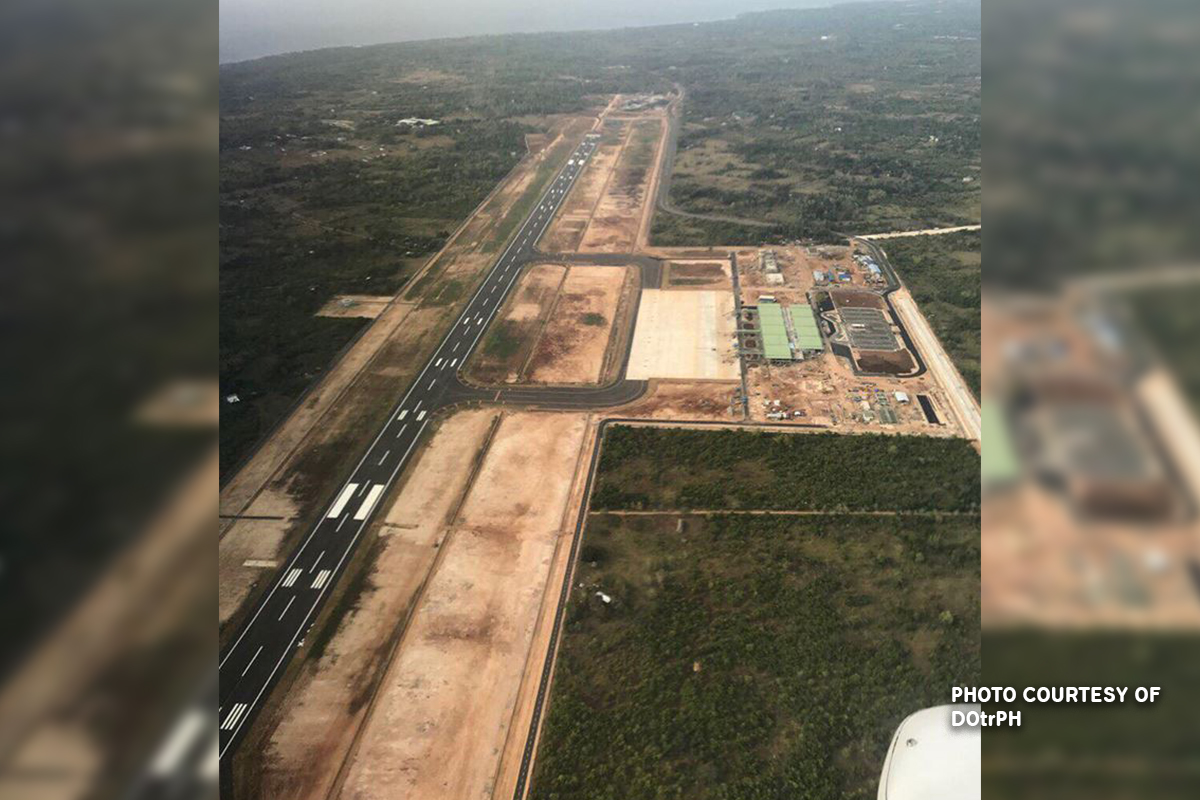
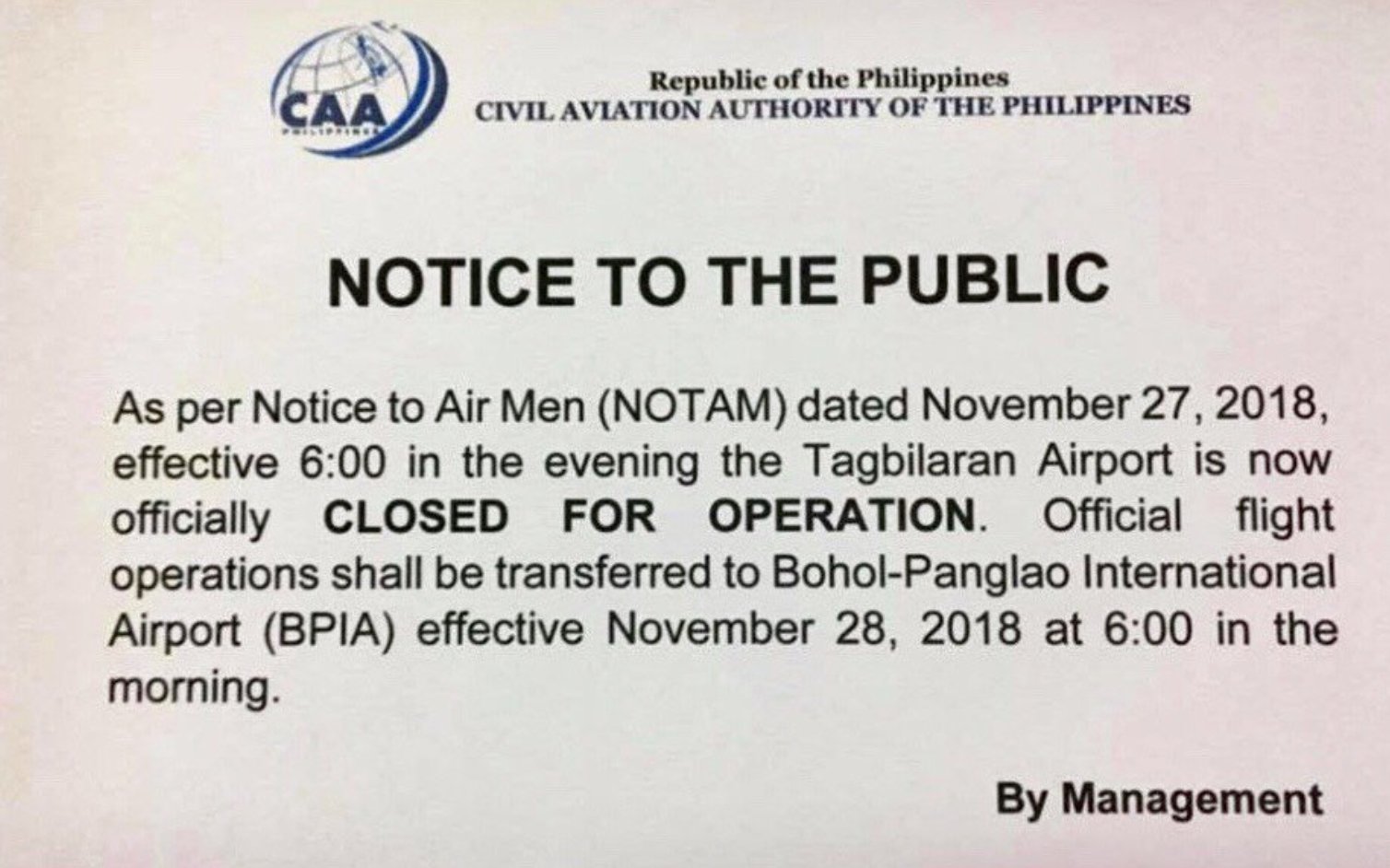
Panglao Airport Development Project was originally planned to replace Tagbilaran Airport whose expansion made difficult by encroaching residential houses. Its plan is similar to that of Bacolod Silay, which is a new international standard domestic airport with provisions for expansion encompassing 120 Hectares. Along its circuitous process for loan approval from a simple issue of domestic airport transfer in 1994 to its unfounded and oversized growth in 2001, as it metamorphosed into what in now called Panglao International.
Lets examine the story on how it became to be.
Swedavia operates as a fully independent international civil aviation consultancy with a multi-skilled background and an extensive experience from international aviation projects. The company has provided services to more than 50 countries as well as to institutions. Eurocontrol, European Union, European Space Agency and ICAO have all been provided services by Swedavia.
The company submitted to the Air Transportation Office (ATO) a 436 page report detailing the constraints of the airport. Among those listed is the limited runway approaches because of high terrain. The straight-in approach to runnway 35 is obstructed by the 196-meter Biking Hill while the approach to runway 17 is blocked by the Maribojoc mountain range, with elevations of 1l,000 to 13,000 meters.
The study also said the airport had virtually no space for expansion. The fence is located at the property line for the most part of the 50-meter distance from the runway centerline. Houses have been built outside and even along the fence.
Further, the report said that the development of a 150-meter wide strip as a minimum requirement for B737 operations would "require considerable additional land on both sides of the runway and, as a consequence, relocation of existing residential developments" is necessary.
Swedavia suggested a runway that was 2,000 meters long and 45 meters wide. That proposal proved to difficult to implement. If ever it can be extended, ATO can only manage to extend the runway to 1,800 meters. Beyond that line were the residential houses which need to be cleared as far as 1,000 meters for an obstacle free approach.
The recommendation calls for the demolition and relocation of Immaculate Heart of Mary Seminary buildings and the Immaculate Heart of Mary Parish Church. The City will also have to endure building restrictions and severe air and noise pollution particularly along its flight path.
The demolition and relocation plan entails huge capital expenditure as compared to finding a new site. Thus, it recommended minimum investments in the airport and speed up development of a new facility at a more suitable site.
Swedavia pointed to two alternative areas on nearby Panglao Island as future airport site. One site cuts across Barangays Tawata to Bil-isan while the other straddles Barangays Bolod and Libaong. Panglao is linked to Tagbilaran via a causeway. It concluded that Panglao island is a poor alternative airport because of its soil foundation issues.
The proposed Panglao Airport Development Project was estimated to cost P323 million and was due for implementation in 2002.
PANGLAO ISLAND TOURISM ESTATE
In the Philippines, the blueprint for tourism development has been the Philippine Tourism Master Plan (TMP) that was begun in 1989 and was completed in 2001. The concept of sustainability was not yet incorporated in the plan until 1993 when then Department of Tourism (DOT) secretary Narzalina Lim presented to the World Tourism Organization (WTO) the Philippine Plan in 1993. The TMP includes establishment of Tourism Estate.
From the TMP, there are only two places in the Philippines declared by the government as tourism estates: Samal Island in Mindanao and Panglao Island in Bohol. While Samal Island is partly developed by Malaysian investors, the Panglao Estate is developed by DOT, mainly because the supposedly Built Operate Transfer(BOT) project failed to generate private investors. The
total project cost is $42.7 million. Its development was plagued by land acquisition controversy and social unrest, yet the Ramos government was bent on developing the islands tourism potential.
The Panglao Island Estate will convert the whole island into an integrated tourist paradise where amenities like aqua sports, diving and dancing centers, and golf course among other land sports facilities will be constructed. The proposed Panglao Tourism Estate Plan has been identified as one of the priority tourism projects in the 1995 Government Investment Plan.To implement the project, President Fidel Ramos issued Memorandum Order No. 338 creating the Inter–Agency task Force to implement the Tourism Estate of Panglao.
Panglao Island Tourism Estate (PITE), through its Management Committee, took 2 years to finally start at a budget cost of P200 million.
The money were used among others, for the drafting of the Panglao Island Comprehensive Land Use Plan in 1995, the inventory of cadastral and landowners mapping in 1996 and Environmental Impact Assessment for the Panglao Tourism Development Project in 1997 . This project was undertaken by Seastems Inc.
THE SEASTEMS REPORTSeastems Inc. is an environmental consultancy firm commissioned by President Ramos to conduct ecological profiling of Panglao Island. The company prepared the
Ecoprofile of Panglao Island Report in 1997. It also submitted another report on
Environmental Impact Assessment for the Panglao Tourism Development Project in 2001.Since potential hazards and negative impacts have been identified with the development of Panglao Island as a tourism estate, the Environmental Impact Assessment (EIA) was conducted by Seastems.
The EIA done by Seastems, Inc. covers 2,023-hectare proposed Panglao Island Tourism Estate (PITE) area of which the airport is included. The company finally made the delineation of 2,000 hectares for the Panglao Island Tourism Estate (PITE) in 1999-2000.
Panglao Island has a
total land area of 9,000 hectares. The profiled PITE area confirmed Swedavia finding that the land upon which the airport is to be built sits on a limestone and coral deposits.
The Seastems 50 million pesos study covers the environmental impact of the tourism estate as a whole, and it did not addressed other factors considered by SWEDAVIA, an airport expert, involving the building of the airport. Both concluded problems on safety and environmental issues. Its final report was never seen by the public. Its major content was however known as shown on the
PIDS discussion paper. It was shown that the government withdrew the new airport construction project as part of PIPE. In year 2000, DOTC acknowledged that they will instead continue upgrading the Tagbilaran airport, as previously recommended by SWEDAVIA.
In a surprising twist of event, the final SEASTEM Report submitted in 2001 issued a clean Environment Impact Assessment (EIA) profile WITHOUT THE AIRPORT component as part of the Tourism Estate. The PIPE got the tourism construction project going after it was issued an Environment Compliance Certificate (ECC) .
Meanwhile DOTC hired the services of
TCGI Engineers, is a local engineering firm headed by Virgilio Madraza. Its
main office can be found in the 9th Floor of Feliza Building, 108 V.A. Rufino Street, Legazpi Village, Makati City. It is one of the firms that do consultancy service to JBIC on airport construction and development in the Philippines. It undertook site investigation on the proposed Panglao Airport. In 2000, a feasibility study by the TCGI Engineers was completed and submitted to the Investment Coordinating Committee Technical Board of the National Economic and Development Authority (NEDA). It supported the position of Seastems and Suedavia.
When the ECC was issued in 2001, Panglao Airport came to life again, like a phoenix rising from its ashes, or in this case rising from the sand.
In August 27, 2005 issue of
Manila Bulletin, the paper reported that NEDA Board requested DOTC in December 2002 to downscale the airport into a domestic airport instead of its plan of constructing an airport
of international standards.
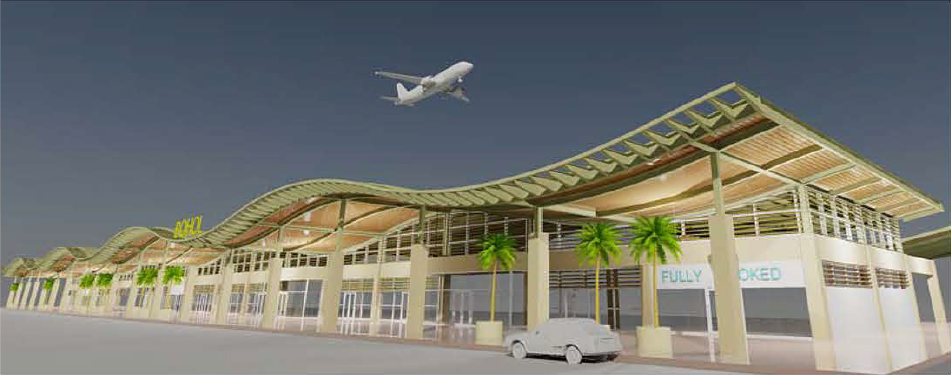
The airport has now a staggering cost figure of $ 50.1 million, or an estimated cost amounting to P2.614 billion pesos. It has a new name too. Panglao Bohol International Airport (PBIA).
PANGLAO BOHOL INTERNATIONAL AIRPORTIn 2001, Panglao Airport Project, now repacked as PBIA, Development Project, was being offered to Japan Bank for International Cooperation(JBIC) for funding. It was supposed to be part of the 25th yen credit package to the country. The 323 million project suddenly became 2.6 billion. It was disapproved outright for economic non-viability.
In 2004, the project was offered to the Swedish government for funding. Sweden was surprised to see that the 323 million project recommended by Swedavia, a noted airport specialist, swelled to US$ 75 million (4.2 billion pesos). It declined the offer to finance it saying that its economic viability is unrealistic.
It was offered again in the 27th yen credit package in 2007 this time with a balloon amount of 4.7 billion. It was disapproved for the second time by JBIC, this time with more reasons. Its outright disapproval prompted President Arroyo to issue an Administrative Order commanding the MIAA to take control and fund Panglao airport instead. But this order came with plenty of legal issues yet to be resolved starting with MIAA Charter.
The ECC was finally issued for the airport in favor of DOTC on June 3, 2008. The problem is no foreign funding agency is willing to fund the project for a simple reason and the government is not listening.
Therefore, the project will be funded wholly by government from the Manila International Airport Authority (MIAA), the Department of Transportation and Communications (DOTC) and some of its attached agencies, and the Department of Tourism (DOT). It will be jointly implemented by the DOTC and the MIAA.
Manila International Airport Authority (MIAA) General Manager Alfonso Cusi said that the P4 billion will have no foreign loan component for obvious reason.

The project was supposed to start in July 2008. Alfonso Cusi, general manager of the Manila International Airport Authority (MIAA), said that the airport would be finished by 2010. He bared the P3 billion outlay is a "sure deal" after business tycoon Lucio Tan paid P3 billion as part of Philippine Airlines' payables to the MIAA as rental fees of the Centennial Airport which is being used by PAL as terminal building of all its domestic and international flights. The amount is now placed under escrow intended as the budgetary outlay for the airport project.
After the
capsule laying, not a single heavy equipment ran the propose airport area up to this date. Tirso Serrano, Assistant General Manager for airport development and corporate affairs, confirmed that up to this time the project is not even good on paper and that there is no single contractor listed to undertake the project. He
said that the consultancy firm TGCI Engineers had just completed the feasibility study while Phil JAC Inc. had been commissioned to do the new airports detailed design. It was hoped that the airport becomes small again as originally planned.
It turned out that the cost of airport project has now escalated to almost 80 percent of the approved NEDA valuation based on the original design. In a report from
Manila Bulletin on September 28, 2009, the well kept secret-no-more of the new design was shed to light by Governor Erico Aumentado when he publicly announced in his local radio program in Tagbilaran that he was asking Malacañang for help to address the cost overrun. Aumentado said the runway has been reoriented 32 degrees in order to avoid plowing into the Alona Beach resort. According to him, there is need for engineering intervention, otherwise the airport would hit many crevices and depressed areas.
According to
Bohol Cronicle, the Governor, in justifying the increase gave a comparative analysis between the airports in Panglao and Laguindingan in Misamis Oriental. He said the former has a 2.5-kilometer runway compared to the latter's 2.1 kms. only. Panglao Airport's terminal building will have a 1.5-hectare floor area while Laguindingan's has 7,000 square meters only but costs more than the former that is locally funded.
The Governor failed to mentioned why Laguindingan airport in Cagayan De Oro got financing from Korea and why Panglao airport failed to get any nod from the foreign lenders. Instead, it crow for a local funding that is not there. The funding anomaly came also from the Governor's mouth that it went instead to CAAP.
The Philippine Japan Airport Consultants (PHIL-JAC) has submitted a revised detailed engineering design which substantially increased the project’s budget to P7.5 Billion pesos from the final figure of P4.7 Billion. It effectively overhauled the approved technical designs of JICA accredited TGCI.
DEBUNKING THE TOURISM ARGUMENTAs part of the 1991 Tourism Master Plan (TMP), the policy was to continue to implement the program that in the 2001-2004 Medium-Term Philippine Development Plan (MTPDP), the Arroyo administration devotes a separate chapter to tourism, entitled “Putting the Philippines on the International Tourism Map."
The constant argument for the Philippines dismal failure in tourism has always been airports, yet it has plenty of open international airports which remained a white elephant. Meaning, good for decorations only, as most of these airports are not earning international revenues as expected. Its interesting to point out that in the PIDS report for Sustainable Tourism in the Philippines, the 1991 Tourism Master Plan promoted the hub and spoke system of air travel following the successful story of Thailand. The aim was to bring tourists to satellite destinations via at least one gateway. The development of an efficient transportation network must be accelerated to allow tourists to move with reasonable costs from one destination to another at the shortest time possible.
For the Japanese market, for instance, access (preferably direct) is a very important decision factor for choosing a destination. If more gateways like Palawan can be developed, tourists (domestic and foreign) will no longer be obliged to fly back to Manila or Cebu for an international or even domestic flight. A liberal transportation policy is needed to make this happen.
But did the airlines, foreign or domestic followed the cue? No because there was no international passenger traffic sufficient to economically justify its operation. That is the first concept of airline business.
DOTC Secretary Mendoza argued the need for the "aeronautical highway" to link the Philippine islands. Yet in the same event, he said that foreign tourists are bothered by the hassle of airport transfers that is why the Panglao Airport was constructed.
He never answered the question and the issue relative to foreign tourist traffic in the Philippines and why no airlines operate internationally to almost 2/3 of its listed international airport inspite of it being open to foreign airlines.
He also failed to answer squarely the question on why they insist on making a big one when they can start with a small airport, and why immediately international when they can make and start it as domestic just like Bacolod and Iloilo does and grow from there.
PHILIPPINE AIRPORT ECONOMICS
The BPIA, if constructed will be the 11th international airport for the country which has managed to accumulate only 3 million foreign tourists in 2008. Almost all of of them entered in NAIA, while the rest came from Mactan, Clark, Davao, Zamboanga, and Kalibo in that order. Of those mentioned, only 3 airports are considered to be truly international with multiple flights from different airlines and substantial tourist registrants.
Malaysia which is also an archepelagic country like ours managed to entice 16 million tourists, yet it has only 6 international airports.
Thailand , which is the tourist mecca in Asia managed to post 14 million tourists but has only 6 international airports, while Indonesia which is 6 times bigger than the Philippines has only 9 international airports, despite its massive archipelago.
MCIAA General Manager Adelberto F. Yap, already argued that an international airport in Panglao, Bohol is not economically viable and could only increase the Philippines’ foreign debt. He further said that If this project is implemented, the National Government will only lose a huge amount in loan interests because an international airport in Panglao will just become a white elephant if it will only cater to one or two aircrafts.
PANGLAO ASSUMPTIONS
In the Airport Master Plan, the Terminal Building capacity (7,600 square meters) will host an assumed 969,000 passengers a year or capacity of near 500 at any one time. Using simple arithmetic, that is equivalent to 2,654 passenger movements per day in the airport.
An Airbus 319 monoclass carries 150 passengers, while the Airbus 320 carries 180. Assuming, that both Philippine Airlines and Cebu Pacific, which has 3 frequencies daily, would both fly A320 and suddenly increase its frequncy to 5 each with a total of 10 flights per day starting 2010, the terminal would accommodate only 1,800 passengers. Way too far to even meet the minimum capacity. From that simple calculations, the airport needs to accommodate 15 flights of A320 daily.
The projected capacity of Panglao airport is even much higher than Iloilo, Cagayan and Bacolod airports, and to think these are foreign funded airports that has been cautiously evaluated by foreign donors. To top it all, the technical evaluation as prepared by TCGI Engineers is off limit to the general public.
The economic internal rate of return (EIRR) of the airport is listed as 23.6 percent, even higher than the NEDA threshold of 15 percent. If it was the case then it would have no problem convincing Japanese, Korean or Swedish government or any other funding agency to finance it. In fact it was same proposal that was rejected by JBIA twice.
In Michael Canares blog, Governor Aumentado has said boasting that the study conducted by the TCGI Engineers reported a 23.6% economic internal rate of return. UP economist Dr. Ernesto Pernia questioned this claim and demanded for a copy of the study.
Dr. Pernia’s major contention was, if this was indeed true, then there would have been any problem for the project to get low-interest loans that would have freed government resources for other more ‘poverty-reducting’ projects. Also, he questioned why a group of engineers were the ones who assessed the financial viability of the project.CONCLUSIONFrom 323 million in 1994, six years later it become 2.6 billion. In 2003 it breached 2.7 billion mark. By 2005, the project amount grew to unprecedented heights at US$ 75 million, that is equivalent to 4.2 billion. In the final NEDA Report, the project cost 4.7 billion pesos in 2008. In September 2009, the project cost was now 7.5 billion pesos. Its almost the equivalent amount for 3 new airports built in Iloilo, Bacolod and Cagayan de Oro combined.The airport land area grew too from the original 33 hectares in 1994, 120 in 1997, to 216 hectares in 2008. The original Swedavia runway grew too to 500 more extra meters.
The irony of it is that the original airport never got the nod of foreign funding agencies for being too environmentally unsound and economically unrealistic. Yet it never perturbed the Arroyo government in growing it out of proportion.
Boholano Bloggers call the the international airport envisage for Panglao Island nothing but a mirage, promoted by a government that doesn't have the money to finance its construction, amidst rising foreign loans and widening budget deficits. Somewhere the illusion must stop.