Showing posts with label Disaster Relief. Show all posts

Tuguegarao Airport Badly Hit By Typhoon

15 September 2018

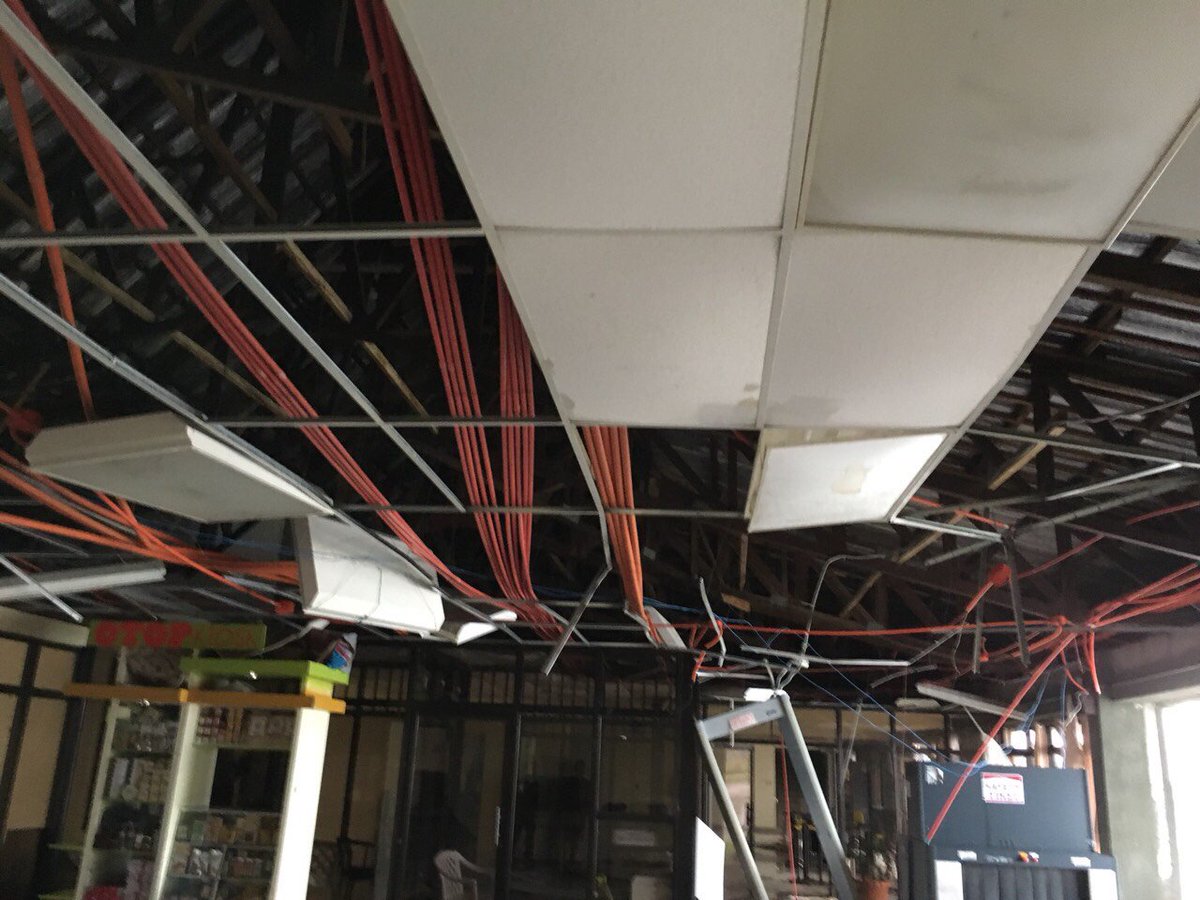
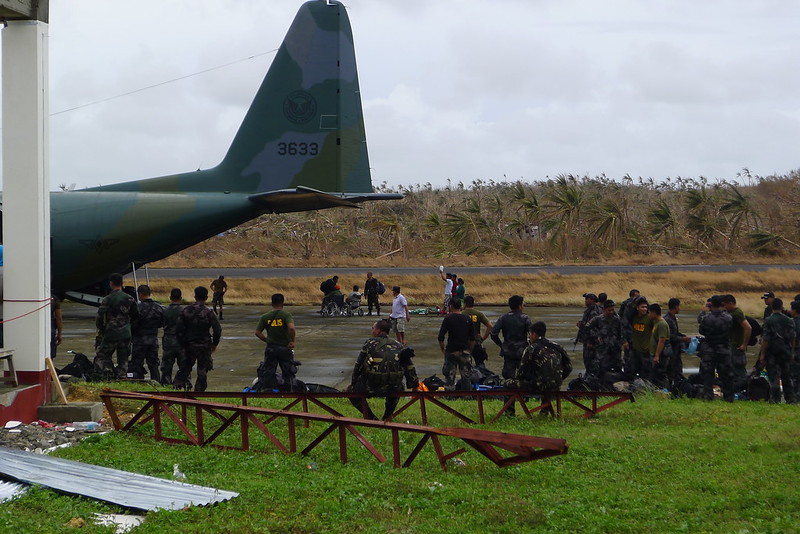
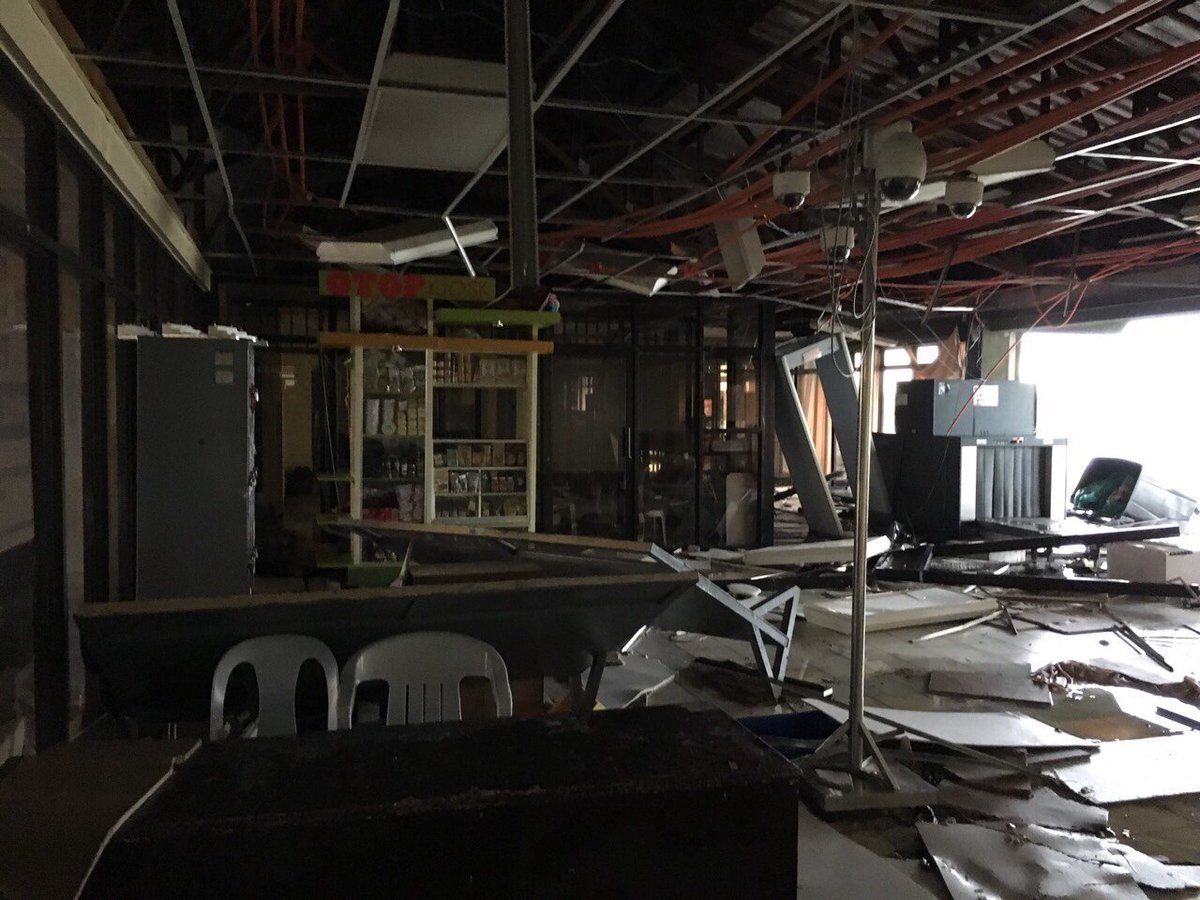
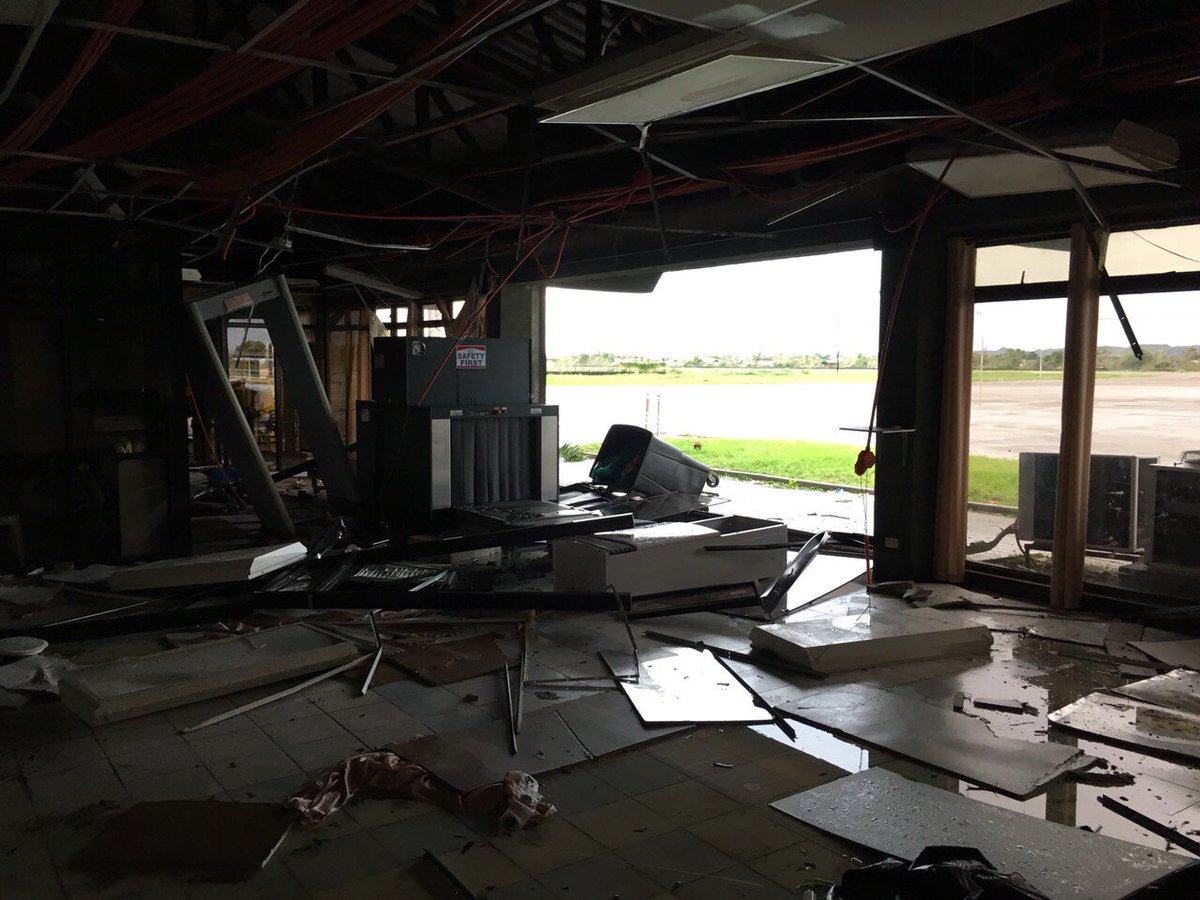
Tuguegarao Airport Terminal in Cagayan suffered structural and equipment damages  brought by typhoon Ompong (Mangkhut) in a report made by Transport Secretary Arthur Tugade.

Secretary Tugade discloses airport will need to be closed to commercial traffic for couple of days to facilitate terminal repair. Meanwhile, they are working on the opening of the runway to make way for C-130 relief flights.

The upgraded terminal was recently opened in March this year.

Weather conditions in Tuguegarao remains challenging to aircraft as of posting time which prevented the Philippine Air Force (PAF) from flying to the area.


Malaysia Delivers HADR To Marawi

 ASEAN Closed Ranks, Sends Aid

21 July 2017


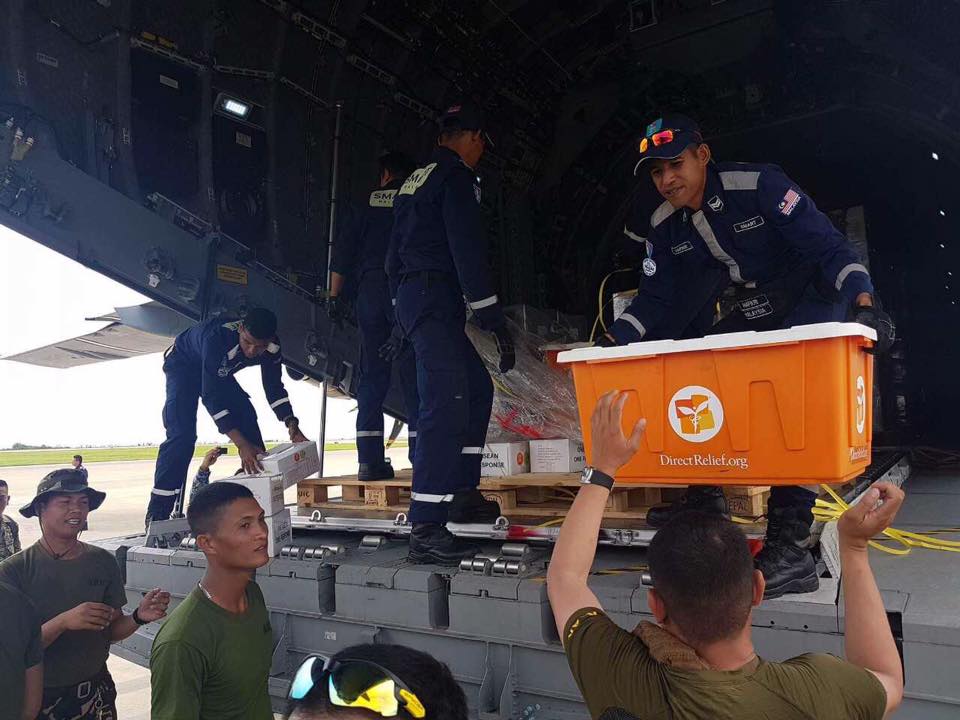
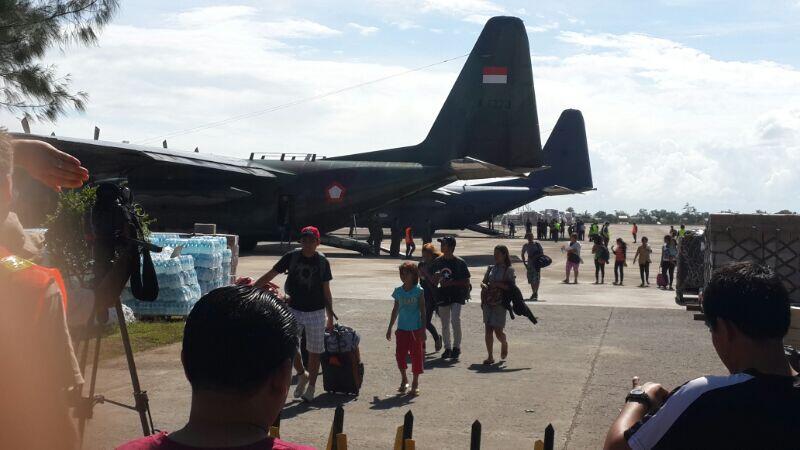
Malaysia has send 19 tonnes of Human And Disaster Relief (HADR) assistance to Marawi City on Friday ferried by Royal Malaysia Air force A400M transport plane. 


The airlift operation arrived at Laguindingan airport this morning and was the first humanitarian mission of the air force that involves the A400M operation.

The A400M is piloted by Lieutenant-Colonel Baharin bin Mohamad assisted by Major Wan Azrul bin Wan Azmi as his co-pilot. The aircraft arrived around 6am and was on the ground for nine hours unloading the cargo before it left for Kuala Lumpur at 3pm this afternoon.

Likewise, eleven personnel from the Special Malaysia Disaster Assistance and Rescue Team (SMART) are also deployed in Cagayan de Oro to assist in the distribution of the aid.

US Sends Humanitarian Aid To Marawi

Singapore Sends Drones

19 July 2017

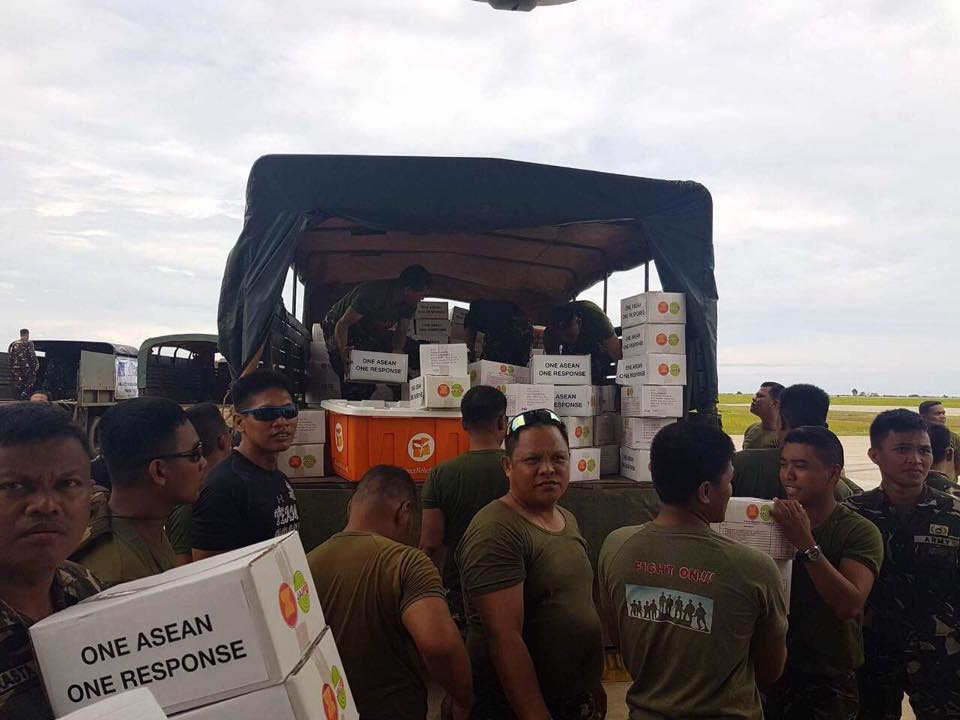
The United States government has delivered Tuesday morning humanitarian assistance that was offloaded in Zamboanga International Airport intended for displaced civilians at the war torn City of Marawi.

The US government said the cargo comprises among others educational supplies, drugs and medicines, as well as water containers and chlorine tablets to make potable water to evacuation centers in the provinces of Lanao del Sur and Lanao del Norte and in Iligan City. There are 78 evacuation centers that was put up by the government to house thousands of displaced persons (IDPs).

Meanwhile, Singapore has offered drones and its urban warfare training facilities to help Philippine troops on its fight against ISIS militants. The offer was accepted by the Philippines through its Defence Minister Delfin Lorenzana.

Defence Minister Ng Eng Hen of Singapore said in a news briefing this afternoon that he offered to his Philippine counterpart Delfin Lorenzana help "to enhance the intelligence, surveillance and reconnaissance capabilities" of the Philippine military.

Singapore has two types of unmanned aerial vehicles (UAVs): the Heron 1, which has a range of 200km and can stay in the air for 24 hours; and the Hermes 450, which has half the range and a shorter flying time of 14 hours.

The UAV's will be send to Zamboanga's Edwin Andrew Airbase with a C-130 complement anytime next week where they will be stationed together with its counterpart from the US military for intelligence, surveillance and reconnaissance missions in Marawi.


The Singaporean C-130 will also be used to ferry humanitarian supplies to Marawi evacuees.

From Russia With Love

Russia Delivers Aid To Earthquake Victims In Surigao

16 February 2017

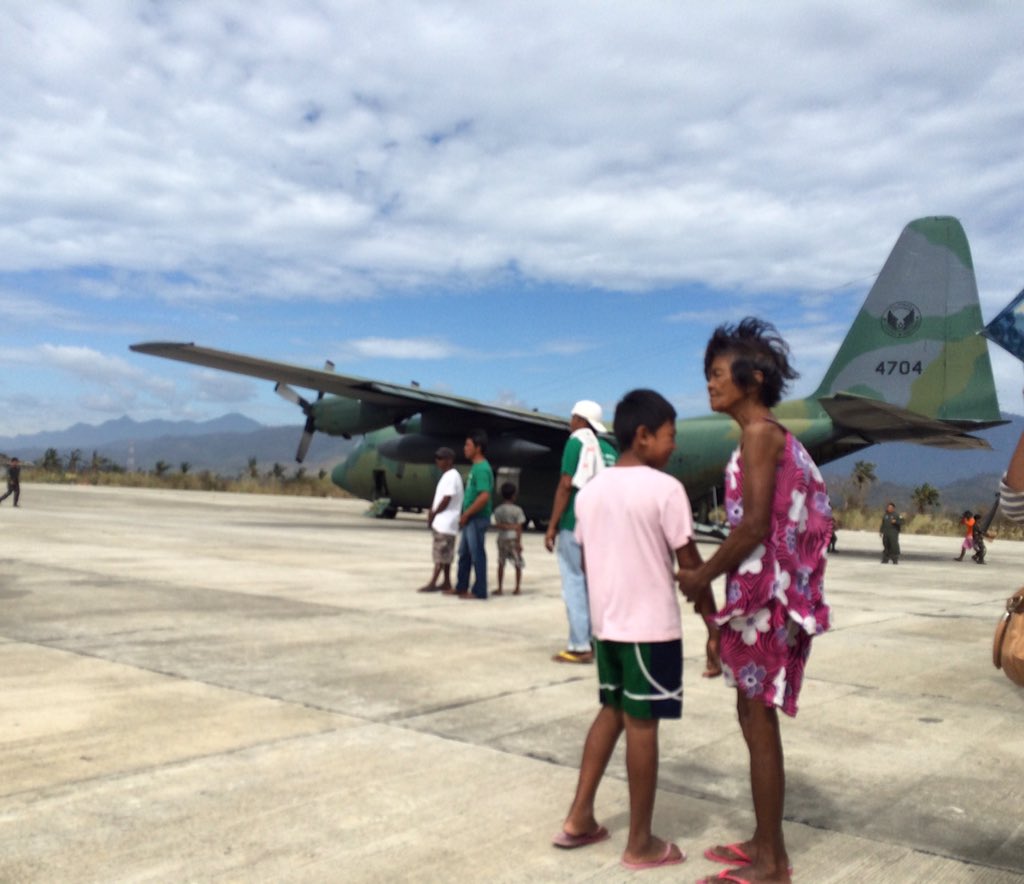
The Philippine government yesterday received from the Russian Federation some 30 tons of humanitarian aid for the victims of the recent earthquake that struck Surigao Del Norte on February 10 delivered from the Kremlin's Special Flight Squadron.

The relief items from Moscow Vnukovo Airport, valued at some 20 million, arrived yesterday morning at Davao International Airport aboard a military aircraft from the Russian Federation for Civil Defense.

Russia also sent aid to Bohol and Cebu when earthquake hit the area in 2012 coincidentally on the same month and date.

Disaster Relief Casiguran

Ground Zero

23 October 2015

By: Voltaire Topaz
Rappler

GROUND ZERO. Local residents watch as boxes of relief goods are downloaded from the first C-130 that landed in Casiguran, Aurora, following the landfall on October 18 of severe Typhoon Lando. Photo by Voltaire Tupaz/Rappler.com
Local residents watch as boxes of relief goods are downloaded from the first C-130 that landed in Casiguran, Aurora, following the landfall on October 18 of severe Typhoon Lando. 
Photo by Voltaire Tupaz/Rappler.com 

On October 21, the first C-130 of the Armed Forces of the Philippines (AFP) carrying cabinet officials and relief goods from the national government reached Casiguran, Aurora. The aircraft almost did not make it to ground zero of Severe Typhoon Lando (international name Kuppo).

When the national officials landed in Baler for their first stop, local authorities dissuaded them from flying to Casiguran because the weather was bad and the town’s runway was not ready to receive the C-130.

Air authorities recommended travel by land, a 4-hour trip on bumpy road. This disappointed Interior Secretary Mel Sarmiento, who was with Welfare Secretary Dinky Soliman and national disaster management chief Alexander Pama.

“Our order yesterday (Tuesday) was clear. Prepare the runway,” the new interior secretary reminded air authorities in a mix of English and Filipino.

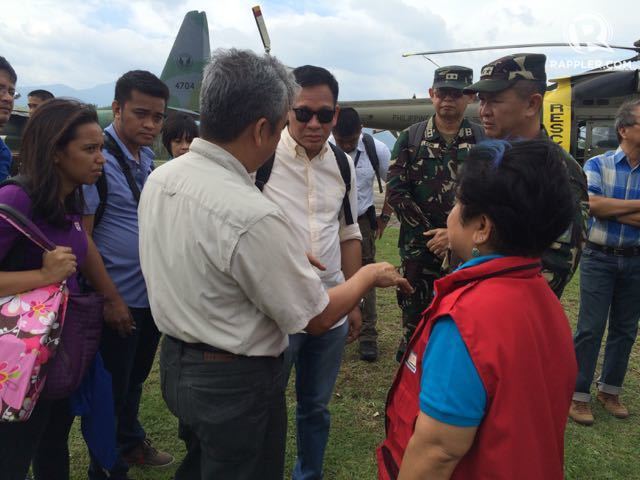
LET'S GO TO GROUND ZERO. DILG Sec Mel Sarmiento, DSWD Sec Dinky Soliman, and NDRRMC executive director Alexander Pama decide to fly to Casiguran, Aurora to hand over relief goods despite bad weather on October 21. Photo by Voltaire Tupaz
LET'S GO TO GROUND ZERO. DILG Sec Mel Sarmiento, DSWD Sec Dinky Soliman, and NDRRMC executive director Alexander Pama decide to fly to Casiguran, Aurora to hand over relief goods despite bad weather on October 21.
 Photo by Voltaire Tupaz

The national officials were determined to reach Casiguran because the stakes there were high. Their first attempt to reach the devastated town was aborted on Tuesday, October 20, 72 hours after Lando made landfall – a critical time for the national government to augment local relief goods in times of disaster.

The officials wanted to personally see the situation on the ground and to hear concerns needing their attention, according to Pama. They were also setting up a task force that would assist the local government units in Aurora in their recovery efforts. 

The officials decided to proceed despite the risks. In the cockpit, Sarmiento and Pama closely watched as the aircraft approached the runway. A tree blocked the landing view.

But after the pilot, Philippine Air Force’s Maj Ramil Daet, successfully maneuvered through the obstacle for a safe and smooth landing, the officials broke into applause and shared a high five.

“Now we know we can deliver relief goods,” a relieved Pama blurted out.

Waiting for relief
An old woman, her grandchild and a few other typhoon survivors were at the peripheries of the runway waiting for relief goods when the first aircraft landed in Casiguran Wednesday morning.
It carried 500 boxes of relief goods that can feed hundreds of families for three days. Another C-130 brought in at least 1,500 boxes of blankets, hygiene kits, mats and clothes. More goods are on the way, according to Soliman.

More stories at Rappler.com

Meet Farah Adam

Ormoc Airport's One Woman Show

12 December 2013


Air traffic controller Farah Adam jots down some notes in between guiding aircraft landing and taking off from Ormoc City airport. (photo by Tony Ahn for InterAksyon.com)
Much has been said in praise and gratitude, and rightly so, for the disaster response and relief workers who rushed in to help the communities devastated by super typhoon Yolanda.

But there are those, too, whose work, while mostly unnoticed, is indispensable to ensuring the relief missions even take place at all.

Meet Farah Adam.

Farah is an air traffic controller with the Civil Aviation Authority of the Philippines, and she was responsible for establishing flight operations in Ormoc City, allowing aircraft to bring in relief supplies, equipment and personnel and fly out refugees and relief workers rotating out.

In her mid-thirties, married with two kids, and a swimming and running enthusiast, Farah arrived in Ormoc on November 21.

The Ormoc airport has not been in commercial service since 2009.

Farah set herself up in a small office with a single window facing the airstrip and a radio set that had been brought in.

This, essentially, was the control tower.

Normally, airports have one or more controllers handling approach and departure, bent over radar screens in what is known as the Terminal Radar Approach Control Room.

There are other controllers who manage ground operations, deciding where an aircraft should taxi and park after landing, and which plane is to take off and when.

And then there are the ground marshals who manually signal the aircraft with orange wands.

They all communicate with each other to make operations as smooth and safe as possible.

In Farah’s case, she handled approach, departure, and ground operations all at the same time -- and with no radar.

When I first saw her in Ormoc on November 25, she was glued wide-eyed to her window, watching the sky for a Royal Australian Air Force C-130 that was preparing to land.

There were two in the air at the time.

With pencil in one hand and radio microphone in the other, she issued clearances in response to requests from the aircraft, moving swiftly from one activity to another: watching the sky, talking on the radio, poring over charts and other papers.

She had no radio to communicate with the ground marshals directing the aircraft.

Instead, she turned to a man standing in the doorway and said: “Can you ask the ground crew to direct this landing aircraft to park on the south end? And would you mind asking if they can unload it?”

She explained to InterAksyon.com: "They're with the RAAF and this isn't one of their aircraft, but there's no one else to unload it, so I have to ask a favor."

Later, finding no available runner at the door, Farah dropped her mike and sprinted outside herself as a C-130 touched down to talk to the ground marshals directly.

Then she sprinted back inside to monitor the radio.

This was her job from sunrise to sunset every day.

“We’re unconventional, but we’re safe,” she said with a smile when she finally got a moment to speak to InterAksyon.com.

“I arrived on November 21. As per Atty. Gonzalez, our Air Traffic Services Head, I was tasked to establish an Ormoc flight service station to provide safe, efficient, orderly, and expeditious air traffic service, and to coordinate with the US forces and other contingents for the allocation and division of labor, as well as reiterating the role and mandate of CAAP in providing safe Philippine skies.”

InterAksyon.com got another chance to talk to her, by phone this time, when she returned to Ormoc for a five-day rotation.

"It was beneficial to be deployed here because it is really fulfilling," she said. "We made a small contribution, by sending supplies in and sending refugees out, and negotiating with various carriers to get them taken onward to Manila and Cebu, as well as get disaster relief workers ferried out who were going home. I'm on my second cycle here and I'm not regretting it."

Indeed, while disaster response and relief workers get the lion’s share of the gratitude and praise for their tireless work, there are others - pilots, drivers, ground crew, air traffic controllers and many others - whose work helps facilitate the missions of all other disaster relief agencies.

Meet Farah Adam, air controller and post-Yolanda heroine.

Australia's Ormoc Airport


11 December 2013


© Commonwealth of Australia, Department of Defence

If the United States of America took care of Guiuan airport and the rest of Samar Island, and Canada establishes DART hub at Iloilo airport for Panay Island operations, the mates down under assumed responsibility for assisting the Government of the Philippines in heavily damaged Ormoc airport, about 500 of them, as they put up base for the Australian Defence Force (ADF) Operation PHILIPPINES ASSIST to support Humanitarian Assistance and Disaster Relief. 

The ADF commitment includes command and control elements from the Deployable Joint Forces Headquarters, Army Engineers from 3rd Combat Engineer Regiment, Amphibious ship HMAS Tobruk and logistics aircraft.

Command ship HMAS Tobruk, which sailed from Townsville on 18 November and arrived Ormoc November 26 is anchored off Ormoc City with a Recovery Support Force composed of teams from the Navy, Army, Air Force and Australian government personnel which is based at Ormoc Airport, while the airlift support is based at Mactan Cebu International Airport being provided by Royal Australian Air Force C-130J Hercules and C-17A Globemaster aircraft.

Royal Australian Air Force C-130J Hercules pilot, Flight Lieutenant Christian Yates-Round wearing the Philippine Air Force insignia at Ormoc Airport
HMAS Tobruk’s embarked MRH-90 helicopter arrives at Ormoc Airport
A landing craft departs HMAS Tobruk loaded with Australian Army Engineer equipment for the Recovery Support Force

ADF repaired newly finished but typhoon destroyed Ormoc airport terminal providing temporary roof on the facility

When a smile isn't even enough to say THANK YOU!


Iren Dornier Survives Crash

As Royal Air Force Comes to its aids 


26 November 2013

Southeast Asia Airlines (SEAIR) and SEAIR International owner Capt. Iren Dornier together with American pilot Capt. James Eagle survived a helicopter crash around 4 pm Sunday after their Bolkow 105 helicopter with registration number RP-C399  crash-landed near the shoreline of Purok 6, Barangay Binwangan, Obando, Bulacan after both its engine suddenly shut down.

The helicopter, operated by Aviation Enterprises based in Clark International Airport, was flying back to its home base in Pampanga from Caticlan in Aklan after bringing relief goods for victims of typhoon "Yolanda" when it encountered engine problems.

The two passengers managed to send distress signal and jumped off the helicopter right before it crashed to the sea.

"I was able to grab the radio. Luckily there was a great coincidence that there were so many aircraft flying relief goods. They were monitoring the frequency and they were able to throw us a raft," Eagle said.

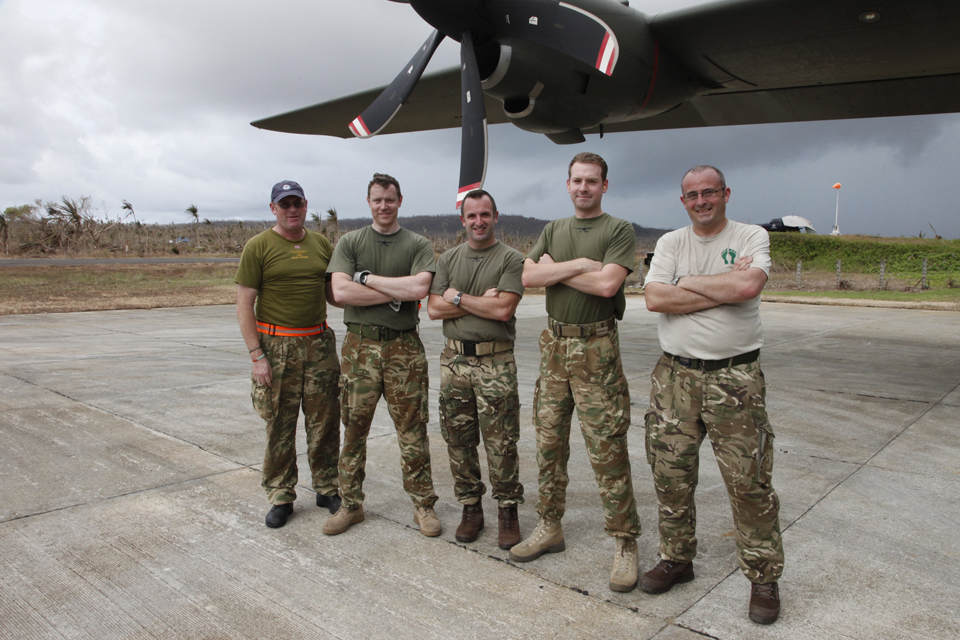
Their savior happens to be the Royal Air Force of the United Kingdom. The C-130 crew from RAF Brize Norton were on their approach to Manila Airport to collect more aid equipment at Villamor Airbase when they heard a Mayday distress call.


Their distress call was received by the RAF C-130 Hercules captain, Flight Lieutenant Jamie Knox, which immediately broke off his landing and went to search for the helicopter in distress.

"It was an instinctive response. When we heard that Mayday we knew we had to do something." says Flight Lieutenant Tom Arnold who is co-piloting the cargo plane.

Eagle were able to give the RAF Hercules their last known position over the radio, and the C-130 crew headed to that location to begin their search.

Almost as soon as the Hercules reached the crash site, an excited voice on the radio said ‘we can see you’, and the helicopter aircrew directed the search aircraft until the RAF crew spotted the life vests of the 2 helicopter crew members.

The two had been swimming towards the shore for about an hour and a half when the C-130 plane arrived.

The RAF Hercules took on scene command of the rescue efforts, marking the location and flying above the crash scene. 

Flight Lieutenant Arnold then requested further assistance from Manila air traffic control and the Philippine Coast Guard, whilst reassuring his fellow pilots.

Eventually, a United States Marine Corps (USMC) C-130 Hercules arrived on the scene to assist. 

US Marine Captain Caleb Eames of the Third Marine Expeditionary Force said their C-130 aircraft  proceeded to the area to help and throw a life raft out to the downed pilots to scramble into.

Flight Lieutenant Arnold could hear over the radio that the aircrew were okay. The RAF C-130 Hercules, call sign ‘PAGASA 47’, which means ‘there is still hope’ in Filipino, remained above the life raft until it spotted a fishing vessel heading towards the 2 survivors. 

The crew then handed over control to the USMC aircraft and continued to Manila on their humanitarian mission.

"Stuff like this doesn’t happen every day. It is fantastic that we were able to help our fellow pilots at the same time as helping the people of the Philippines." says Flight Lieutenant Knox.

PAF's Outstanding Job

On the most massive and complex relief operations 
the Philippines ever had!

By Ayee Macaraig and Ana Marie Pamintuan

25 November 2013

There are twelve C-130's based at Mactan Airbase in Cebu alone, feeding the international relief work of Typhoon victims. Three of the 12 belongs to the Philippine Air Force which makes 12 flights a day to deliver aid to disaster stricken areas.

The base operations at the Benito Ebuen Air Base in Mactan for relief efforts for Super Typhoon Yolanda (Haiyan) is a virtual United Nations.

On the tarmac, an Australian Air Force plane takes off while an Emirates aircraft lands. Outside the gate, an American soldier counts the heads of the responders and Filipino relatives boarding a flight to Tacloban. In the VIP room, ambassadors get updates on the relief work. Right outside, Japanese medics huddle while Spanish relief workers conduct their own informal briefing.

English in various accents fill the command center, as air force troops from several countries fly in and out of the hub for the airborne rescue and relief operations in the Visayas. The languages are different, the groups countless. Yet there is only one goal: to get the people and cargo moving so the victims of the world’s strongest typhoon have much-needed food, water, shelter and medical care.

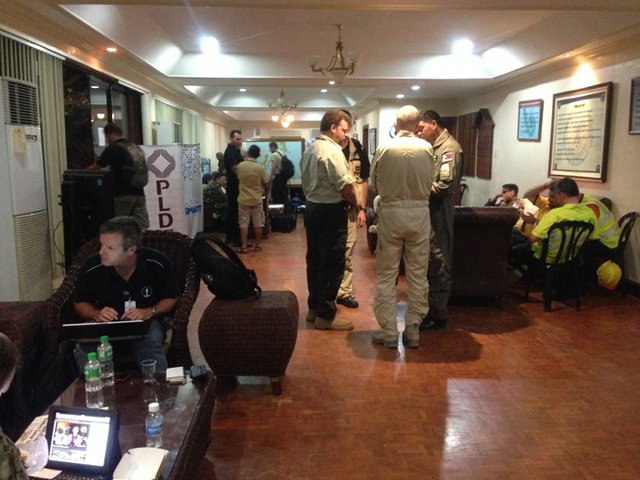
'THE COALITION.' The relief operations for Super Typhoon Yolanda (Haiyan) is the work of several militaries, NGOs and international groups led by the Philippine government. This is the base of their operations at the Mactan Airbase. Photo by Ayee Macaraig/Rappler

Despite the large number of troops under various national commands, however, the operations are generally smooth, with the PAF coordinating the missions and running the center like a commercial airport.

The Philippine Air force (PAF) said that with the large number of aircraft, the tarmac, which the air base shares with the Mactan-Cebu International Airport, would be clogged with planes and relief goods and crippled within two days. Mactan Airbase can handle only three aircraft on the ground at one time.

So the PAF devised a system of facilitating air traffic at the command center, with computerized flight information displayed on a computer screen at the reception area and regularly updated, like in commercial airports.

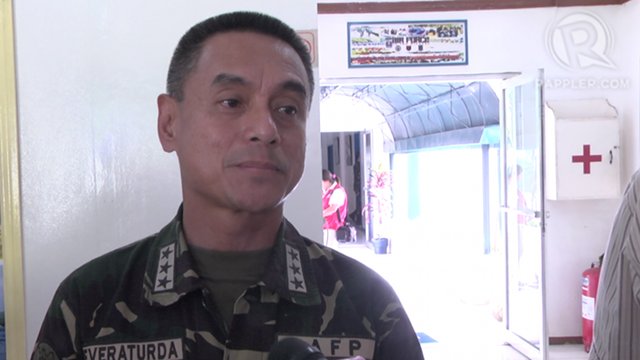
The Philippine military directs the delivery of aid, with Lt Gen Roy Deveraturda, chief of the central command of the Armed Forces of the Philippines (AFP) leading what soldiers often refer to as the “coalition” effort. 

He controls deployment of 12 C-130's from different nations, including three of his very own.

TEAM COMMANDER. Lt Gen Roy Deveraturda of the Armed Forces of the Philippines Central Command leads the Haiyan relief efforts for the Visayas at the Mactan Airbase. Photo by Franz Lopez/Rappler

Philippine-led ‘coalition’
“There’s a lot of pieces in the puzzle. Overall you have Manila but in terms of this operations center, in terms of flights, where we should take our military assets, we run to him and say, ‘What’s the need today? What flight times can we get?’ And then he goes from there,” said Jonathan Gilbert of the Australian Embassy in Manila who has been in the base for 5 days now.

Several countries have brought tons of relief goods to Cebu on their own military C-130 Hercules transport planes, which can operate efficiently even in a harsh environment. A few, like Australia, Indonesia, Japan, New Zealand, Singapore, Sweden, South Korea, and the United States, allow their aircraft to be used to transport relief goods donated by others or prepared by the Philippine government, and to bring evacuees to Cebu from devastated villages in Samar and Leyte.

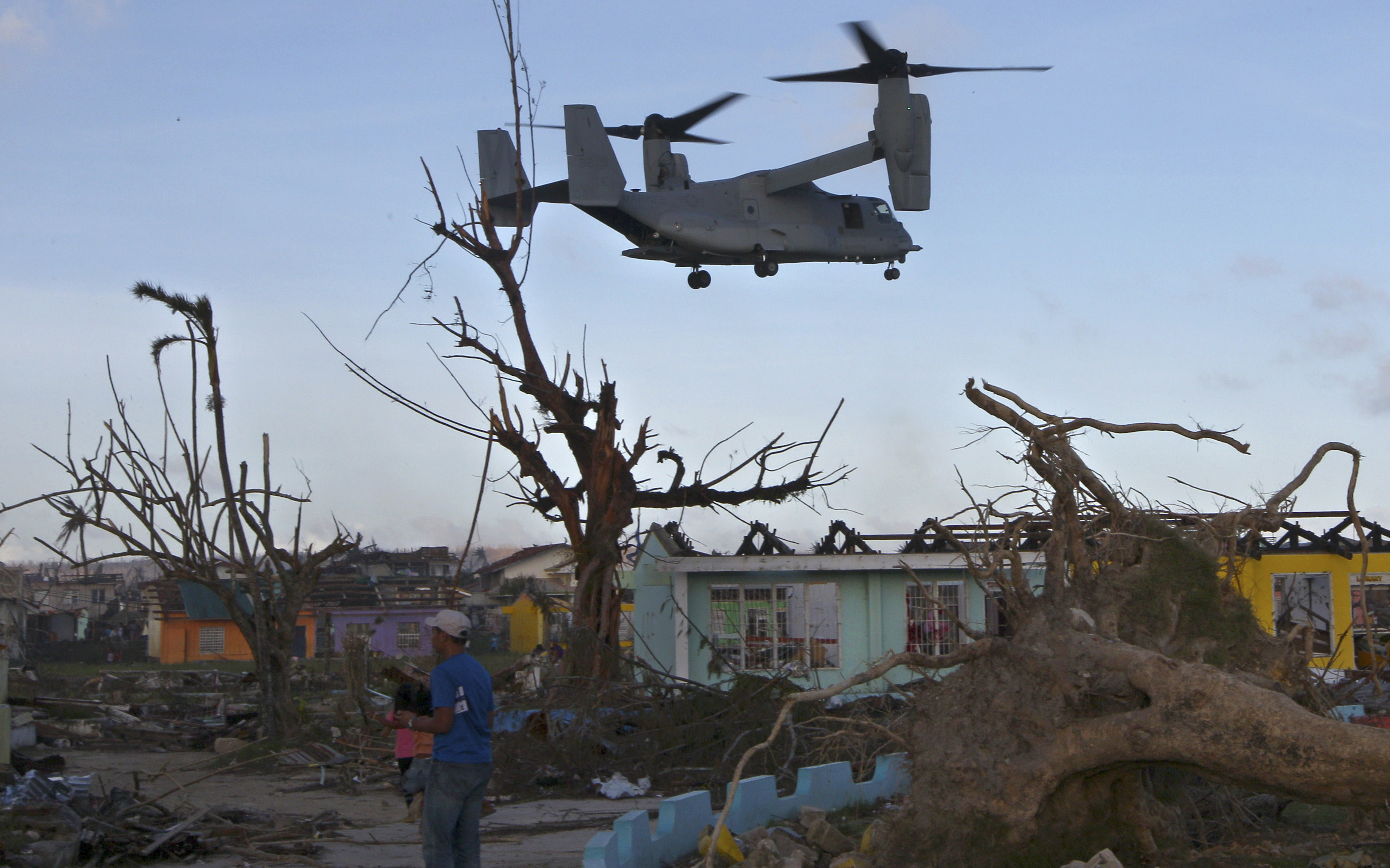
From 5 a.m. till early evening, there is an unending stream of mostly C-130s flying out of or into the air base. The Americans have also deployed helicopters and the V-22 Osprey, a fixed wing aircraft capable of vertical takeoff and landing like a helicopter, but they don’t take up space in Mactan. 

Instead the US Ospreys mostly fly in and out of the devastated islands from Clark Airbase in Pampanga, and the MH-60S Seahawk helicopters then return to their aircraft carrier, George Washington anchored east of Samar.

To coordinate air traffic, the command center was opened on Monday last week and was up and running by Wednesday. All arriving foreign air force teams must check in at the command center, then fill out forms declaring their personnel composition, the goods and equipment being brought in, the needs of the team, and the identities and contact numbers of the flight leader and load master.

All planned flights must be proposed for approval to the command center by 1:30 p.m. the day before. A coordination meeting attended by representatives of each “partner nation” and the PAF is held at 3 p.m.


Handling of aircraft begins two hours before departure. PAF ground maintenance crew, many still in training, assist in the cargo handling, which is swift and orderly.

Essential goods and equipment as well as essential personnel are given priority in departure. Aircraft with no night vision capability get priority for daytime flights.

Geographic Division of Work

The foreign countries military contingent also divide the work geographically. 

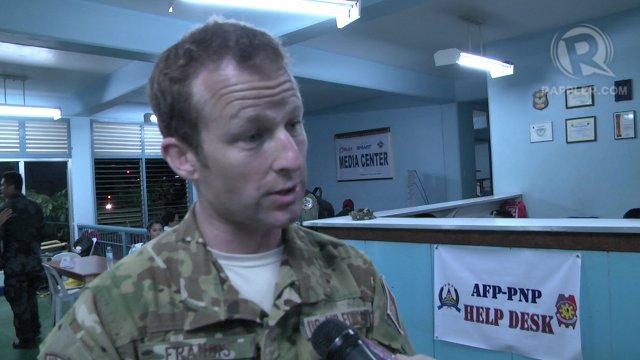
Major Jimmy Francis of the US Air Force said the United States focused on the east coast of Samar including Guiuan, while the Australians and New Zealand moved toward Roxas City to the west to join Canada, while their Israeli counterpart set up shop in Bogo, Cebu.

“The USS George Washington is there with a fleet of SH-60 helicopters and they’re covering the east coast. Also, the US Marine Corps was bringing in supplies to Guiuan. I don’t think they’re quite going to Borongan yet but in the future, in the next couple of days, they’re gonna start doing that, also Ormoc and of course, Tacloban,” Francis said.

Guiuan airport was basically crowded with US Air Force Ospreys and Black Hawk helicopters. But other aircraft landed their as well. The New Zealand C-130 delivered relief goods Wednesday and waited on the runway for about 15 minutes as the Americans moved their Ospreys away from the unloading area.

With a forklift and help from locals, it took less than an hour for the Kiwis to unload the relief goods and take in several evacuees. It was pitch-black as the C-130 took off at around 6:30 p.m.

About 45 minutes later, it was back in Mactan, taking its place among about 12 other Hercules planes parked for the night, their teams resting for the next day’s work.

They also divide the work according to time.

Francis said, “There are some US air force controllers that are assisting the Philippine air traffic control in the day and in the night time, the US forces control the fields to enable 24 hours delivery of supplies.”

Squadron leader James Anderson of the Royal New Zealand Air Force pilots a C-130 transport plane over Tacloban last Wednesday, after delivering several tons of relief goods to Roxas City in Capiz and Ormoc as well as transporting evacuees to Cebu. The RNZAF team, accompanied by New Zealand embassy deputy chief of mission Justin Allen, also unloaded boxes of biscuits and more sacks of relief packages in the coastal town of Guiuan in Samar.

Problem of airfields, land transport

Officials admit logistics is a key challenge, particularly how to transport aid.

“It’s on a certain level of Haiti or the tsunami and so we are working on that level of this large-scale humanitarian operations and of this large amount of needs of the population,” said Christoph Altheim, coordination and assessment expert from the European Civil Protection Mechanism.

Gilbert said the whole group is using a lot of equipment to address the problem.

“It entails everything from big things like planes to things you wouldn’t necessarily think about like forklifts, trolleys to move supplies. I think the biggest challenge for logistics is airfields in some regard. We can only bring heavy planes into certain areas. We can’t fly heavy planes into small villages. That’s where the arrival of the US aircraft carrier really helps.”

Francis said the US strategy is to bring in supplies to the large bases first through ships or huge aircraft like the C17 then use “more tactical level aircraft” like the C130s, MV-22 Ospreys and Navy SH-60 helicopters then forward these to the airfields. Smaller helicopters will then deliver relief goods to barangays.

Having worked in recovery in the 2010 Haiti quake, Hurricane Katrina in 2005 and other US military missions abroad, Francis said Haiyan is one of the most complex operations he has been a part of.

“The breadth of destruction is pretty wide. Transportation is very difficult on the ground. There are many barangays that are unreachable. There are a lot of aviation assets so I think we are getting to all those locations slowly but surely.”

Beyond logistics, coordination is also a challenge.

COMPLEX WORK. Major Jimmy Francis of the US Air Force says the Haiyan relief operations is one of the most complex he has been part of. Photo by Franz Lopez/Rappler
“You have different agencies with their own languages of operating: governments, militaries, civilians. It’s extremely difficult. Oftentimes, there’s not one authority that directs everything. It’s kind of a joint cooperation so as long as there’s communication between everybody, we have a good way forward,” Francis said.

Catching up with aid delivery

Lt Jim Alagao, spokesperson of the AFP Central Command, said that 9 days after the typhoon, the relief effort is still in the early stage, focused on feeding the victims.

Alagao said though that there has been improvement in the delivery of aid.

“I talked to some foreign reporters who went to Guiuan on Friday and their observation was there were no trucks, only motorcycles. When they came back Saturday, they were surprised there were 30 to 40. That came from Manila and the reinforcement trucks. We hope to bring the goods from Guiuan to the suburbs.”

Francis said the priorities in the coming days will be to shift from providing the basic needs to infrastructure like water purification systems and tent cities. The US is also setting up refueling points for its helicopters so they do not have to go back to the ships or the base.


Indonesian Ambassador Kristiarto Legowo said his country brought in a C130 on Saturday and the Indonesian contingent will stay until November 24 to support the humanitarian operations, upon the request of the AFP. A new Japanese medical team also flew to Tacloban on Saturday.

The European Union’s Altheim said the EU is pledging 30 million euros to the recovery efforts.

The international team though acknowledged criticism about the pace of relief efforts.

“I know it’s a little bit slow and I’m sure it’s very frustrating for the people on the ground but I think the coalition is really starting to catch up with the aid,” Francis said.

For Australian representative Jonathan Gilbert, assessing the work involves taking into account the realities on the ground and the scale of the devastation.


“Here in the Philippines, you have a storm 3 times bigger than Katrina in a very remote part of the country and to be honest, in a very poor part of the country. Your military has only 3 C-130s and you’ve given it all. You’ve deployed all your assets to this and my sense is your military has done an outstanding job with a storm, a once-in-a-century storm, hitting a very poor and isolated part of the Philippines.” says Gilbert.

“That’s a very hard problem to solve.”


The Flight Of The Osprey

Persuading Allies to buy Their Own


24 November 2013

By ERIC TALMADGE and SETH ROBSON
Associated Press, Star and Stripes

The U.S. Marines’ newest and in some quarters most controversial transport airplane is showing the world what it’s got — for the sake of the victims of Typhoon “Yolanda” (international name: Haiyan),  and perhaps its own future.

The MV-22 Osprey, which can tilt its rotors to fly like either a helicopter or a fixed-wing aircraft, is delivering tons of aid every day to people affected by the Nov. 8 storm. The U.S. military’s humanitarian effort presents a golden opportunity: The Marines want to show how safe and versatile the Osprey is, countering critics and helping to persuade allies to buy their own.

Anger over the decision to base the aircraft on the Japanese island of Okinawa, the only place in Asia where they are permanently deployed, has made the aircraft the poster boy of anti-military sentiment there. Opponents cite noise problems and high-profile crashes in the early days of the Osprey, though its safety record since then has been better than any other helicopter-type aircraft.

With its unique design, the Osprey can fly faster and farther and carry heavier loads than the helicopters it replaced.

“Anything that’s different generates criticism. And the Osprey is different,” says Capt. Travis Keeney, who has been flying the aircraft for six years. “There’s nothing like it in military history.”

He’s taken the Osprey to Iraq, Libya and Africa, but this is the biggest humanitarian mission he’s ever been involved in. He wants his aircraft to shine, and his squadron has a lot to prove.


Keeney’s first orders Tuesday appear to have little to do with humanitarian aid. His crew is told to sit tight and prepare to transport an Israeli general.

The Osprey has proven itself in battle in Iraq and Afghanistan, and that has gotten the attention of militaries around the world — including Israel’s.

“Everybody wants to see it,” Keeney says.

But that plan is scrapped, and by 10:30 a.m., Keeney’s Osprey and five others delivering aid are on their way to a busy drop zone in Borongan on the island of Samar. They will make as many runs as they can to pick up and offload supplies.

Keeney’s day usually goes about 12 hours — with nine or 10 in the pilot’s seat and six of actual flying. Shifts earlier in the crisis were longer, but even now he doesn’t have time for breaks. He takes whatever food he needs with him on the Osprey. If he needs to relieve himself, he has an empty bottle.


As the plane, now bursting with boxes of supplies from the U.S. Agency for International Development, gets close to the disaster zone, the crew chief lowers the back ramp, turning the rear of the Osprey into a huge window onto the bright blue Gulf of Leyte and the devastated Samar coastline below. The crew assesses the damage along the way to see what other places they should try to reach.

Borongan, the first stop, was not so badly impacted, and the drop is organized and efficient. Local men run to the Osprey, grab the boxes and race back to the loading area. In 15 minutes, the Osprey is airborne again.

Lifting off in an Osprey feels much like it does in any helicopter, but when it switches to airplane mode it’s much faster, zooming forward like a jet.


Guiuan, the next stop, has suffered far more damage and is much more hectic. It is so congested with aircraft that Keeney decides to bag it and fly to the USS George Washington, a short hop offshore. Within a half hour, the Osprey is refueled and back in Guiuan, with supplies to drop off from the carrier.

From there, the Osprey flies to Tacloban, which was almost completely flattened by the storm and has become a hub for aid efforts.

The area around the runway has become a tent city populated by nongovernmental organizations, military planners, emergency workers and local people desperate for supplies or a flight out.

Helicopters buzz the skies like mosquitoes. Most of the military aircraft here are American, but an Austrian C-130 taxis by as Keeney’s Osprey begins to load up.

Keeney takes off as soon as the plane gets more fuel and more supplies, including 10 bags of rice. En route to Guiuan, over the eastern Samar town of Salcedo, Keeney sees a distress signal spelled out on the ground.

He decides to make a quick drop.


As soon as the ramp goes down in LZ Salcedo, dozens of men, women and children rush the plane, ignoring instructions from the crew. They climb on board and fight each other to get the bags of rice.

This is what crew chief Michael Anthony Marin was told wouldn’t happen — that the chaotic early days of the aid effort were over. This is his first flight since getting to the Philippines, and his first real-world operation as a Marine.

“I was scared as hell,” the 27-year-old says later. “You could see the desperation in their eyes. I was worried about the safety of my crewmembers.”

Fearing the situation could get out of control, the crew cranks up the Osprey’s propellers, creating a deafening roar and a strong rotor wash on the ground. With no more rice to grab and the wind on the ground making it hard even to stand upright, the crowd disperses and the Osprey flies off.

The next stop is only about a mile away. This time, townspeople run to the plane, form a chain gang and quickly offload the USAID boxes — no panic, no fighting.

“I guess a situation like this just brings out the best and the worst in people,” Marin says. “You want to keep them going, but there is only so much you can do.”


It’s just after 7 p.m. Keeney is tired after the day’s run, and disappointed about the morning delay.

“We got out, conservatively, about 3,600 pounds of supplies today,” he says. “We had six Ospreys flying, so altogether that’s about 25,000 pounds. But we could have done a lot more if we had had that extra time.”

About two weeks after the typhoon, Marines say things are improving.

Maj. Brian Psolka, the operations officer for the Keeney’s Osprey squadron, VMF-265 of the 3rd Marine Expeditionary Battalion, says that roads previously inaccessible to ground transport have opened up, so the Ospreys are under less pressure to make drops outside of the more established landing zones, like Guiuan and Tacloban. He said mob scenes like the one at LZ Salcedo are now rare because logistics and civil order have improved significantly.

Rebuilding will take a long time, but a degree of stability is beginning to return to the millions affected by the monster storm, which killed at least 4,011 people, left more than 1,600 missing and displaced hundreds of thousands more who went days without basic necessities.

“We hope they get back on their feet as soon as possible,” Psolka says, adding that the Ospreys will leave as soon as the Philippines government says they are no longer necessary. He also says he is convinced that the Ospreys have proven their mettle, delivering more supplies and moving more people to otherwise inaccessible places than would have been possible with regular helicopters or fixed-wing aircraft.

Marin, the crew chief, is ready to stay as long as needed despite his “crazy” first day.

“I’ve been in the Marines for three years,” he said as he smoked a post-mission cigarette outside the hangar. “It’s always training, training, training. Sometimes you wonder why you do it. Then something like this happens and it puts everything into perspective. We prove ourselves by doing something like this.”


“We have gone to some rural areas looking for open fields to get into,” said Osprey crew chief Sgt. William Kaker, 28, of Murfreesboro, Tenn.

“We don’t see anybody at first, but by the time we land, people come out by the hundreds out of nowhere.” says Kaker.

Marines from Medium Tiltrotor Squadron 262 — “the Flying Tigers” — are working at full capacity to deliver aid, ferry passengers and survey damage with eight Ospreys. Four others are here from its sister unit, Medium Tiltrotor Squadron 265.

The Ospreys, which use wings to cruise and tiltrotors to land and take off vertically, were able to fly 800 miles from Okinawa to the Philippines and start delivering relief supplies, according to squadron operations officer Maj. Andy Gonzalez, 35, of Long Beach, Calif.

The tiltrotors’ range — twice that of conventional helicopters — gives them the ability to fly out of Clark Air Base, hundreds of miles from the disaster zone, and land at numerous locations.

“The benefit of the Osprey is that, while the focus is in the immediate vicinity of Tacloban (the city that bore the brunt of the typhoon), our aircraft can range wider,” Gonzalez said. “We can touch areas that wouldn’t be reached by helicopters.”

Helicopters involved in the relief effort are dropping supplies within a 10- to 20-mile radius of Tacloban, but the Ospreys can range much further, he said.


The Ospreys’ unique features have created some confusion at the airport in Tacloban. Even though the V-22 can drop out of the sky like a helicopter, its only allowed to land on the flightline, while conventional helos are allow to land on the grass next to the runway.

Crew members say they want the Osprey to be treated like a fixed-wing aircraft when commuting and like a helicopter once it arrives at its destination.

During the 2005 tsunami relief effort in Indonesia, which Gonzalez participated in, the Marines didn’t have Ospreys and had to use ships as bases to access the disaster zone, which, fortunately, was limited to the coast, he said.

“The other day they sent us to landing zones that were 40 miles from Tacloban, and we can go further than that,” Gonzalez said.

Each morning, the aircraft load up on as much as 5,000 pounds of relief supplies at Clark, in the shadow of Mount Pinatubo, and head for the disaster zone 350 miles away.

Soaring to 10,000 feet and flying at 280 knots, the trip takes about 90 minutes. In the disaster zone most of the flying is below 3,000 feet and at speeds slower than 230 knots to save fuel.

The aircraft are moving supplies and personnel from hubs such as Tacloban and Guiuan – where large aircraft are delivering aid in bulk - to remote sites that might not be accessible by vehicles, Gonzalez said.

Sometimes crews fly to particular villages. Other times they cruise over specific areas, looking for landing zones and people in need, he said.

All the Ospreys need to drop supplies is an open area that’s big enough for the aircraft, although crews watch out for hazards such as boggy ground, overhead wires and towers, he said.

“Some of the sites are right next to the water so they are still damp from flooding,” he said. “It is probably not a good idea to put a 50,000-pound aircraft on muddy ground.”

Osprey pilot Capt. Jason Snook, 31, of Cumming, Ga., said he’s been flying daily 12-hour missions delivering supplies to multiple landing zones.

In one devastated village, Snook and his crew evacuated an American and his family who they found in a crowd of survivors, he said.

On Monday, pilots Maj. David Sherman, 39, of Hillsdale, Mich., and Capt. Adrian Evangelista, 30, of the Marianas Islands, lifted off from Clark in an Osprey full of relief supplies.

Less than two hours’ later they were hovering over the Leyte Gulf above a town called Marabut that looked like it had been hit by a nuclear bomb. Virtually every coconut tree on nearby hills had been knocked over, and what used to be a small fishing village looked like a giant pile of toothpicks.

The Osprey swooped in to an open space on the waterfront, and hundreds of Filipinos emerged from the devastated landscape to cart away boxes of food.


When the Osprey passed over another devastated island, the crew searched in vain for a landing zone. Most of the buildings were piles of rubble, and the storm had thrown several large fishing boats into the coconut groves. No survivors emerged.

“Man, that island got hit hard,” Evangelista said as the aircraft departed.

It didn’t take long to find another place to drop aid. A grassy field near Culasi village was just large enough to land.

Village chairman Allan Naputo and dozens of other survivors were overjoyed when the Marines off-loaded a stack of boxes from the U.S. Agency for International Development.

Naputo said all of Culasi’s 600 residents survived the typhoon but that they welcomed the help. He handed Evangelista a scrawled wish list: “Food, a chainsaw, gasoline and a generator.”

Villages like Culasi are targets of opportunity for the Ospreys.

“We are going out and asking people what they want,” Sherman said “Some already have water and just want food and medicine. We are often the first ones there, so we have to report back what people need.”


The Osprey landed several times at Guiuan, an airfield where C-130 cargo planes have been dropping large volumes of food and water.

A team of 10 U.S. Special Operations combat controllers were there waiting for a ride to an area where they planned to establish an airstrip so that the C-130s could land more supplies. It took two trips to haul the soldiers and thousands of pounds of gear, including an all-terrain vehicle.

The Osprey also set down on the deck of the USS George Washington aircraft carrier off Samar. Sailors loaded food and water on board while the aircraft refueled.

There were other stops — at Tacloban, to drop supplies, and the carrier again, for more fuel - before a final visit to Guiuan, where about 25 typhoon victims — including several children and mothers clutching babies — waited for a ride to Manila.

Darkness fell, and the pilots donned night-vision goggles for the final leg back to Clark.

“We probably flew 1,000 miles today,” Sherman said, knowing he’d be doing it all over again the next day.
So Why Is Canada in Panay?

Untouched Iloilo Airport
By Matthew Fisher

23 November 2013

ROXAS, Philippines – Canada’s quick dispatch of the Disaster Assistance Response Team, otherwise known as the DART, to the severely battered north end of Panay Island was the right call.

So was how transport aircraft with troops and kit were sent forward to Hawaii and Guam before the location of the Canadian mission was even decided upon.

This strategy saved a crucial few days in getting Canada’s Philippine relief operation up and running in a region where, except for parts of the city of Roxas, there is no power anywhere, almost no food or drinking water, hundreds of thousands of homeless and more than one million mostly impoverished people whose lives have been turned upside down by a superstorm that caused mayhem across hundreds of kilometres of this archipelago.

Questions have been asked about why Canada did not join the crush of countries jamming Tacloban’s tiny airstrip. After all, Tacloban was nearly obliterated by typhoon Haiyan, with thousands of deaths.

But Tacloban was never a place where Canada might set up its DART. Canada was told from the outset by the Philippine government that the U.S. and Philippine militaries were running the show there. Everyone else needed to apply to receive a prized window to land an aircraft there. Countries with a limited capability or ambition to provide humanitarian relief got slots for a few cargo flights that brought in badly needed food, water and medicine.

But Canada’s DART is by design a much more formidable presence than that. To have waited for all the required landing slots to have been granted and then to have forced what they brought with them through the bottleneck at Tacloban would have meant weeks before the DART would have been able to start providing assistance.

So it is no surprise that the government in Manila “invited” Canada to help elsewhere. With the U.S. Navy sending an aircraft carrier, assault ships, landing craft, destroyers, frigates and 50 or 60 helicopters to Leyte and Samar, it made no sense whatsoever for Canada to try to duplicate that. As always in this world, Canada had to find its own niche.

The level of destruction and despair on northern Panay was clearly less than it is on Tacloban, as everyone here has acknowledged. Nevertheless, much of this impoverished island is in a terrible mess. Trees on multiple hillsides were snapped or entirely denuded of foliage by Haiyan’s winds on Panay, where the force of the gale exceeded that which caused havoc in New Orleans during hurricane Katrina. Many isolated inland communities on this island still have not had contact with the outside world.

Smaller islands such as one I visited on Monday, a few kilometres from Roxas, were entirely shattered by the cyclone. When Canada’s helicopters start flying on Wednesday, it will make an immediate difference for those living on these outer islands. Most of them have not until now received a scrap of help from any country including their own.

A clear sign that Canada got it right by heading to Panay was that British and Australian military scouts searching for a place to put down similar roots expressed envy after visiting DART headquarters at Roxas. The Canadians were complimented on finding a meaningful role that got them away from the massive U.S. presence in Tacloban.

Among the other signs that Canada is on the right track, the UN’s co-ordination office for Panay has been quite literally giddy over the fact that the Canadians have brought so much with them to help. Moreover, since the DART hung out its shingle at Roxas on Friday, the number of international aid agencies has mushroomed from a handful to nearly 25. The thinking of these outfits, which is usually contagious, has been that the Canadians will make logistics easier for everyone.


As Canada now has close to 300 officials in the Philippines, including DART, delivering aid in the form of medical services, water purification and logistical and engineering assistance, Prime Minister Stephen Harper announced on Monday an additional $15 million for humanitarian relief in the country, bringing the total Canadian government contribution to $20 million.

There were missteps. True to its instincts, the Harper government at first micro-managed news about the deployment of DART. The idea of having a parade of ministers including the prime minister hog the limelight while soldiers and diplomats on the scene were temporarily gagged was, I guess, meant to try to push aside memories of the Senate debacle by underscoring the government’s commitment to helping the Philippines. The gag order, which lasted until last Friday – after the first Canadians had been on the ground three days –  was a pity because it delayed reporting of positive context from the field.

Canada had seriously considered placing the DART at other locales including northern Leyte, Eastern Samar and Cebu. As in other locations, there was a strong demand for the medical teams, engineers, communications specialists and water-making equipment that the DART carries with it. However, there was one crucial difference that brought them to where they are now: There was a relatively easy way to reach the troubled areas through a fine, untouched airport at Iloilo at the south end of Panay and a passable road from there north.

Three military helicopters were sent to the Philippines to help with aid operations in Panay Island as Canada boosted its relief efforts.

Two of the three CH-146 Griffon choppers left Canada on Sunday while the third one arrived Thursday from Ontario’s CFB Trenton aboard a military transport plane.

Defence Minister Rob Nicholson said the helicopters will give Canada’s 200 plus Disaster Assistance Response Team (DART) — which is already in the Philippines — additional means to reach and help those in need of assistance.

Meanwhile, Canadian soldiers on the ground in the Philippines were making clean drinking water a priority in their relief efforts.

Col. Stephen Kelsey, of Canadian Joint Operations Command, said a transport plane carrying a water-purification system was en route to the country and would be in place by early next week. It will produce 50,000 litres of safe drinking water a day.
While perhaps not as thrilling as an operation at Ground Zero in Tacloban would have been, the DART has been established in a spot that has been begging for attention.

– With a file from The Canadian Press
© Copyright (c) Postmedia News

Guiuan's Air Traffic Controller

22 November 2013

Ravaged Guiuan airport is controlled in the ground by a team of 10 U.S. Special Operations combat controllers (the air traffic controller equivalent in military) from the US 353rd Special Operations Group (SOG) after its control tower was blown to pieces by Typhoon Haiyan.

"Our purpose is to get in there and have an airfield established immediately," said Capt. Jon Shamess, with the 353rd SOG. 

"We work closely with the Philippine military and civilian air traffic control to ensure the safety and efficiency of the airport."

From left, Staff Sgt. Aaron Davis, Master Sgt. Tobin Berry and a member of the Armed Forces of the Philippines, direct air traffic Nov. 17, 2013, at Guiuan Airport. 

The special tactics Airmen, deployed from Kadena Air Base, Japan, worked with the Philippine military in support of Operation Damayan to open the airfield in the aftermath of Typhoon Haiyan. 

Davis and Barry are combat controllers with the 353rd Special Operations Group. 

(U.S. Air Force photo by Tech. Sgt. Kristine Dreyer)