Bicol Airport Takes Shape

 4 March 2021


Your Website Title

Bicol International Airport takes shape.

Posted by Department of Transportation - Philippines on Wednesday, March 3, 2021
 

The Transport Department has announced that construction of the P4.978-billion Bicol International Airport is now 75% complete, the Department of Transportation (DOTr) said Wednesday.

It is slated for completion and to open on the fourth quarter of this year. The actual construction of the airport started in December 2016. 

The 75% completion rate is the project’s overall progress rate, comprising Packages 2A and 2B.

Package 2A of the airport project is at 89.784%. 

Package 2A covers the airport’s landside facilities, such as the Administration Building, Air Traffic Control Building, Crash Fire Rescue Building, and the Maintenance Building.

Meanwhile Package 2B of the airport project is now 52.699% complete. 

It covers the construction of the passenger terminal building (PTB), taxiway, runway extension, and other site development works.

NAIA Passenger Traffic Down 78% in 2020

NAIA Processed only 13.12 million Passengers in 2020


 1 March 2021

Passenger Air traffic in the Philippines spiraled 78 percent down last year as coronavirus pandemic forced government to close airports and its borders for several months beginning March 15 last year.

Data from the Civil Aeronautics Board disclosed total number of passenger traffic carried by domestic and international airlines reached only 13.12 million in 2020, down from close to 60 million in 2019.
 
Accordingly, International air passenger traffic fell 79.5 percent last year to 6.24 million from 30.52 million in 2019, while domestic passenger traffic decreased 76.7 percent to 6.88 million from 29.53 million. 
 
Philippine-based carriers, Philippine Airlines, Cebu Pacific, and Air Asia announced various retrenchment programs to stay afloat amidst trying times. 
 
CAB showed Cebu Pacific to have recorded the highest number of passengers transported last year, with 3.14 million domestic passengers, down by 75.9 percent from 13.03 million domestic passengers in 2019. 
 
Meanwhile, PAL Express carried 1.44 million domestic passengers, down by 79.42 percent from 7.01 million domestic passengers. Philippine Airlines on the other hand carried 401,033 domestic passengers last year, also down from 1.63 million domestic passengers in 2019.
 
Philippines AirAsia flew 1.38 million domestic passengers in 2020, down from 5.34 million domestic passengers in 2019. 
 
The airline regulator said of the 6.24 million international passengers last year, domestic airlines carried 3.13 million which declined from 16.47 million international passengers in 2019. 
 
Foreign carriers served only 3.11 million international passengers last year, also down from 14.05 million international passengers in 2019. 
 
PAL carried the most number of international passengers last year with 1.75 million, down from 7.6 million in 2019. 
 
This was followed by Cebu Pacific with 906,665 international passengers; Philippines AirAsia, 381,018 international passengers; and PAL Express, 12,037 international passengers. 
 

Xian Y-20 Delivers PH First Covid19 Vaccines

 28 February 2021 

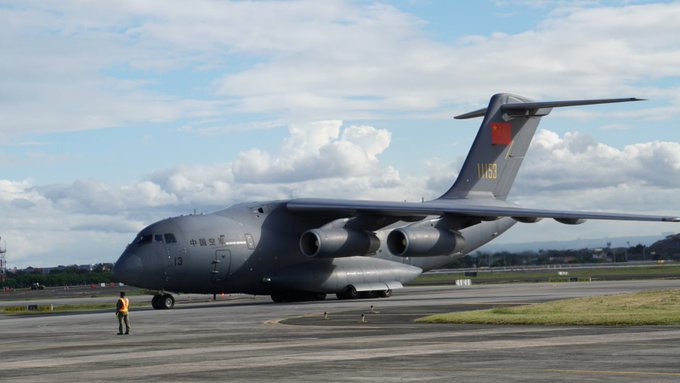
A Xi'an Y-20 of the People's Liberation Army Air Force (PLAAF) carrying 600,000 FREE doses of Sinovac vaccines landed at the Villamor Airbase on Sunday afternoon, culminating start of its vaccination program against the deadly covid19 virus. 

According to Chinese Ambassador to the Philippines Huang Xilian, vaccine delivery is particularly important to Chinese President Xi Jing Ping as he personally orders delivery of vaccines to the Philippines, as compared to other nations where the countries which received similar grant secured it from China, unlike the Philippines where it was personally delivered by government plane. 

President Rodrigo Duterte said he was very pleased with the gesture of China and disclosed he will visit Beijing and personally thank the Chinese President before the end of the year.


Maya-2 Satellite Launched Into Orbit

22 February 2021

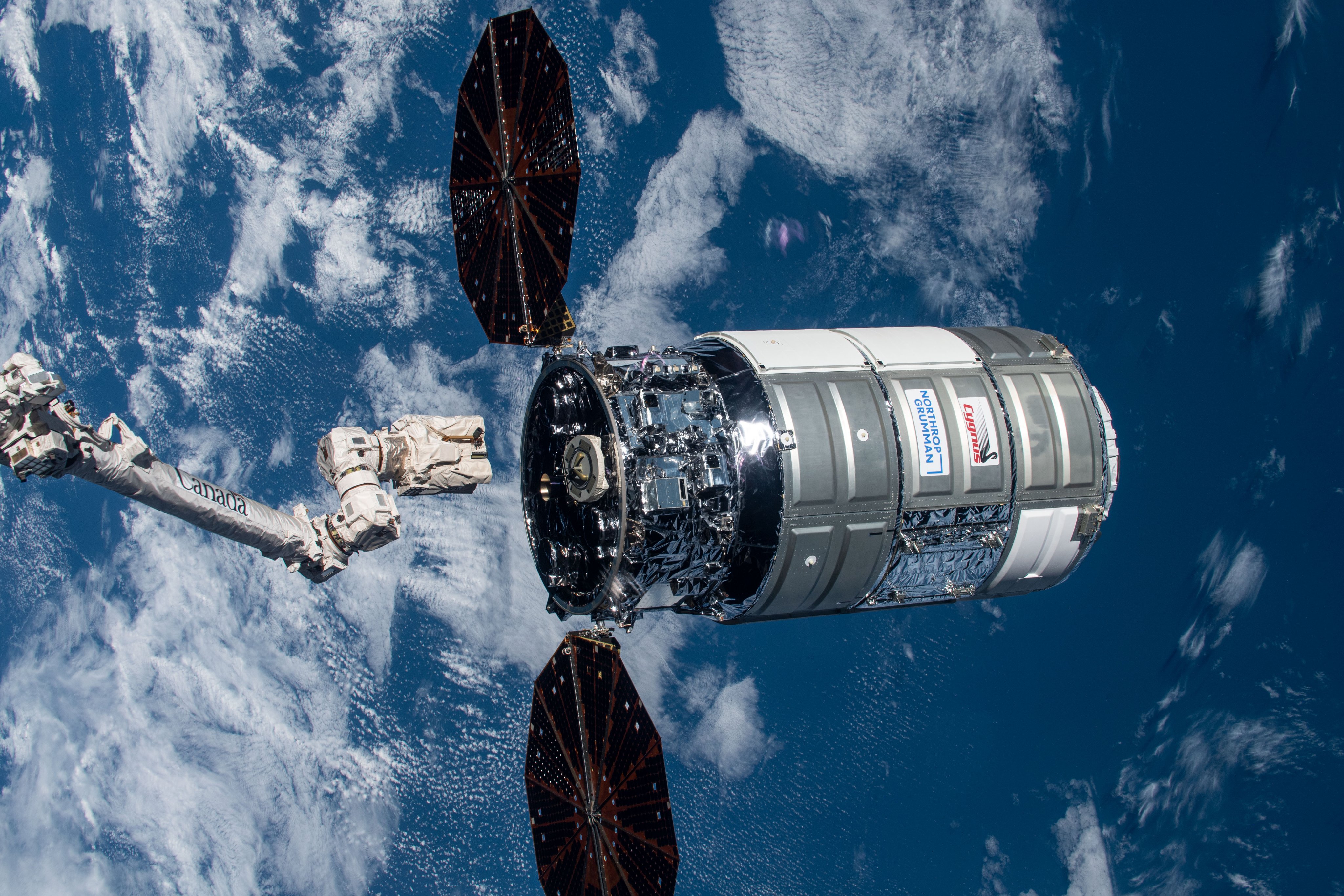
The Philippines on Sunday marked another historic moment with the launching of its second cube satellite (cubesat) Maya-2 to the International Space Station (ISS) aboard the S.S. Katherine Johnson Cygnus spacecraft at 1:36 a.m. Philippine time.

Science Secretary Fortunato T. de la Peña said the Department of Science and Technology (DOST) is “very proud of this achievement.”


The satellite was powered by Antares launcher as it rocketed into orbit from the Eastern Shore of Virginia, deploying a Northrop Grumman Cygnus supply ship carrying nearly 8,400 pounds of cargo to the International Space Station, the the most massive collection of payloads ever flown to the research outpost on a U.S. commercial freighter.

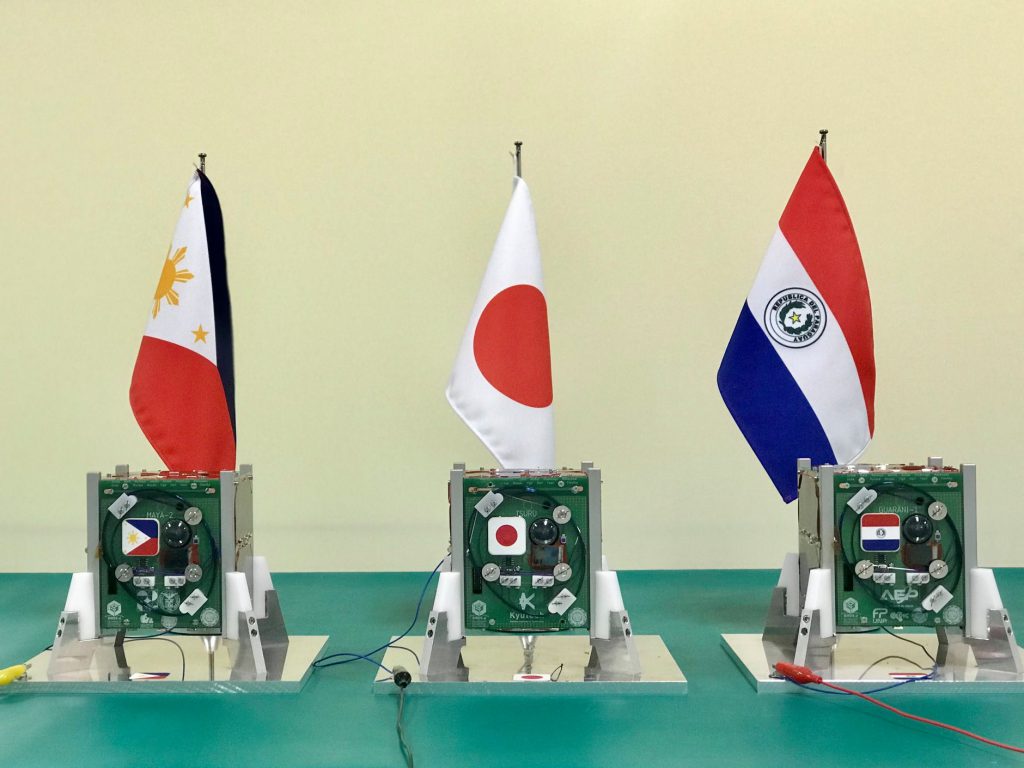
The Joint Global Multi-nation “BIRDS-4 Satellite Project” is a cross-border interdisciplinary CubeSat (cube satellite) project  hosted at Kyushu Institute of Technology in  Japan, in collaboration with the development of satellites of three (3) nations: the Maya-2 CubeSat of the Philippines, the GuaraniSat-1 CubeSat of Paraguay, and the Tsuru CubeSat of  Japan). 

The Maya-2 CubeSat, which weighs 1.3kg, and is 10cm on each side, is meant to stay in low earth orbit (at an altitude of 400km and orbit inclination of 51.6 degrees) and has radio and imaging payloads similar to its “sister” satellites. 

Maya-2 was developed by Filipino students coming from different Philippine universities, and will follow the earlier satellites Diwata-1 and Maya-1 launched in 2016 and 2018, respectively. 

Maya-2 is one of the Satellite Projects under the Stamina4Space Program by the Department of Science and Technology (DOST) and University of the Philippines Diliman.

DOTR Opens Upgraded MNL Runway 13-31

17 February 2021

DOTR Opens the newly rehabilitated and upgraded runway 13-31 of Manila International Airport today.


Sale of Private Air Transport Soars

16 February 2021


Private Aviation solutions company PhilJets Group reported yesterday a 20% increase in aircraft sales in the Philippines in 2020 despite the Covid19 pandemic as commercial airline operations were halted to contain spread of the virus.

The sale were mostly private small to medium sized jets and helicopters.

According to PhilJets Chairman Thierry Tea, business travelers have turned to private flights due to travel restrictions imposed on airlines resulting to limited commercial flights.

“Basically, they are business people who need to fly for business or other activities,” Mr. Tea said.

Tea disclosed that Citation jets and Bell helicopters are among the most preferred aircraft because they are “low-cost, cost-efficient, low maintenance aircraft.”

Philjet, which is also involved in private charter business and Grab Helicopter Taxi service, was likewise gravely affected by the pandemic shutdown as it lost more than 50% of its overall business in 2020, with the charter segment contributing the most due to travel restrictions.

“We lost more than 50% of our charter business,” Mr. Tea said.

“It was a very challenging time for us, especially in the first three to four months of the year. If we were only doing a charter business, probably we’re already dead or bankrupt,” Tea added.

Philjet founded in 2006, is engaged in aircraft sales, rental, management, as well as maintenance, repair and overhaul of business jets and helicopters.

LTP Axes 20% of Work Force


15 February 2021

Lufthansa Technik Philippines (LTP) has announced that it would cut 20 percent of its workforce, or 300 employees beginning April, saying downsizing is necessary amid the impact of the Covid19 pandemic that hit the aviation industry.

LTP said its "rightsizing program" would be carried out in 2 phases: first by voluntary separation, then by retrenchment, if necessary.

LTP president and CEO Elmar Lutter said layoffs would be "temporary until our industry fully recovers," and that rehires in the future would prioritize outgoing workers.

Some 2,700 will remain after the layoffs. The company had as many as 3,400 employees before the health crisis. 400 Contractual workers were earlier let go because of the pandemic.


PAL To Transport Covid19 Vaccines

Pfizer First To Arrive

9 February 2021

Flag carrier Philippine Airlines (PAL) has secured contract from US drug maker Pfizer and its German pharmaceutical partner BioNTech, to transport Covid19 vaccines manufactured in Belgium and the United States which starts arriving Friday.

PAL also secured contract to carry Pfizer vaccines to Cebu and Davao, as well as other major cities across the country. The contract amount was not disclosed.

PAL President and COO Gilbert Santa Maria said the airline will deploy Boeing 777-300ER plane to fetch the vaccines as it can take the largest quantities that satisfy the maximum safety limits as it include the carriage of dry ice.

Pfizer would initially shipped 117,000 doses of the Pfizer-BioNTech vaccine, which would require -70 degrees temperatures for storage. The vaccine shipment is part of Covax Facility commitment together with the World Health Organization (WHO) to the Philippines.

They would be kept in the Department of Health (DOH) warehouse before being distributed to COVID-19 referral hospitals across the country.

The Philippines will begin nationwide vaccination drive on Monday, February 15.