PAL to Increase Footprints in North America

Makes Honolulu Hub

 29 September 2021

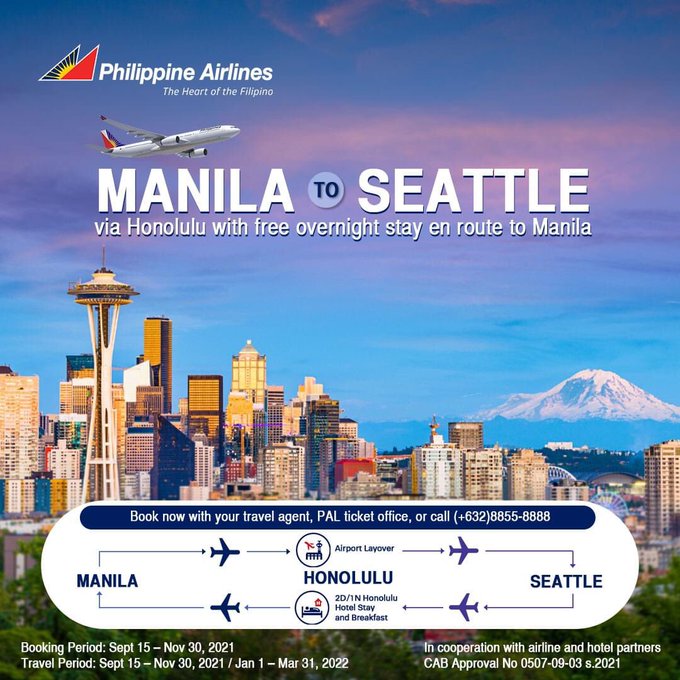
Flag carrier Philippine Airlines (PAL) is increasing its footprint in North America as it intensifies its tie up with Hawaiian Airlines for connections to Las Vegas, Phoenix, Portland, Denver and Seattle.

PAL spokesperson Cielo Villaluna said this will mark the beginning of a broader partnership by PAL with Hawaiian Airlines as it funnels Manila passengers to Hawaii for onward connections to North America.

Villaluna said this is part of the flag carrier rationalization plan as it intensifies US operations under a business recovery plan. It would rely on codeshare and interline agreements to support the strategy.

According to the airline, PAL will fly passengers to Honolulu daily and then Hawaiian will connect to listed destinations in North America in one PAL ticket and vice versa.

PAL earlier has been wanting to fly Seattle but the plan was thwarted by Delta (United) Airlines which objected to its flight. Delta instead applied with US DOT for flights to Manila from Seattle but was caught up with the pandemic. Delta eventually suspended all flights to the Philippines.


PAL To Raise Capital To $600 Million


28 September 2021

Flag carrier Philippine Airlines (PAL) has approved yesterday the raising of authorized capital stocks of the company to US$600 Million, ahead of the Bankruptcy hearing in New York Thursday.

The Board resolution will be presented to the airline stockholders on 25 November 2021 for approval.

The airline has approved capital stock of US$260 million, of which $140 million is traded in the local stock market.

The move will result to increase in market capitalization of $368 million for the struggling carrier, almost threefold from the existing stocks offered to the public.

The increase capitalization is seen to cover advances of existing stockholders for conversion to equity once the resolution is approved by the stockholders in November.

The move is required by the New York Court to balance the books of the airline and authorizes it to prepare exit out of Chapter 11 before the end of this year.

Zamboanga Airport: From disappointment to accomplishment


27 September 2021

By Goddes Hope Libiran

In March 2018, dismay and exasperation dawned on Department of Transportation (DoTr) Secretary Art Tugade when he visited Zamboanga for a surprise inspection of the Zamboanga International Airport. This, as Secretary Tugade was filled with unbelief that one of the country’s international gateways is operating with facilities that are rather unkempt and in a “sorry state.”

He was greeted with a small baggage carousel and the lack of appropriate gang chairs and passenger seats at boarding areas. Moreover, during the inspection, he discovered multiple potholes two inches deep on the airport’s runway.

These frailties of the airport immediately irked the DoTr Secretary as he ordered airport officials to immediately act on the matter. Pointing out the extreme urgency to resolve the issues that have caused inconvenience to air passengers at the Zamboanga Airport for a long time, Secretary Tugade promised to return to the airport and left with a stringent warning to aviation officials.

“When I return and Zamboanga Airport is not rehabilitated yet, I will knock your heads. I will make sure someone will be responsible for it,” Secretary Tugade stressed.

Since then, significant improvements were carried out at the Zamboanga International Airport.

Far from its previous condition, the airport now offers a larger and expanded passenger terminal building (PTB), which can hold at least 750 passengers at any given time from the previous passenger capacity of only 500.

Aside from the expanded PTB, other development projects at the airport include the establishment of the Malasakit Hall and GAD Multipurpose Hall. During the construction phase of these projects, a total of 150 individuals were given job opportunities.

Meanwhile, Civil Aviation Authority of the Philippines also continues with the airport’s improvement as other projects are ongoing, such as the repair and asphalt overlay of its runway, and the grading of its runway strip.

Three years since his 2018 visit, Secretary Tugade will return to the Zamboanga Airport to inaugurate these completed projects, not any more dismayed and disappointed, but now full of pride and enthusiasm.

With the important role being played by Zamboanga International Airport in support of the region’s economic progress, the development projects completed are expected to further promote ease of connectivity and mobility, while ensuring equitable and inclusive growth in the areas of employment, trade and investments.

CEB Keeps Fleet at 73

 24 September 2021

 
Low cost carrier Cebu Pacific (CEB) announced that it will retain its fleet of 73 jets and turboprops aircraft, an airline spokesperson disclosed Friday.

“The 73 aircraft are for the full recovery of our network and we do want to go back to pre-Covid levels as soon as possible,”Cebu Pacific VP Candice Iyog said.

The airline is preparing to ramp up its domestic and international operations, increasing frequencies to popular local destinations Boracay, Siargao, and Bohol in the coming months, as well as resuming international flights to Narita, Nagoya, and Fukuoka, among other destinations.

“We are ready to ramp up as quickly as demand comes back.” Iyog said.

Cebu Pacific only operates 26 percent of its capacity currently.

The airline intends to increase frequencies for international and domestic destinations for its winter schedule beginning October, stating the carrier will operate at 38 percent of its pre-Covid capacity.

No information was disclosed on the utilization of its fleet, as most of them are already return to lessors, basically either expired or expiring. Some of them are supposed to be replaced last year and this year with new aircraft orders. It also return two A330 this year to lessors.

Iyog said Cebu Pacific is “in discussion with Airbus for delivery schedules.”

She however declined to comment on delivery schedule of 16 long-range A330 neo aircraft, 10 A321 XLRs, and five A320 neo jets. 
 
The company earlier stated that it will upgrade its entire Airbus fleet with newer and more efficient planes by 2027.

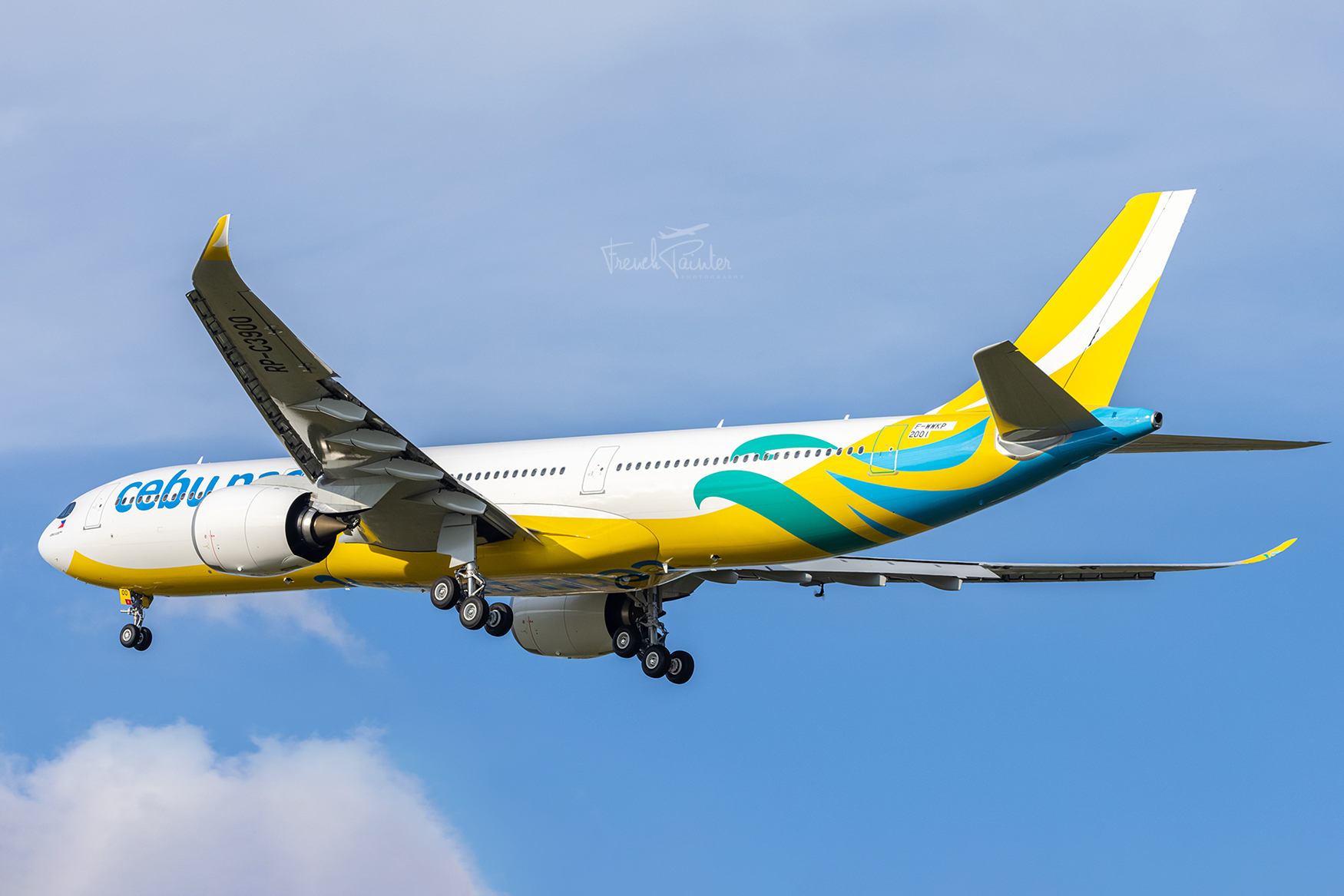
The airline earlier received its eight and ninth new Airbus A321neo (New Engine Option) aircraft on April 2 and May 19 2021. It will also received its first A330-900 aircraft this October, financed both by Indigo Partners US$250 million equity infusion. It is scheduled to fly Dubai route.
 
According to Company reports, the airline will receive 5 more Airbus jets and ATR turboprops for the remainder of 2021 but will not grow its fleet. 
 
Cebu Pacific would take delivery of 40 Airbus A320neo family aircraft, 16 A330neos and three more ATR 72-600s by 2026, completely replacing its old fleet.

To date, the Cebu Pacific fleet comprises of nine A321neo, 25 Airbus A320, seven Airbus A321ceo, five Airbus A320neo, four Airbus A330-300, six ATR 72-500, and 13 ATR 72-600 aircraft. Its fleet also has two ATR freighters on top of one A330 converted freighter.


DOTr Opens GenSan New Terminal

Fast-Tracked as Quarantine Gateway

24 September 2021

The Department of Transportation (DOTr) has opened the 959 million new General Santos International Airport Passenger Terminal building (PTB) capable of handling two million passengers per annum yesterday, and is expediting completion of CIQ facilities for the inclusion of the newly rehabilitated and expanded airport terminal as among the alternate quarantine gateways for returning Overseas Filipino Workers (OFWs) and international travelers.

DOTr Secretary Arthur Tugade led the formal unveiling and inauguration of the city airport’s new passenger terminal building and other navigational facilities.


He said Philippine Airlines and some middle east airlines has been requesting the Philippine government to open General Santos international airport as quarantine gateway from airline passengers coming in from the Middle East.

Tugade said the proposal to increase daily quarantine capacity for returning OFWs to 4,000 daily is already with the National Task Force of the IATF for their consideration.

The daily limit for returning OFWs is currently peg at 3,500 returning Filipinos with Ninoy Aquino International Airport (NAIA) accounting for 2,000 passengers, while Cebu, Davao, Clark and Subic is taking 1,500.


“If we will increase the cap, we need to expand our gateways and not limit them to Clark, Cebu, and NAIA. We can include GenSan among the gateways for travelers from Doha who are going to Manila,” he said in a press conference.

According to Tugade, other possible alternate gateways proposed are Laoag International Airport in Ilocos Norte, Zamboanga, Iloilo and the Bohol-Panglao International Airport. 

But these airports are not capable of handling wide-body planes that PAL and middle eastern airlines used to transport passengers. Only General Santos fits the bill as the only other airport capable of accommodating bigger aircraft like Boeing 777 and 747, as well as Airbus A330, A340, and A350.


Tugade said the passenger terminal area has tripled in size from 4,000 to 12,000 square meters and can now accommodate around 2 million passengers annually, a significant jump from the previous 800,000 per year.

“This will allow the airport to accommodate more passengers and provide them comfortable and convenient travel,” he said.


The Transport Chief added that additional improvement will be made next year as they upgrade its air control tower, which he considered as “too low.”

He said they will build a “higher and modernized” tower in 2022 to make it “more world-class” and can easily adjust to the needs of the airport.

F-16 Remains A Dream For PAF

Gripen More Likely

17 September 2021

Defense Secretary Delfin Lorenzana on Thursday said the Philippines is unlikely to acquire Lockheed Martin F-16 jet fighters for its multi-role fighter (MFR) program due to its steep price but considers acquisition of Swidish made Gripen more likely.

Lorenzana disclosed in Washington DC that the Philippine government doesn't have enough money to buy jets that will be used in the MRF project. 

The Philippines is shopping for a new multi-role fighter jet and is evaluating the F-16 of Lockheed Martin and the SAAB Gripen.

The U.S. State Department has recently approved the potential sale of F-16 fighter jets, as well as Sidewinder and Harpoon missiles, to the Philippines in three separate deals with a combined value of more than $2.5 billion, the Pentagon said last June 21 in Washington.

"That is if we can afford it. We are currently looking at different financing options to push this through." Lorenzana said.

The Defence Chief said that for the price of six Gripen the Air Force can only operate a pair of the F-16 variant considered by PAF. 

Lorenzana said the only way the Philippines could acquire the US$ 85 million F-16 jet fighter is through a favorable US military "financing scheme" (military aid) similar to those offered to Afghanistan, Pakistan, and Iraq.

The Pentagon said the Philippines has requested to buy 10 F-16C Block 70/72 aircraft and two F-16D Block 70/72 aircraft made by Lockheed Martin. 

That package, which includes spares and training, is valued at up to $2.43 billion which the Philippine government is finding hard to finance. Another package includes AIM-9X Sidewinder Block II air-to-air missiles worth $42.2 million, and another 12 Harpoon Air Launched Block II Missiles, two training missiles, spares and equipment made by Boeing and valued at up to $120 million.

Lorenzana said they are finding mutually beneficial financing scheme to acquire the jet in installments, and if this arrangement is not found this year the Philippines has no choice but to look into the Gripen fighter aircraft.

PAL And London Heathrow

New UK Regulation Could Help PAL Keep LHR


16 September 2021

A new UK legislation taking effect on October 30 2021 may give flag carrier Philippine Airlines (PAL) much reprieve to keep its London flight going.

The unexpected help from Europe came after the European Commission agreed to suspend strict requirements since April 2020 regarding airport slots known as the  80:20 rule of “use it or lose it” in the light of the coronavirus outbreak last year.

Until this point, some airlines had been forced to operate nearly empty flights to Heathrow, referred to as “ghost planes” in order to keep it in operation in an effort to not lose the valuable slot.
 
PAL secured six slots and operated 5 slots at its maximum before the unprecedented impact of covid-19 hit airlines around the world in March last year. 

The "Airports Slot Allocation (Alleviation of Usage Requirements) Regulations of 2021", would provide the UK Secretary of State with a power to provide air carriers with an alleviation of the requirement to operate slots allocated to them 80% of the time in order to retain those slots in the next equivalent scheduling period. 
 
This power would be exercisable until 24 August 2024 and for scheduling periods up to and including winter 2024-25. The waiver should not apply to slots of an airline that ceases operations at an airport.

These Regulations make amendments to retained EU law in the field of aviation, relating to the allocation of slots at congested airports. It amends Council Regulation (EEC) No 95/93 of 18 January 1993 on common rules for the allocation of slots at United Kingdom airports, and to make provision about the allocation of airport slots to air carriers in respect of specified periods, as a result of a reduction in the level of air traffic as a result of COVID-19.

Council Regulation (EEC) No. 95/93 requires airlines with allocated slots at level 3 airports to use those slots at least 80% of the time in the preceding scheduling period, in order to retain that slot in the upcoming equivalent period.

Under Article 8(2) and 10(2) of the Regulation, air carriers are generally required to return airport slots to the slot coordinator at the end of the scheduling period for which they were allocated, unless they operated the series of slots for at least 80% of the time or the non-utilisation can be justified on the basis of certain reasons listed in Article 10(4).

These Regulations make three changes in relation to slots allocated for the scheduling period which runs from 31st October 2021 to 26th March 2022, which will affect reallocation of the same slots for the equivalent period from October 2022 to March 2023.

The European Commission stated that it has agreed to suspend temporarily the rule that requires airlines to operate a majority of their scheduled flights in order to avoid forfeiting their landing slots.

Due to government imposed lockdowns in the Philippines, PAL was forced to suspend flights to London and has flown irregular schedule to the British capital.

The Philippine government earlier imposed flight restrictions to London in March 21 and December 24 last year, and another ban from March to August 2021 due to rising UK variant (alpha) strain of the covid19. In the same manner, the UK government also classified the Philippines as a red list country.

The airline has so far flown London Heathrow twice a month, a mere 10% of the 22 slots it had a month at the airport, following the latest EU directive and UK legislation after the Philippine government lifted its flight ban to the UK on the first week of August 2021. Its winter schedule is not posted at this time.

London Heathrow is home to some of the most expensive and sought-after slots in the world. PAL reportedly paid US$45 million from another European operator in 2012 to acquire daily slots at the airport when the airline was under SMC management.

The suspension of EU Council Regulation (EEC) No 95/93 effectively prohibits trading of said slots at this time until after suspension of said directive is lifted.
 
Heathrow is PAL’s first European destination restored in November 2013 since flights to Europe were discontinued in 1998.

PAL Wins Approval from Bankruptcy Court

 Authorizes Airline To Draw Financing Funds

10 September 2021

Flag carrier Philippine Airlines Inc. (PAL) has won approval Thursday from a New York bankruptcy judge to access financing for its chapter 11 proceedings, the first step in an effort to relieve the national carrier of roughly $2.1 billion in financial obligations.

Judge Shelley Chapman of the U.S. Bankruptcy Court in New York granted approval to let Philippine Airlines draw up to $20 million from a $505 million loan facility led by the carrier’s controlling shareholder, Buona Sorte Holdings Inc.

PAL intends to return contracted widebody planes and remove $2.1 billion in debts together with a new business plan that would enable the embattled national carrier to book an operating income of $220 million next year and $364 million in 2023, according to PAL chief financial officer Nilo Thaddeus Rodriguez said. 

“By 2022, PAL expects to exit its recovery phase as operating activities generate more consistent positive monthly cash flow,” added Rodriguez.

Its new business plan includes more flights to China, and South Asia, boost in US West Coast flights, and possible exit from unprofitable markets of New York, Toronto, and London Heathrow.

It will also implement a so-called power-by-the-hour scheme for remaining planes, allowing PAL to better manage cash flow since it would pay a fixed cost based on the number of hours an aircraft is used.