Clark Opens Terminal 2 Beginning May 2


 28 April 2022

Terminal 2 of Clark International Airport will open to the public beginning May 2, according to its airport operator.

Luzon International Premiere Airport Development (LIPAD), operator and manager of CRK, said the Transport Department has cleared them to begin operating the terminal after complying all regulatory requirements for international gateway.

LIPAD in a statement said that starting May 2, all Domestic and international flights will be utilizing the new Passenger Terminal Building (PTB) of Clark International Airport (CRK).

CRK is serviced by local carrier Air Asia, Cebu Pacific and Philippine Airlines, and international carriers Jetstar Airways, Jeju Air, Jin Air, Qatar Airways, Emirates Airlines, and Scoot Airlines.

"Passengers of airlines including Jetstar 3K 779/780, Qatar Airways QR 930/931, Scoot TR 386/387, Emirates EK 338, Cebu Pacific Air 5J 606/607 and Philippine Airlines PR 2833/2834 are advised to proceed to the new terminal," says Bi Yong Chungunco, LIPAD Chief Executive Officer.

“We have put a lot of effort into making our passengers’ journey as seamless as possible through the terminal and getting to and from our airport,”  according to Chungunco.

The airport already serves point-to-point bus services from Trinoma and ParaƱaque City f
or commuters. It also has taxi services within Pampanga and other car rental services are available.

The new terminal spans 110,000 square meters and will host 18 aerobridges when completed. Its state-of-the-art facilities positions it as a premier Asian gateway for tourism and business, LIPAD said.

CRK also features a touchless passenger check-in experience. Self-service, self check-in kiosks and self-bag-drop systems are in place for passenger safety and autonomy.

The new terminal, built by Megawide Construction Corp. and GMR Infrastructure Ltd., was completed in October 2020, increasing the airport’s passenger volume from the current 4.2 million to 12.2 million annually.

LIPAD is composed of Filinvest Development Corp., JG Summit Holdings Inc., Philippine Airport Ground Support Services Inc., and Changi Airports Philippines Pte. Ltd., a wholly owned subsidiary of Changi Airports International.    


PAL To Open Full Cargo Subsidiary


 27 April 2022

Flag carrier Philippine Airlines (PAL) will open its full cargo subsidiary in June following its exit of Chapter 11 proceedings in the United States.

PAL president and COO Stanley Ng said the airline did some trials in 2020 amidst travel restrictions and airport closures, and the results were impressive for the airline.

“It’s on the way already. Unofficially, we did some trial already and it has proven to be successful,” Ng said.

The COO said the new cargo delivery service will be door to door, similar to services offered by Fedex and DHL.

It will initially start operations from the United States to the Philippines, and will soon cover other countries. The name of its logistics partner is under wraps for now.

 “So it’s from other countries all the way to the people because there’s a tie up with this logistics company. It’s from the US all the way here to the homes of the people,” Ng said.

“We are currently integrating our cargo reservations system with a new cargo mobile app and website and create more cashless payment options and offer last-mile cargo deliveries directly to homes and offices in the Philippines,” according to Ng.

The COO disclosed that PAL has moved cargoes in the belly of its B777 and A330 planes without passengers, citing for example the covid19 vaccine the airline carried from Beijing, China to Manila, and essential medical supplies from Guangzhou to Manila. 

“PAL is now a cargo airline in our own right. We will continue to develop new all-cargo markets – removing dependence on passenger traffic as a single revenue stream,” Ng said.

He did not disclosed whether the airline solely used an aircraft for this purpose, as he acknowledges that they still have plenty of underutilized aircraft sitting on the ground and the  e-commerce business is getting stronger.

“We are looking into that. We are exploring. We will know the answer to that in a year or two,” Ng said.

PAL, which hopes to return to its pre-pandemic size in two to three years, is studying to convert some of its aircraft to cargo-only airplanes.

PAL posted a significant increase in revenues last year, mainly due to the increase in cargo revenues, with air cargo being a vital partner in delivering essential goods since the COVID-19 pandemic.

Cargo revenues of the airline in 2021 stood at P15.02 billion, 60 percent higher from lasts year’s P9.41 billion.


PAF First C-295W Arrives In Clark

29 March 2022

Philippine Air Force (PAF) welcomes its newest addition to its fleet which arrived Monday. An Airbus C-295W (sn 204) aircraft manufactured by CASA in Spain. Two more are scheduled to arrive this year. Three (3) C-295 aircraft were additionally acquired by the Philippine Government under the Medium Lift Aircraft Acquisition Project following impressive performance of the type. It earlier secured four other C-295's operating under the 220th Airlift Wing. The new derivative of the C-295 differs from the old one as it is powered by modern avionics suite Collins Aerospace Pro Line Fusion® with uprated engines, additional payload of 1,000kgs. and enhanced flight performance than the previous M variant. 


NAIA Opens Terminal 4

Expects To Handle 12,000 Passengers


29 March 2022

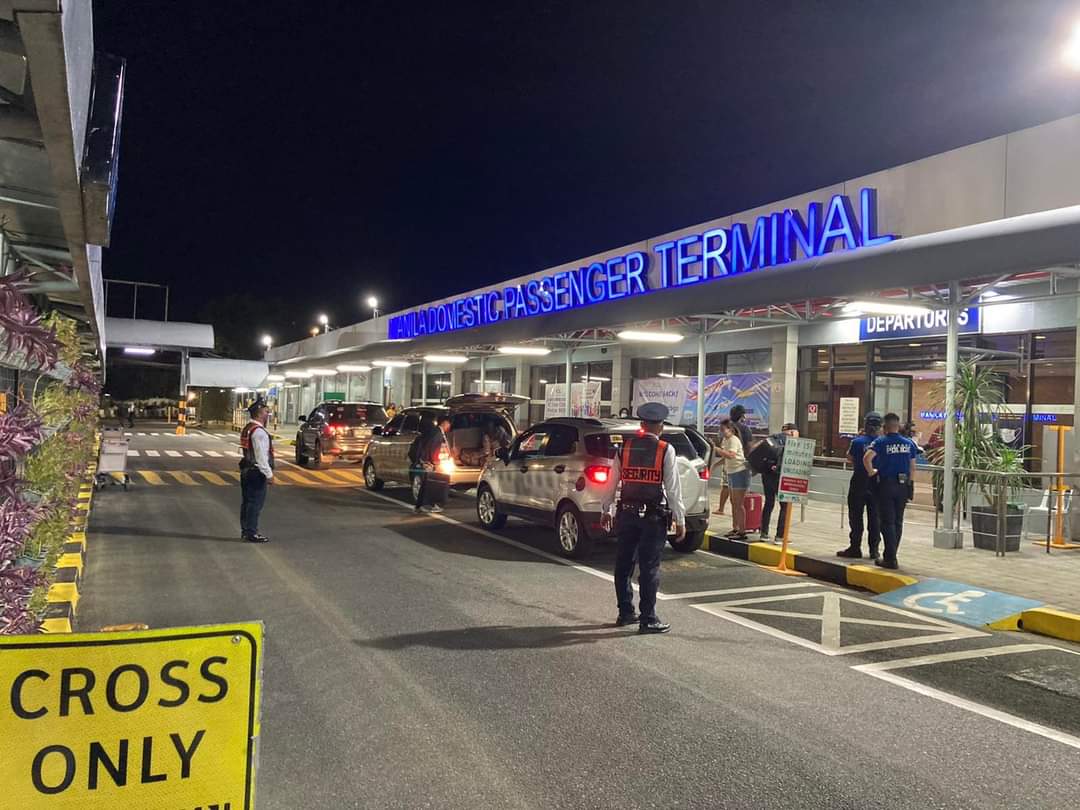
Ninoy Aquino International Airport's Terminal 4 has resumed operations for domestic flights after nearly two years of closure, according to airport operator Manila International Airport Authority (MIAA).

Terminal 4 caters to Cebu Pacific's turboprop fleet CebGo, AirAsia Philippines and AirSWIFT Airlines, and other small carriers accommodating 93 scheduled daily flights.

MIAA said it reopened Manila airport's oldest facility on Monday to serve the traveling public after its domestic operations were suspended in 2020 because of the Covid-19 pandemic.

AirAsia Philippines operated 48 flights out of Terminal 4, while CebGo operated 27 domestic flights Monday. Meanwhile, Airswift operated 12 and Alphaland 4. The rest were operated by other small carriers.

Terminal 4 was temporarily converted to vaccination and COVID19 support facility while operations of the three carriers were transferred to Terminal 3 in June 2020 due to limited number of passengers brought by domestic travel restrictions. 

MIAA said Terminal 4-based airlines operated special and sweeper flights from terminal 3 where quarantine facility was set up to screened, quarantined, and ferry passengers bound for provinces, and to pick up foreign tourists who were stranded in different areas back to Manila after the Department of Transportation allowed them to fly for humanitarian reason.

According to the Civil Aeronautics Board (CAB) Terminal 4 can only accommodate 1.5 million passengers this year due to flight restrictions  on some domestic routes.

Terminal 4 handled 15,000 daily average passengers in 2019 prior to the pandemic. This time however, it will only serve about 12,000 passengers.

Dornier Technology Appoints New CEO

25 March 2022

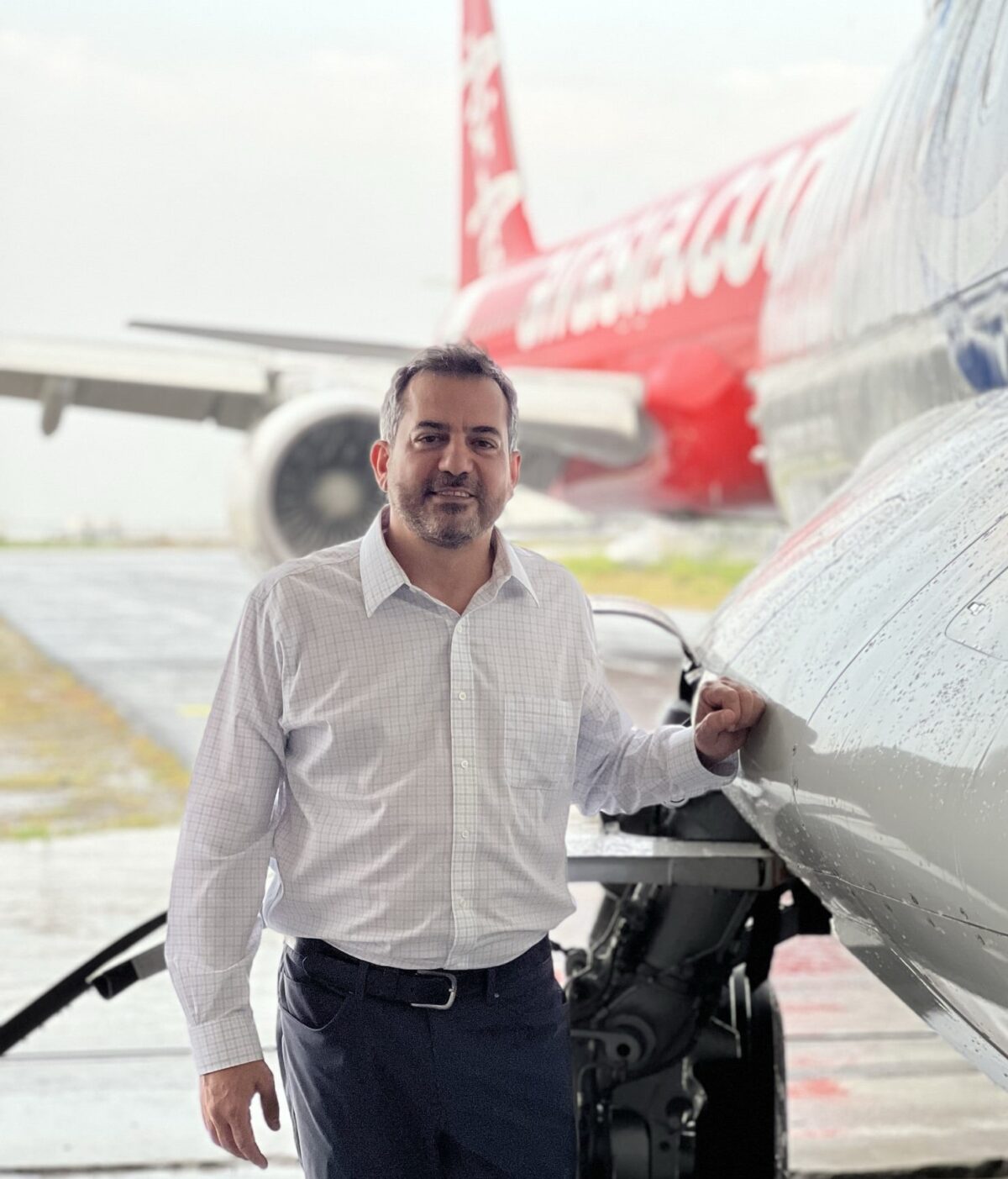
Featured photo from Dornier Technology shows Nikos Gitsis, the new CEO of the company.

Aircraft maintenance, repair and overhaul (MRO) provider Dornier Technology announced Thursday the appointment of Company President Nikos Gitsis to be its new Chief Executive Officer (CEO), replacing Janus A. Reyes, as it looks to expand the organization’s business. It also announced the appointment of Joseph Espiritu as its new Chief Operating Officer.

Gitsis is also a director of Philippine cargo airline Seair International and Philippine ground handling provider Transnational Aviation Support Services (TASSI), the company said.

Gitsis says "he is focused on growing the MRO business in the Philippines by expanding the company’s customer base to include operators from around the region."

Dornier Technology was founded in 2008 and was a spin-off of a Philippine regional airline SEAIR, that was later sold to Tiger Airways Philippines, and later to Cebu Pacific turboprop subsidiary Cebgo.

The MRO company, which has its heavy maintenance base at Clark International Airport outside Manila, employs 180 people. It also has line maintenance stations in  Manila, Cebu, Kalibo, Tagbilaran, Davao and Puerto Princesa.

“We are inside Clark’s special tax-free economic zone, so our clients can benefit from an expedited process for the import and export of aircraft parts and components,” says Gitsis.

Dornier Technology is a more price competitive MRO organization due to its convenient location in the region and the fact the Philippines has a large pool of skilled, qualified maintenance technicians and engineers, he adds.

Dornier Technology is certified by the Civil Aviation Authority of the Philippines (CAAP), South Korea’s Ministry of Land, Infrastructure and Transportation (MOLIT) and Indonesia’s Directorate General of Civil Aviation (DGCA) as an approved MRO organization.

The company says it can do line and heavy maintenance for: Airbus A320-family; Boeing 737 classics such as the -200, -300, -400, -500 series; ATR 42 and ATR 72; British Aerospace/Avro BAe 146/RJ, Dornier 328 and Let 410. It also provides: technical training, fleet management, engine support as well as maintenance of aero systems, such as avionics.


PAL Holdings Resumes Public Trading on March 28

25 March 2022

Flag carrier Philippine Airlines (PAL) parent company PAL Holdings is slated to return to public trading at the Philippine Stock Exchange (PSE) Monday, after a nine-month absence.

The Philippine Stock Exchange said in a notice that PAL Holdings Inc. would resume trading on March 28 this year after the company refiled its 2020 annual report with the requisite disclaimer-free opinion from independent auditor SyCip Gorres Velayo & Co. (SGV).

The refiling reflected the recent and most significant developments, which includes new investments from major stockholders and PAL’s exit from US Chapter 11 proceedings in December last year that allowed it to slash huge debts, thus putting it in a better financial position to continue business as usual.

Both the initial and refiled 2020 attached auditor’s report were signed by the same SGV partner, Catherine Lopez.

Lopez—who refused to even render an opinion last year due to PAL’s mounting losses, unpaid debts and prospective restructuring plans—provided the required “unqualified” opinion in the refiled version.

That basically means the auditor found no reason to doubt any of PAL Holdings’ financial details in the refiled report. More importantly for the airline, that was all the PSE needed to lift PAL Holdings’ June 18, 2021 suspension and continue trading next week.


CEB Loses US$498 Million in 2021


25 March 2022

Budget carrier Cebu Pacific (CEB) saw its net loss increases to US$498 million(P24.9 billion) last year from US$498 million (P22.2 billion) in 2020.

It flew only 3.4 million passengers in 2021 as compared to 5 million passengers in 2020.

It also operated fewer flights in 2021 servicing 34,463 flights as compared to 41,804 flown flights in 2020.

CEB said it registered 30% drop in revenue in 2021 generating only 15.7 billion.

Its passenger revenue also dropped 50% from 12.6 billion in 2020 to 6.3 billion in 2021.

The airline however increased its revenues for cargo operations registering 20% increase in reveune to 6.5 billion.

Total revenues for the period dropped by 30 percent to P15.7 billion as passenger revenues fell by 50 percent to P6.3 billion from P12.6 billion year-on-year. Revenues from cargo operations, meanwhile, rose by 20 percent to P6.5 billion last year.

The airline said it registered a P1.4-billion (US$28 million) gain from aircraft sale and leaseback transactions of its Airbus A330-900 aircraft.It was also able to rake in over US$1.6 billion from various fundraising initiatives to complement its cost-saving measures.

Cebu Pacific said it is expecting to recover to its pre-pandemic domestic capacity by the second quarter of 2022.

PAL Raises Flights By 52% In Summer Timetable

11 March 2022

Flag carrier Philippine Airlines (PAL) is adding more than 1,500 additional flights for its summer timetable beginning in March as international borders reopen and domestic travel restrictions ease.

PAL said the 1,500-plus additional flights represent a 52-percent expansion in regular scheduled flights.

“We are seizing the opportunity to intensify our efforts to promote international tourist travel to the Philippines, as well as to respond to rising demand for flights to serve overseas Filipinos and a recovering economy,” acting PAL president and chief operating officer Captain Stanley Ng said.

The airline's flight to the US and Canada will increase by over 24 percent this month, with Los Angeles moving up to 11 flights weekly, from 9 flights previously. It will go twice daily beginning June 4. 

San Francisco will receive daily flights from five flights before beginning April 5. New York is moving 3 flights weekly from the previous two, while Vancouver will see two additional flights beginning April 3, and daily flights beginning July 4. 

Honolulu will have additional flight beginning June 4, up from 3 flights weekly, while Toronto gains additional flight from 2 flights weekly. Guam will have daily services beginning May 16 up from previous 5 flights.

Meanwhile, PAL’s Southeast Asia flight will increase by 98 percent from its winter timetable. 

PAL’s Manila-Singapore route will rise to 14 weekly flights in beginning April 1, and ultimately to 28 weekly flights in succeeding months.

PAL will also add more flights to Bangkok, Jakarta, Kuala Lumpur, Phnom Penh and both Ho Chi Minh City (Saigon) and Hanoi in Vietnam.

Routes to Japan will increase by around 11 percent, with additional services to Osaka (10 flights beginning April 1, and 12 flights beginning July 2), Nagoya (additional flight beginning April 3, and additional flight beginning July 5), Fukuoka (additional flight beginning July 7) and Tokyo’s Haneda (daily beginning April 2, and 10 flights a week beginning July 1) and Narita airports (10 flights beginning April 1 and 12 flights beginning July 2). 

The Middle East region will see a 16-percent increase in flights out of the Saudi Arabian cities of Riyadh (daily beginning May 1) and Dammam (2 more flights from existing 3 flight. PAL flies daily from Dubai and Doha.

Meanwhile, flight services to London will remain the same at 1 per week every Tuesday, up from the previous 2 flights monthly, and will still overfly the Russian Airspace, as the Philippines maintains good relations with Russia. 

PAL will also begin twice weekly flight to Tel Aviv on June 8.

The flag carrier is set to increase domestic flights by more than 56 percent. This will include more frequency from Manila to Cebu, Davao, Bacolod, Legazpi, Iloilo, Cagayan de Oro, Boracay and Tacloban.

Twice daily flights will operate between Manila and Coron (Busuanga), Tagbilaran (Panglao), Dumaguete and Butuan. The flag carrier will offer 11 weekly flights between Zamboanga and Manila and twice weekly flights between Zamboanga and Tawi-Tawi.

Daily flights will now be offered between Manila and Puerto Princesa, Kalibo, Roxas, Cotabato, Ozamiz City, Pagadian and General Santos City.

PAL’s Cebu hub will link Mactan Cebu with 13 airports in Mindanao, Luzon and the rest of the Visayas, including Clark, Siargao, Butuan, Davao, Boracay and Coron.

Davao will see regular flights to Iloilo and Tagbilaran, in addition to Manila.

PAL will continue serving Antique, Basco, Laoag, Catarman, Calbayog and Siargao.