Finnair keeps its eye on the Philippines

Finnair's future lies in Asia

February 16, 2009

Helsinki - Nordic airline Finnair Oyj (FIA1S.HE), Finland's national airline, keeps its eye on Manila and the rest of Asia despite the global financial crisis and the global decline of international passenger traffic from Europe.

The Philippines allocated four flights per week between Manila and Helsinki in its first Bilateral Air Service Agreement with Finland in October last year. However, the Philippines refused to give Fifth-freedom rights from Manila, its intended destination. It opened Clark instead to any point in Asia. This put Finnair's plan in limbo as it ordered aircraft that is not capable of flying direct to Helsinki.

In December 2005 Finnair made the biggest investment decision in its history with more than one billion euro commitment to acquire long-haul Airbus aircraft. The airline continues its modernization of the wide-bodied fleet in 2009 with the acquisition of five new Airbus A330-300 long-haul aircraft and in 2010 with the acquisition of three more. It just converted its A340 order to the A330 series last year making its service to Manila more difficult. All its A340 fleet are far east bound.

The destination as a leisure route is not however remote as they intend to operate flight this year. It may have to lease another A330-200 from XL Airways just to serve the route. Other Leisure Flights long-haul destinations include Phuket in Thailand, Vietnam, Penang in Malaysia, India, the Caribbean and Brazil as well as Fort Lauderdale in Florida.

The Airbus A330-200 will allow non-stop flights from Helsinki to Manila. The aircraft has a total of 328 seats, of which 42 are in Comfort Class located in the front section, and 286 in Economy Class. The leased aircraft delivers a very high standard of passenger comfort; the seat spacing in Economy Class is 32–33 inches (81-84 cm) and in Comfort Class 38 inches (96 cm).

Philippine Airlines on its part has said that it is not keen on reviving European routes for now because of stiff competition from state-subsidized Middle Eastern carriers.

Finnair President and CEO Jukka Hienonen said "We still believe in our Asian strategy. This is our lifeblood in the coming years. Even in the most difficult of times, we cannot concede our place as one of Europe's most significant Asian operators. Our task is now to adjust in order to put our profitability on a sustainable basis. " The carrier just announced a 9.5% reduction in its network and a range of layoffs, furloughs and personnel expense reductions aimed at maintaining financial health. However no fleet reductions are planned this year.

Traffic numbers from Nordic countries to the Philippines proved too good to ignore, almost accounting to half of Europe's total visitors count to the country. A report from Europe Tourism Attaché Domingo Enerio III, head of the Philippine DOT office in London recorded that tourist arrival breached the 40,000-barrier for the first time in 2007. The figure exceeded earlier expectations and raised hopes that it could breach the 50,000 mark in 2008. Overall, tourist arrivals in the Philippines for 2007 rose 8.7 percent from the previous year to a record 3.09 million, as the country positions itself to become a major travel destination in Asia. Tourist arrivals for the first ten months of 2008 to the Philippines recorded an all time high of 2,607,118 visitors which is a 4 percent growth over the same period last year.

The Philippine market turns out a surprise in 2008 registering positive growth of 4% despite the economic slowdown while the rest of Asia reported negative trends. Amsterdam based KLM already capitalized on the market by fielding its new triple seven on daily basis and as the only European carrier, has registered more than 80% load factor of its EU flight despite the market downturn.

Hienonen when asked if his airline can survive in the current market said that its getting difficult and the only strategy left is connecting Europe to East Asia via Helsinki. He further said that "the natural growth of Asian air transport is 7-10 per cent per year, according to all available forecasts. We do not believe that even possible crisis or economic disruptions will change this overall picture over the long term".

Finnair last week reported a fourth-quarter operating loss of 60 million euros ($77.5 million) and it does not expect the flexibility to remain stable during the current market downturn. Finnair was €2.1 million ($2.7 million) in the black through the first nine months of 2008. In Asian scheduled traffic, Finnair cut capacity by 8 percent in January, resulting in a less than 2 percent increase in traffic figures. "To date we have kept our aircraft reasonably full of customers, but the price level has fallen as costs have risen,” says Jukka Hienonen.

According to a recent UBS Investment Research , among Europe's 13 largest carriers, only two carriers had increased the number of available first-quarter seats for long-haul operations. Iberia and Finnair are showing overall increases, with BA, Lufthansa, Air France-KLM and Alitalia each showing overall decreases. Carriers that made particularly sizable cuts include Alitalia, to Asia and the Middle East (down 38 percent and 32 percent, respectively); British Airways and Lufthansa to South America (down 10 percent and 8 percent, respectively); and BA to Asia (down 8 percent).

Finnish carrier's Asian strategy has made Finnair one of the largest airlines utilising the Siberian airspace. And the airspace utilization does not come cheap. The relatively small Finnish national airline recompenses Aeroflot around EUR 20 million per year, nearly a tenth of the entire annual European Airline dues. The sum could have been used to ease its severe profitability pressures.

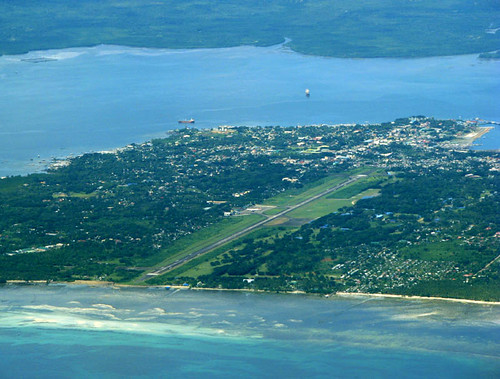
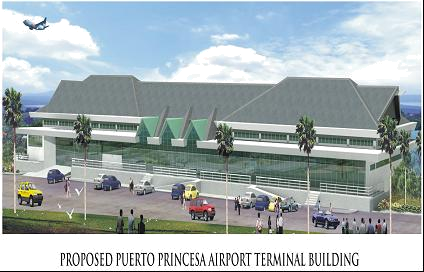
PSS finally starts 3.5 Billion project

Delay caused by government buying its own land

February 14, 2004

Puerto Princesa - After being plagued by corruption scandals on land acquisitions, Puerto Princesa International Airport Development Project finally started construction 12 years after it was conceived.

The airport was funded not under the grants of the Asian Development Bank (ADB) and European International Bank (EIB) but by loan grants from Korea Eximbank, through the Economic Develoment Cooperation Fund (EDCF).

Originally, the development of Puerto Princesa airport was part of the DOTC’s Third Airports Development Projects, which also included the airports of Cotabato, Butuan, Dipolog, Pagadian and Sanga-Sanga in Tawi-Tawi, with total cost estimated at P14.3 billion, P5 billion of which was supposed to be used for terminal construction. The rest of the funds were intended for land acquisition; civil works; equipment; navigational aids; crash, fire and rescue vehicles; consulting services; contingencies and other expenses.

The ADB loan became effective in November 1998. By the original closing date of May 2003, civil works implementation had not commenced.

The development project was stopped after ADB found out that Department of Transportation and Communications (DOTC) made "ghost purchase of public land" to the tune of P100.8-million for the expansion project to which land the government already owns.

In the Citizens vs Corruption Task Force (CCTF) report in 2004, then Senator Francisco Tatad told that the government reportedly paid P100,804,500 for 112,005 square meters (sqm) of "public land" in Palawan for the proposed expansion of the airport in 2002.

The DOTC concluded the sale a month after it had offered to buy the property at P900 per sqm, while the government was buying private land for the Iloilo international airport at P60 per sqm.

Tatad said the Asian Development Bank and the European International Bank initially agreed to fund the projects, "but they have since pulled out because of the government’s unsatisfactory performance."

In August 2003, ADB and Government agreed to cancel the civil work and equipment components for the six airports and conducted a reappraisal of the project airports with the assistance of detailed design and construction supervision consultants under the loan. ADB did formulate a replacement project for Puerto Princesa in 2004 under the "Technical Assistance on Intermodal Transport Development Project." Although a replacement project was mooted, this did not proceed. The project was finally terminated in Sepember 2005 due to unresolved differences with DOTC.

In 2006, The government negotiated with the Korean government to fund the Puerto Princesa Airport Develoment Project. It was approved for funding in 2008 with a total project cost of P3.2 billion pesos at 3% interest, payable in 30 years and with grace period of 10 years. Korea Eximbank agreed to finance 80% of the project cost while 20% was to be financed by GOP. The counterpart fund was however a problem to the Philippine government. Consequently, project implementation was moved to 2009 with cost estimate balooning to 3.5 billion pesos.


A loan of P2.79 billion from the Korean EDCF will be supplemented by a counterpart fund of P698.76 million from the national government, which may source the money from the Malampaya royalty shares.

The Government of Korea established the Economic Development Cooperation Fund (EDCF) on June 1, 1987 with the purpose of promoting economic cooperation between Korea and developing countries.

The Puerto Princesa Airport Development Project will include the construction of a passenger terminal complex and an access road off the national highway, the widening of the runway strip, the installation of an instrument landing system, the establishment of a new security fencing, and the improvement of navigational aid, air traffic control, communications and air field lighting in accordance with international standards set by the International Civil Aviation Organization.(ICAO)

The project is rated by EDCF as economically viable with an Economic Internal Rate of Return of 16.92 percent. It is expected to generate 1,400 jobs during its construction. The project will last from 2009 to 2013.


Balloon festival kicks off

February 14, 2009

Written by Albert Lacanlale

CLARK FREEPORT—Twenty-four giant hot-air balloons from 12 countries were flown into the Philippines to

join this year’s Hot Air Balloon Festival, which kicked-off yesterday at the Air Force Ramp here.

Close to 20,000 local and foreign spectators watched as the balloons soared from the ramp, where organizers had set up booths and allowed kite-flying, paragliding, and remote-controlled plane-flying contests.

The balloons came in various sizes and shapes including a telephone booth, a coffee mug and a tiger.

Ronaldo Tiotico, the Tourism Department’s director for Central Luzon, said more than 150 enthusiasts from Switzerland, New Zealand, Finland, England, Japan, the United States and other countries were participating in the festival.

He said the event was expected to bring in P1.5 million from sales, services and gate receipts compared with P1.2 million last year, adding gate receipts were already close to the P1-million mark. -Manila Standard Today


5J suffered bird strike, declares emergency landing

February 14, 2009

Tacloban City, Philippines – A Cebu Pacific's airbus 319 plane declared “bird strike" early Friday morning while on final approach to Tacloban Airport.

The aircraft, Cebu Pacific flight 5J651 with 125 passengers and 6 crews, left Manila at 4:20 AM and was expected to arrive at 5:25 AM . The A320 family aircraft managed to land safely, but its return flight to Manila was canceled after the bird broke the engine’s three blades. Manila bound passengers were accommodated in the other flights of the airline later on the day.

Candice Iyog, vice president for marketing and distribution of Cebu Pacific confirmed the incident saying “The plane landed normally and will undergo servicing and maintenance in Tacloban". CAAP said the incident was the first recorded bird strike in Tacloban. Tacloban meanwhile has a standing city ordinance prohibiting the raising of birds within a four-kilometer radius from the airport.

Last month, a US Airways jetliner crashed into the Hudson River after a flock of birds was sucked and eventually disabled both its engines. All passengers and crew survived as the US jet landed safely on the water.

SOME GOOD THINGS AT NAIA

Improvement in services


Written by Margaret Jao-Grey
13 February 2009

Here’s some good things happening at the Ninoy Aquino International Airport (Naia).
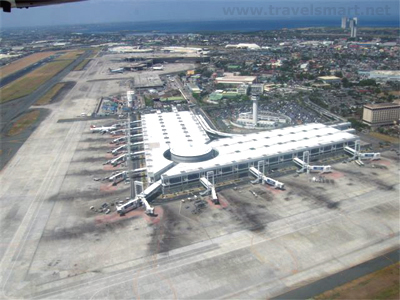
For one, the fixers and facilitators are gone or are, at least, more discreet. In their stead are uniformed personnel of the Manila International Airport Authority (MIAA) with proper IDs.

For such services as being met at the airport or getting through immigration in a hurry, an individual or a company can pay P800 per person directly to MIAA. Whatever is collected will form part of MIAA’s revenues, half of which will be remitted to the national government as dividends, and the remaining half will go to operating costs such as the P500 million needed to pay the salaries of 3,500 employees and capacity building (read: infrastructure improvement) for Naia, which accounts for 90 percent of the country’s arrivals and departures.

These days, the washrooms are clean the toilets flush and there’s always toilet paper. There’s also talk that MIAA general manager Alfonso Cusi will put in foot basins for Muslims in all washrooms.

MIAA projects gross revenues this year at P8 billion, based on a 2-percent increase in international tourists and close to 15-percent increase in domestic travel. When Naia 3 is fully operational, Manila will be able to handle 32 million tourists a year. Last year, Naia handled 22 million arrivals.

Right now, Naia 1 serves 7 million customers, a million more than its 6-million capacity. Even Naia 2 (read: the Centennial Airport of Philippine Airlines) cannot handle the huge number of passengers in its highly lucrative trans-Pacific flights. To temporarily resolve the overcrowding, departing passengers who usually leave in the evening are allowed to use a connecting lounge of the domestic airport, which has no customers at night.

PAL seen to postpone Airbus deal

PAL delays deal with Airbus on loss forecasts

February 12, 2009

MANILA - Flag carrier Philippine Airlines is likely to postpone new aircraft purchases this year as it expects to post a net loss for the fiscal year ending March 31 primarily due to costly fuel hedges and high fuel prices, its president said on Wednesday.

The airline, PAL Holdings Inc (PAL.PS), incurred a net loss of $113.8 million for the first half of the fiscal year which ended on Sept 30 as compared to its booked income of $22.7 million in the same period last year, and it went earning $30-million profit in 2007.

It joins industry leader Singapore Airlines, Thai Airways International, Malaysia Airlines, China Eastern Airlines Corp., Air China Ltd. and Cathay Pacific, which agreed to hedging deals when oil prices were rising last year, and have all posted paper losses from contracts after oil prices went down.

Benchmark U.S. crude oil CLc1 fell to a 2008 low of $32.40 a barrel in December from an all-time high above $147 in mid-July. It traded around $40.40 on Tuesday.

Hedges are typically derivatives used by companies to lock in a fuel price in advance. The goal is to protect airlines from price volatility.

The amount of hedge-related losses is determined by the type or derivative an airline uses and what obligation is built into the hedge. Airlines also account for the losses in different ways and at different times.

Many airlines use options, which give the holder the right, but not the obligation, to buy a commodity at a predetermined price. But if the market price falls below the preset price floor, hedges become worthless and may even force carriers to pay more than market price.

The volatility in world prices hurt most airlines last year. Those that hedged to protect themselves against rising fuel costs ended up losing money on hedges when the price of crude oil slumped.

Top airlines, including UAL's United Airlines and US Airways wrote down almost $2 billion in accounting losses for their hedge portfolios. Meanwhile, Southwest Airlines, long the envy of the industry due to its thorough fuel hedges, took a $247 million write-down.

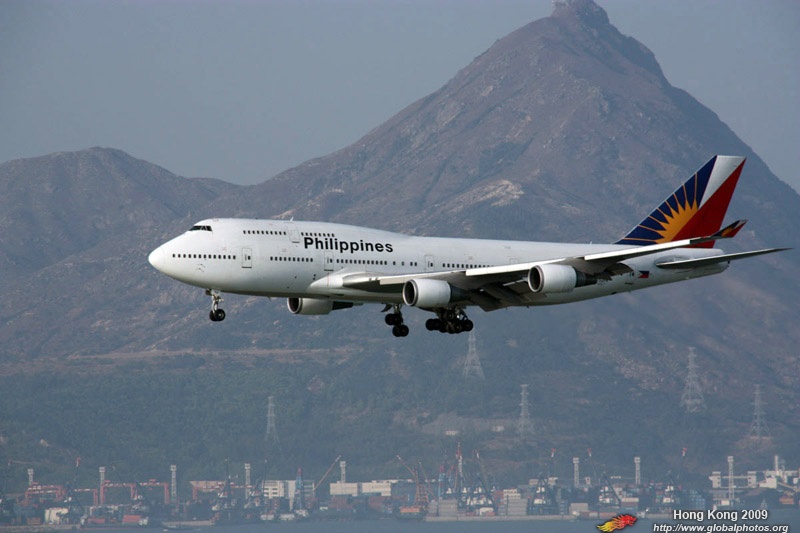
To offset hedging losses, Mr. Bautista said the company deferred the refurbishment program of its 4 Boeing 747-400 to save cost, and at the same time focus on keeping load factors high. Philippine Airline’s average load factor per flight has stayed at more than 70%.

"We already reported a six-months' loss. For the third quarter we will lose again but hopefully in the last quarter we will be profitable or break even, that is our projection," Jaime Bautista told reporters.

The global economic downturn also weakened travel demand, making it difficult for airlines to recover from high fuel prices that hit earnings for most of 2008.

A positive note on Philippine Airlines was that while industry airline leaders Singapore and Cathay shelved and reduced capacity to the U.S., Europe and Asia to prevent “flying half-empty planes” PAL went on expansion mode to meet rising demands particularly in Austral-Asia region as well as maintaining good passenger load across the pacific despite the turbulent period.

"We have to manage our revenues depending on the demand. If the revenues are low, we offer more seats at lower prices," Mr. Bautista said.

The airline expects a modest growth in 2009. Bautista added that they will be happy if they will be able to achieve the same number of eight million passengers carried in 2008.

The International Air Transport Association(IATA) has said some carriers were unlikely to reap the full benefit of the drop in fuel prices until 2010.The airline industry may lose as much $2.5 billion this year as traffic declines, with carriers in the Asia-Pacific region accounting for almost half of the deficit.


Cathay leads Terminal 3 Transfer


NAIA Terminal 1 burst to seams as Cathay seeks new home


February 10, 2009

Hong Kong, SAR - Hong Kong flag carrier Cathay Pacific Airways will lead international airlines to Terminal 3 by middle of this year.

The airline flew 1,067,270 passengers out of Manila from January to September last year followed by Northwest Airlines, at 383,104. Singapore Airlines carried 415,828; Korean Air, 314,808; Emirates Airline, 321,191; Japan Airlines, 312,670; Thai Airways, 241,372; China Airlines, 203,956; Gulf Air, 255,741; and Asiana Airlines, 214,871.

Coming in tow are Singapore Airlines, Korean Air, and Thai Airways whose international flights caused congestion at the Terminal 1 during peak hours. All of them also operated multiple flights.

Terminal 1 exceeded its 7-million passenger capacity in 2007. With the foreign airlines transfer, it is expected that 3 million passengers will be taken away from Terminal 1.

However, Terminal 1 capacity is expected to grow following additional flights from middle east carriers particularly Emirates and Qatar airways. Emirates intend to fly the bi-class Airbus 380 early next year. Two more foreign airlines, one from Europe and the other from the middle east, are also expected to fly out of Manila Terminal 1 this year if their plans push through.

General manager Alfonso Cusi of the Manila International Airport Authority (MIAA) when asked, neither confirmed nor deny which airline was transferring because they are still negotiating the terms of the contract. Japan bound airlines will continue to operate at Terminal 1.

The airport authority expects international traffic to rise by 2 percent to 3 percent this year, while domestic air travel at conservative 6%.

CAB reported that in 2008, international passenger traffic was at 10.7 million and domestic traffic was 9.7 million, for a total of 20.4 million passengers.

By 2013, the MIAA forecasts 11.3 million international passengers and 10.3 million domestic passengers for a total of 21.6 million passengers. It is expected to service 39 million passengers by 2018.

Meanwhile, Cusi announced that a monorail would be constructed next year to link first Terminal 1 and 2, then Terminal 3. The project is estimated to cost P300 million and be completed in three years. By 2014, the Terminal 2 annex will be constructed together with the monorail extension to Terminal 3 to accommodate future international flights of Philippine Airlines.

MIAA earned revenues close to P8 billion last year. CAB expects the Philippines to continue serving more passenger arrivals despite the crisis, citing the healthy growth of deployment in overseas Filipino workers. OFW arrival was recorded at 25 percent of terminal capacity in 2008. Philippine aviation industry grows more than 9% in 2008 while the rest of Asia Pacific struggles positive growth.

FedEx adieu

FedEx flies out to China PDF Print E-mail
Written by Henry Empeño / Correspondent
Monday, 09 February 2009 22:30

SUBIC BAY—The mighty FedEx birds have flown, and Subic might never be the same again. On Friday, February 6, starting at 2 a.m., a fleet of eight Airbus-A310s and four MD-11 aircraft made a beeline to Taxiway C of the Subic Bay Airport. Hours before, the planes were topped off with fuel, checked by technicians and loaded by hub operations agents with cargoes bound for destinations like Taiwan, Vietnam and Hong Kong.
It was a reprise of what has become a daily routine in Subic since the air cargo giant Federal Express (later to become FedEx Corp.) established its Asian hub here in 1995. Except that this time, the planes were not coming back, perhaps for good.
As the aircraft taxied for takeoff, their familiar bulk nosed through a curtain of water sprayed by a fire truck on standby—a farewell gesture that signaled the end of an era at the Subic Bay Free P wort.
The last cargo flights out of Subic on Friday actually started the transition period for FedEx’s transfer of its Asia-Pacific hub from here to Guangzhou, China, said Armand Arreza, administrator and CEO of the Subic Bay Metropolitan Authority (SBMA).
FedEx, Arreza said, has started to test-run its new facilities at the Baiyun International Airport, the main airport of Guangzhou, the capital of China’s Guangdong province, after operating in Subic for 13 years.
But the pullout, Arreza explained, was borne out of competition—not by the ongoing global recession.
“The decision was made as early as 2004, even before the global economic slowdown last year began to affect Asian economies,” Arreza pointed out.
“The market condition in China dwarfs that of the entire Southeast Asia combined,” he said, citing that China accounts for some 60 percent to 70 percent of Asia’s cargo traffic.
Moreover, China dangled to FedEx the incentive of cabotage, which would allow the American firm to handle domestic cargo in China.
“Here, the Philippine Constitution allows cabotage for domestic companies only,” added Arreza.

CARGO trolleys lay idle at the FedEx Subic hub after operations crew fi nished loading the last planes to fl y out of the Subic Bay International Airport. HENRY EMPEÑO

Lost income, lost jobs
The decision, nonetheless, would result in the contraction of SBMA’s income by about P150 million annually—the fees paid by FedEx for landing rights and warehouse rentals.
Landing fees by FedEx, in particular, made the bulk of revenue generated by the Subic Bay International Airport (SBIA), which was practically rehabilitated in 1994 to accommodate FedEx’s cargo flights.
According to SBIA records, FedEx logged in an average of 1,000 flights a month, with international flights almost double the domestic runs.
At its heyday here, the cargo firm had 12 inbound and 12 outbound flights on a regular night, with its fleet of Airbus A310s carrying as much as 35 tons each and the wide-bodied MD11s loaded with up to 89 tons of cargo each.
FedEx’s transfer to China also displaced more than 500 workers, mostly from Olongapo City, who were variously employed in sorting documents and freight, warehousing, ramp operations, as well as in aircraft maintenance, logistics distribution and ground support.
Earl Esmane, a part-time hub-operations agent from Olongapo, said the part-timers, who composed of about 70 percent of the FedEx hub crew, were paid P60 an hour for the usual four-hour nighttime shift.
The full-timers, however, received higher base pay, he said, adding that some regular employees had received offers to relocate to FedEx hubs in Hong Kong and Taiwan.
Esmane, who had completed his clearance with the company as early as last month, has yet to receive his separation pay.
However, a FedEx official said on Friday some officials would remain in Subic to oversee the completion of the firm’s reintegration program for its workers.
Farewell regrets
As the last FedEx plane took off on Friday, FedEx assistant chief pilot Joel Edmondson expressed some regrets about pulling out of Subic, saying that the FedEx hub here has been “very successful” since it was established in 1995.
He reiterated, however, that global economics dictated that FedEx had to relocate to China.
“It’s not a matter of Subic being not good enough to [FedEx],” Edmondson said. “This is an economic decision that puts us in a better position to move forward in the market.”
Ironically, it was the same market force that had brought FedEx to Subic Bay in the first place.
Noting the significant increase in the cargo market in Asia in the late ’80s and early ’90s, FedEx reportedly decided to establish a strong presence in the Asia-Pacific region, with the strategy to build an “Asia One” hub in Subic and, thereafter, adding more “spokes” to the hub.
In 1993 FedEx began negotiating with the SBMA for the use of the former US Naval Air Station in Subic—a year after it closed down as a result of the Philippine Senate’s rejection of the treaty extending the stay of US bases in the country.
The following year, FedEx signed a contract with the SBMA and the latter began rehabilitating the airport runway and procuring international-standard navigational equipment to meet its client’s requirements.
On September 1, 1995, FedEx launched the Asia One network in Subic, thereby setting up an overnight intra-Asian delivery network connecting 11 major Asian centers.
The following year, FedEx expanded its operations to include regular all-cargo flights directly linking Shanghai with its Asia-Pacific hub, thus getting the first taste of the burgeoning Chinese market.
FedEx would soon expand in 1999, adding eight more aircraft to its 12-plane fleet and signing an extension of its lease agreement from 2002 to 2007.
By 2001 the FedEx Asia One network in Subic has grown to include 19 destinations in Asia, so that in May 2004, it opted to extend its contract with the SBMA for up to August 2010, with options for three successive renewals of one year.
However, in July 2004, FedEx announced it has opted to transfer to Guangzhou by 2008, a decision that, it said, was based on an exhaustive series of feasibility studies that recognized the tremendous business potentials in China.