5J to fly Bali by March 16

November 20, 2012

Cebu Pacific will inaugurate flights to Bali, Indonesia, on March 16, 2013 says Candice Iyog, CEB’s VP for marketing and distribution.

Manila-Bali service will be every Tuesday and Saturday. It will depart Manila at 4 a.m. and arrive in Bali at 7:50 a.m. The return flight will depart Bali at 8:35 a.m. and arrive in Manila at 12:25 p.m.

5J 279 MNL 0400H Arrives DPS  at 0750H T-SA A320
5J 280 DPS  0835H Arrives MNL at 1225H T-SA A320

Airborne to disaster


November 17, 2012

The finding by the Civil Aviation Authority of the Philippines (CAAP) that pilot error was behind the plane crash that killed Interior Secretary Jesse Robredo should remind everyone that in the era of easy and readily available air transport, safety remains a key concern and a nagging challenge. 

According to the 14-page report of the special body that investigated the crash, Capt. Jessup Bahinting, the pilot and owner of the six-seater Piper Seneca aircraft that sank in waters off Masbate last Aug. 18 lacked the ability to handle the plane in bad weather. Bahinting and his Nepalese student-pilot died along with Robredo. 

The report said Bahinting erred when he did not turn the plane back to Cebu at the first sign of engine trouble. The plane had only one engine operating and Bahinting had no training in what the report called a “one-engine inoperative emergency.” He could have turned back to Mactan airport where he had taken off but he pressed on toward Naga City—a decision that proved fatal. Had he turned back, the accident might not have happened, or it would have been mitigated, because Mactan has the longest runway and widest air strip, the most modern navigation and communication equipment, and the most advanced and trained crash, fire and rescue equipment and personnel. Bahinting simply ignored dire warnings and wiser options and brought Robredo—tragically—to his death. 

Moreover, Bahinting ignored orders by air safety authorities to remain at 2,500 feet given the abnormal circumstances of the weather, the report said. Data from the air traffic control center in Manila showed that the plane climbed to 4,000 feet before the crash. The report also cited the testimony of Jun Abrazado, Robredo’s police aide and the lone survivor of the crash, that the plane veered to the left in its final approach to the runway, but the pilot appeared to have miscalculated and maneuvered the plane too late so that it shot off and crashed into the sea. 

A number of plane crashes in the last five years have been mostly attributed to pilot error. The worst took place in December 2011, when a cargo plane crashed into a neighborhood in ParaƱaque City, killing 14 people, including the pilot; 11 of those killed were on the ground. Like Bahinting, the pilot was considered relatively proficient but was unable to safely maneuver and land the plane. Both incidents involved engine trouble, which probers admitted would require the pilots to apply their skills of maneuvering so as not to aggravate an already bad situation. In both cases, the pilots fell short of the skills required. 

Similarly, a 2008 incident in which a C-130 cargo plane crashed in Davao Gulf involved a pilot of the Philippine Air Force much respected by his peers for smooth takeoffs and landings. The crash of the Air Force workhorse killed nine, mostly PAF men. While PAF officialdom at first discounted pilot error, later findings pointed to its likelihood. 

It is ironic that Robredo, who was in charge of public safety and order, should die because of safety infractions. It is even more ironic that even PAF pilots have perished due to factors that may include pilot error. In the case of the Robredo crash, the report blamed not only engine trouble and pilot error, but also the alleged connivance between Bahinting and CAAP personnel in the issuance of a certificate of airworthiness for his aircraft even without the necessary tests. The last finding is particularly worrisome, as readily admitted by President Aquino, who said he had read the report with “a mixture of sadness and disappointment.” 

“The pieces of evidence point to one thing,” the President was reported as saying. “If some people did their job, if the rules of the industry were followed, if those involved were only faithful to their obligations, the tragedy could have been avoided.” 

Even Robredo’s widow, lawyer Maria Leonor Robredo, while saying that “the crash report will not make me any sadder,” urged reforms in air safety regulation. She said she hoped that the results of the inquiry would lead to reforms to ensure the safety of air transport and prevent mishaps, such as the one that killed her husband, from taking place. Hers is an urgent, if plaintive, appeal. Going by recent air crashes traceable to pilot error and violations of air safety measures, with some connivance by regulators themselves, there appears a history of impunity in the breach of safety rules. This has got to stop—or the much-admired Robredo would have died in vain.

5J Cleared to Land in America

As DOT Clears Wet Lease to fly


November 16, 2012

Low Cost Carrier Cebu Pacific(CEB) is now permitted to fly the United States Of America (US), data from the US Department of Transport said.

Cebu Pacific applied to service the route on October 17, 2012 to the United States from Manila via intermediate points to Honolulu, San Francisco, Los Angeles, Guam, Saipan, and four additional points in the United States selected by the Philippines, the application shows.

The airline proposes to conduct its services pursuant to a wet lease arrangement with a duly authorized and properly supervised U.S. or foreign air carrier in view of the country's current FAA restriction. 

Cebu Pacific will introduce Guam and Saipan to its route network early next year followed by Hawaii. Preliminary unconfirmed talks by the airline suggest they would be letting the AOC of another Asian carrier based in Singapore. 

DOT restricted CEB's U.S. operations that forbid it to fly using its own aircraft and crews to the US because the Philippines is currently a Category 2 country under the FAA’s International Aviation Safety Assessment Program.

CAAP Cleansing Has Began

20 Employees purged from the ranks

CAAP Director General William Hotchkiss III and his Deputy Capt. John Andrews.

November 15, 2012

Civil Aviation Authority of the Philippines Director General William Hotchkiss announced Thursday the suspension of up to 20 CAA personnel's  involved in falsification of documents, one of them leading to the crash of Piper Sineca plane resulting to death of Secretary Jesse Robredo.

"Th investigating body has come up with names. These people will feel the brunt of the full implementation of Philippine Civil Air Regulations," Hotchkiss said.

The first strike was effected by CAAP Wednesday suspending airworthiness inspector Fernando Abalos for 90 days pending an administrative investigation into his culpability in the plane crash. 

"Previous actions of falsifying documents constitute gross dishonesty and grave misconduct. If proven true he would be remove from government service, and criminal complaints filed against him.” Hotchkiss adds.

Aircraft Accident Inquiry and Investigation Board (AAIIB)’s report found that Abalos approved a test flight permit for the renewal of the crashed plane’s airworthiness certificate without following PCAR procedures. However, no such record of the test flight exists in the aircraft logbook. There was also no record at Mactan-Cebu Airport that showed any flight plan for the plane supposedly filed on that day.

The investigation report found that Aviatour officials and some CAAP employees colluded to expedite the passage of the flying school’s airworthiness documents.

"We are still withholding the names of other employees pending the filing of formal charges against them" says Hotchkiss.

Meanwhile, AAIIB head Capt. Amado Soliman revealed that because of the investigation’s results, several air taxi operators and pilot schools will be re-audited, starting with inspections and certifications made by Abalos.

Soliman said they have the testimony of a witness Aviatour pilot who confessed to falsifying a document that led to the approval of the company’s Airworthiness Certificate.

“Captain Federico A. Omolon III, Aviatour Flight Instructor and supposed pilot of the test flight testified that Captain Jessup Bahinting, Owner of Aviatour and pilot of the fatal Seneca flight asked him to sign the Flight Test Report even though he did not fly the plane,” Soliman said.

“We will be re-auditing about 39 pilot schools and 24 maintenance organizations. We will also be reviewing 21 air taxi operators,”

Meanwhile,  The Civil Aviation Authority has ordered all aircraft operators to update their registration information before Jan. 1 next year to fully comply with the International Civil Aviation Organization’s (ICAO) safety standards.

The CAA directive (Memorandum Circular No. 27-12 Series of 2012) addresses one of two remaining significant safety concerns that an ICAO Validation Mission identified during its 10-day inspection last month. 

CAAP also approved the increase in the salary of flight safety inspectors to 50% from 30% of industry standards to entice more qualified inspectors to join the CAAP, which is other SSC of ICAO.

The Not-so Secret MOU to Dubai

PAL Cries Foul Over Emirates Refusal to Code Share 3rd Flight

November 12, 2012

Flag carrier Philippine Airlines (PAL) has asked the Civil Aeronautics Board (CAB) to reject the petition of Emirates Airlines (UAE) to add third daily flight starting January 1, 2013 between Dubai and Manila stating that the additional schedule was "counterproductive and unjustified."

The reason, UAE already fly 14 times a week, the agreement with them say so. PAL cannot fly to the gulf state because of previous secret agreement with UAE set to expire in 2014.

Negotiations between the two airlines failed after Emirates refused to code-share the third flight saying that it doesn't owned the additional frequencies granted to the Philippines.

Earlier, Cebu Pacific (CEB) filed a complaint against PAL for forfeiture of its rights  to fly the United Arab Emirates arising from non-use of bilateral air traffic rights. CEB wants to fly to the middle east starting winter season next year but their plans to expand to the region was hampered by lack or inadequate flight entitlements which were all taken by PAL and its codeshare partners. CAB rules that PAL was actively flying the route. Consequently, the government of the Philippines and the Arab Emirates expanded their Air Treaty to cover 28 weekly frequencies between Dubai, Abu Dhabi and Manila.

According to PAL in its Opposition letter to Emirates Petition (CAB CASE No. EP-59079/HED102012-261) for additional third daily flight, the airline intends to introduce its own-operated flights to the United Arab Emirates by 2012 and 2014, “given the assurance that no more than 28 weekly frequencies are to be operated by each side on the agreed routes between the UAE and Manila.” 

PAL codeshared the routes to Dubai and Abu Dhabi via partners UAE and Etihad Airways (ETD) for a total of 28 flights between the two countries.

“As code share partner, PAL honors its existing code share arrangement which remains in effect until 2014. Our objection is to the proposed unjustified and counterproductive excess of seven frequencies, or for that matter any formulation that results in an EK operation in excess of 14 frequencies per week on the Dubai-Manila route,” PAL said. 

Further, PAL said that the new PAL-UAE Confidential Memorandum Of Understanding (CMOU) already provided for a maximum entitlement of 14 weekly frequencies for UAE as the exclusive designated UAE carrier under Category 1 Route 1. Category 1 Route 2 covers Abu Dhabi-Manila sector.

PAL also said that UAEs proposed petition would undermine the earlier negotiation of a new CMOU in September that was intended to usher in a new development era where the airlines of both the Philippines and the UAE would offer their own self-operated services in an environment of fair and healthy competition.

“As the board will noted, EK’s proposed 21 times weekly service will result in a total UAE carrier operation of 36 weekly frequencies when added to the existing 14 times weekly Abu Dhabi-Manila services of Etihad Airways, the UAE’s designated carrier for Category 1 Route 2 under the CMOU,” PAL said.

UAE argued however that PAL's interpretation is flawed.

Gigie V. Baroa, UAE Philippine manager explained that while both of them are entitled to fly 7 times a week for a total of 14 flights between Dubai and Manila which they are now doing, another 7 entitlements was granted by both Arab Emirates and Philippine government last September 11, expanding bilateral services between these two points.

"The United Arab Emirates awarded this additional entitlement to Emirates Airlines" says Baroa.

“It was in the fact the agreement of the aeronautical authorities of the two governments that the pre-existing borrowing of unused entitlements could continue alongside the additional daily services granted under the new confidential memorandum of understanding of Sept. 6,” Baroa said.

PAL did not get the new entitlements nor applied for the same. The seven additional frequencies are still to be divided between Cebu Pacific and Zest Air which applied to service the routes.(Air Philippines applied for this route after blog posting)

"The requested additional frequencies will not just benefit Emirates but the Philippine carriers as well" Baroa adds citing growth demands on the market.

The other 7 entitlements on the Philippines side is yet to be awarded by CAB. The applicants for the route were Zest Airways (EZD), and CEB and they were both asking for seven flights says a CAB insider.

The 40 Million Pesos Job

CAAP looking for Flight Check Aircraft, 
the final piece of the puzzle 

November 11, 2012
by Recto Mercene


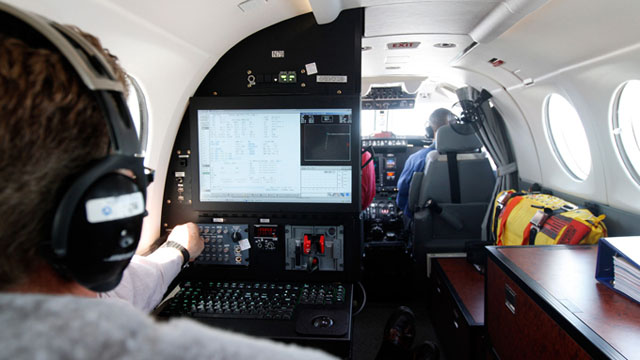
THE Civil Aviation Authority of the Philippines (Caap) is offering P40 million for a one-year contract to a company, which can provide a flight-check aircraft to calibrate some 118 navigational aids (Navaids) throughout the archipelago.

A flight-check aircraft is specially designed to calibrate Navaids every six months to ensure they are beaming the correct signals for safe navigation.

Like any electronic equipment, Navaids are subject to the vagaries of weather and constant use—being on the air 24/7—and they get misaligned or deviate from their setting, according to Alger Ramo, a senior airport ramp controller.

The Caap hire or rent foreign flight-check aircraft to calibrate a few Navaids costing P3 million to P5 million when its flight-check airplane is under maintenance. It recently rented from a New Zealand company for a week.

Because of the high expense, the Caap bought its own flight check aircraft, a twin-engine Beechcraft “King Air.” However, it has been out of commission for years after its two engines required overhauling, the Caap said.

The engines were eventually repaired in India at a cost of P43 million, but problems still exist before they could be made operational.

Improperly aligned signals by a Navaid could lead to an aircraft going astray from air routes, which could spell disaster if not corrected on time, Ramo said.

Airplanes could also fail to be properly alignment in the runway if the signals are incorrect.

Clark, Subic and the Mactan-Cebu International Airports maintain their own Navaids. They are also designated alternate airports.

Ramo, a former pilot, said modern airplanes have redundant devices, such as Global Positioning System, relying on satellite signals to show the airplane’s location.

The efficient operation of all the Navaids is a requirement of the International Civil Aviation Organization, Ramo added.

PAL's UK License to America and EU

Goodbye CAAP, Hello CAACI?


November 10, 2012

George Town - The Philippines largest carrier may be going to United States of America and Europe after all with or without the Philippine Civil Aviation Authority's (CAAP) support or regulatory license when push comes to shove on Philippine Airlines (PAL) US$10 billion expansion plans.

San Miguel Corporation, one of Asia's largest food conglomerate, is currently in talks with Cayman government to sell substantial share of the airline to a Philippine-based corporation valued at US$ 25 million.

Cayman Primier McKeeva Bush in a statement to the Legislative Assembly said Cayman Airways (CAL) had received investment proposal from San Miguel Corporation which owns Philippine Airlines (PAL).

“These explorations are very preliminary,” the premier stated, adding that while there may be “great speculation in the media as to what may ultimately be agreed,” nothing has yet been confirmed and talks were continuing between CAL and SMC.

However, a leaked document suggests the company to be looking for a substantial chunk of preferential shares with an agreed dividend starting at 3% in the first year rising to 5% in the third year of its investment. It would then be seeking an option to convert the shares to ordinary ones which could give the firm as much as 49% of the airline.

Bush pointed out that any agreement to sell shares would require approval of Cabinet, the Legislative Assembly and ultimately the United Kingdom. The Cayman Islands is a British overseas territory.

“The introduction of preference shares as an additional class of shares is one of those considerations that could possibly be pursued to raise capital from any potential investors locally or otherwise,” says Bush.

“These non-voting shares provide for a stated return to the holders and provide an equity source of funding for the airline.” he said to legislators Friday.

The premier acknowledged that under the Public Management and Finance Law, and the Framework for Fiscal Responsibility, to issue preference shares the airline would need the Foreign Commonwealth Office (FCO’s) backing.

“The necessary due diligence and seeking of approvals all need to be conducted, but at this point it is suffice to say that the exploration is ongoing and I look forward to bringing more details forward if some of the ideas are commercially viable and acceptable under the PMFL.” said Bush.

SMC investment however raised serious concerns notwithstanding the exploratory nature of the talks.

Legislative Assembly (LMA) member Ezzard Miller noted that the parent company of PAL is and has been seeking ways to get around its own airline’s black listing status in Europe and FAA category two status in the USA as a result of the aviation regulators shortcomings at its home base in Manila.

“While I believe that if government is going to sell shares in CAL those shares should in the first instance be offered locally, if we are to seek overseas investors we need to be very careful,” Miller said. 

“It is very unlikely that SMC genuinely wishes to sink as much as $25 million into CAL for the dividend but because it may help it circumvent the problems it has with regulations in Europe and the United States which has prevented the airline from expanding its routes.” Miller adds.

Miller said he hoped that Bush has thoroughly explored the implications of attempting to assist an airline which could be an effort to by-pass, not only the British civil aviation regulations but the US Federal aviation regulations as well. 

“I am concerned that Cayman Airways could be punished as a result of this attempt to sidestep important international rules which are about airline safety,” he added.

Cayman Islands aviation industry conforms to the standards and recommended practices of the International Civil Aviation Organization (ICAO).---with reports from Cayman News Service

Hawaiian Flies A330 to Manila

November 7, 2012

Hawaiian A330-200 departing Las Vegas to Honolulu. The airline already connects Manila-Las Vegas via Hawaii

Honolulu, Hawaii - Hawaiian Airlines a subsidiary of Hawaiian Holdings (Nasdaq: HA), intensify its market hold on Manila  as it added capacity to its Honolulu-Manila service until 31 March 2013.

The airline which declared Manila its flagship route will deploy one of its newest and largest aircraft, the Airbus A330-200, to the Philippine capital aimed at improving its product against competition.

Manila remains the airlines goldmine after registering a positive growth rate since 2008 while its other route network suffered decline. Already, it has gain headway in traffic against inferior product offered by Philippine Airlines that prompted the latter to matched generous baggage allowance given by Hawaiian.

The transition from the 264-seat Boeing 767-300ER aircraft to the 294-seat A330 will add more than 2,500 new seats to the route during the winter travel period as it continue to expand the market, taking advantage of its competitors inability to upgrade its product due to FAA restrictions.

Hawaiian Airlines president and CEO Mark Dunkerley remarked that its flight to Manila is always full of Filipino passengers accounting almost 80% of its load. “The deep cultural and historic bond between the Philippines and Hawaii is another major reason for travelers to make more frequent trips." he quipped.

Durkerkley also said that Hawaiian Airlines is reporting a steady growth of Philippine passenger traffic with bookings mostly from US West Coast routes. It also reported increased bookings to Las Vegas after PAL announced termination of service effective January 15, 2013.

Hawaiian flies to Manila four times a week, departing Honolulu on Sundays, Mondays, Wednesdays and Fridays and returning the following day.

Hawaiian Airlines is Hawaii’s largest and longest-serving airline, and the second-largest provider of passenger air service between the U.S. Mainland and Hawaii. It also flies to Australia, American Samoa and Tahiti.