18 September 2015
by Lorenz S. Marasigan
Cheaper Fares
Rolando R. Zamora, 51, thinks about his family often. His work in Dubai as a site engineer is quite taxing, but it’s the only thing he can do to provide for his family.
He still remembers how hard it was to pack his bags that fateful Tuesday of July in 1992, when his youngest, then 9-month-old Nicole, was crying nonstop.
Zamora kept telling himself that leaving his family behind to seek greener pastures will allow his children to avoid the hardships he had to endure.
“It will be better,” he recalled saying to himself. “It will be better for all of us.”
“I didn’t want my kids to work behind counters at night just so they could finance their studies. I want them to have a good life,” the father of four said.
Despite his hesitation, Zamora left Manila for Dubai and has worked there ever since. He goes home to his family every year, bringing with him several boxes of gifts for his loved ones.
In 2003 he brought his family to Dubai and lived there for several years. But raising his kids in a foreign land—where his seemingly handsome salary according to Philippine standards was meager in the Middle East—proved to be harder than he thought.
So, after five years, Zamora and his family decided to go back to their home in Marikina City.
“It was a hard decision, but buying a plane ticket back to the Philippines and to Dubai is much cheaper than raising my family in the Middle East,” he said.
Zamora is just one of the thousands of overseas Filipino workers (OFWs) currently based in the Middle East who rely on cheap airline tickets to be with their loved ones in the Philippines as frequently as they want to.
Data from the Philippine Overseas Employment Administration showed that the Middle East remains as the top destination for OFWs in 2014. A total of 885,541 land-based workers were deployed to the Gulf last year. The figure is more than half of the 1.43 million overseas workers registered with the government.
“I get to save a lot of money from cheaper airline tickets. The few hundred riyals or so that I save from the fare, I use to buy more gifts for my family,” Zamora said.
Airline-ticket prices to the Middle East are expected to go down this year, thanks to the growing competition in the aviation market in the Philippines. Today, there are about seven local and international carriers flying directly to the Arab gulf.
Last month Manila and the United Arab Emirates (UAE) signed a new memorandum of agreement expanding the air-traffic rights between the two nations.
The parties agreed to increase the maximum number of flights per week for each country from the current 28 flights to 35, subject to the condition that the UAE carrier operating additional flights to Manila is bound to also operate separately to Clark or Cebu within one year from signing of the memorandum.
The conditional agreement, described by Civil Aeronautics Board Executive Director Carmelo L. Arcilla as “more or less fair” to both parties, aims to stimulate the traffic in developmental gateways outside Manila.
With the signing of the agreement, Filipino and Arab carriers may now expand their operations in the Gulf, intensifying the already-stiff competition in the said market. This will effectively lower the cost of fares to Gulf destinations.
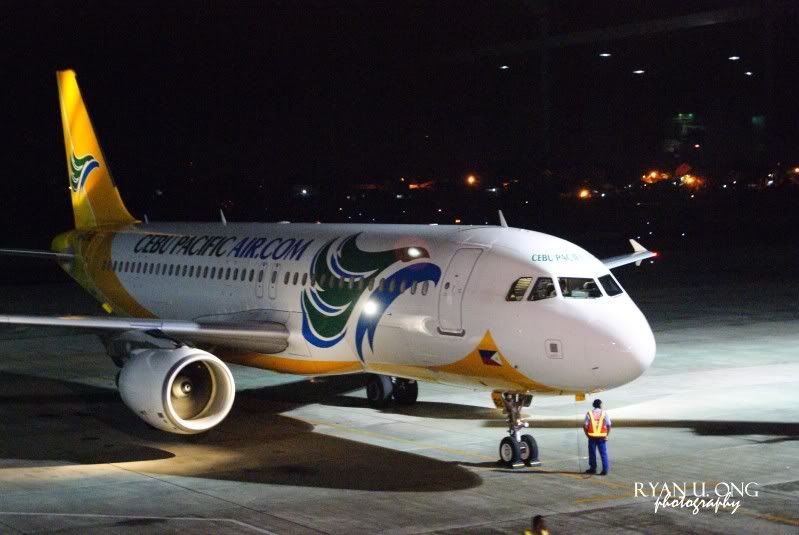
Currently, a roundtrip ticket from Manila to Dubai costs about P53,130 in Philippine Airlines, P54,630 in Emirates and P31,029 in Cebu Pacific.
These rates could go down before the year ends, when Emirates and Etihad Airways are expected to mount more flights during the holidays.
“When you open the competition, it means that you will have more flights. The more flights you have, the more options you get, and the more choices you have, fares tend to go lower,” Arcilla said.
Lower fares are expected to be welcomed by both tourists and OFWs.
Tourism Secretary Ramon R. Jimenez Jr. said the increased capacity between the Philippines and the Arab gulf ultimately is “good news” for the country’s tourism sector.
“When you hear news that there are new seats, this is always good news. It just simply means that new people will come,” he said.
Jimenez characterized the Middle Eastern market as a huge market that is highly untapped by the Philippines.
“It is a gigantic market, yet few tourists visit the country. We’re marketing very heavily in these markets. We’re doing promotions and we are trying to encourage more seats,” Jimenez said.
During the first six months of the year, only 38,144 tourists from the Middle East visited the Philippines, contributing less than 2 percent to total visitor arrivals.
Also, the additional seat entitlements would mean better access to the Philippines for tourists from European markets, which go through Abu Dhabi and Dubai.
Emirates and Etihad are airlines that generally make use of the hub-and-spoke system, which is essentially a system of connections in which traffic moves along spokes connected to the hub at the center.
In the case of Emirates, the hub is the main airport in Dubai, and the spokes are scattered around the world like a chariot wheel.
Such a system has an exponential effect. It can connect Manila to more than 200 destinations around the world without having to have a direct connection to, say, a secluded city.
Tourism Promotions Board (TPB) Chief Operating Officer Domingo Ramon C. Enerio said his group expects to see development from the Scandinavian bloc and the Benelux countries, as well as traditional top visitor sources—the United Kingdom, Germany and France—thanks to the expanded seat capacity.
The European bloc contributed only 105,330 visitors to the 2.6 million tourist arrivals in the Philippines as of end-June. This means that the market contributed only 4.02 percent of total arrivals for the first six months of the year, way below the tourism department’s 10-percent to 15-percent target.
“It would be good to have this percentage grow exponentially in the next couple of years because they are a long-stay market, and they spend more. They’re a high-yield market,” Enerio said.
The tourism body expects to net P350 billion in tourism receipts this year.
Experts said, however, that while the tourism sector would benefit from the expansion of air-traffic rights between the Philippines and the UAE, this could pose a threat to Filipino carriers.
“The increase in frequency for UAE carriers generally favors tourism. It means more seats for foreign tourists no matter which airlines operate the capacity. That is why the travel and tour agencies, in contrast with the Philippine carriers, are rejoicing. The dilemma for the country is it might help improve tourism but at the expense of weakening its airlines,” Avelino L. Zapanta, an aviation expert, said.
Top OFW Destination
FILIPINO carriers have no problem competing with Middle Eastern airlines, especially since they have regained their footing financially. However, wrestling with giants that are backed by government funding will lead them back to the pit and the mire.
Generally, competition in the Philippine aviation sector is both intense and dynamic, as regulators had done a good job in providing consumers a wide range of choices in terms of air services. For example, a passenger going to London has at least 10 airlines to choose from —it all depends on his preference of route.
“There’s a real competition happening in the airline industry. There’s no indication that the players are doing anti-competitive activities unlike what’s generally perceived in the oil industry, whose players are suspected to be more a cartel than competing firms,” Avelino L. Zapanta, an aviation expert, said in an e-mail.
Philippine Airlines (PAL) President Jaime J. Bautista agreed, saying that his company has always been pushed by the competitive market to improve its services.
“Competition in the airline industry in the Philippines is both intense and dynamic. We have a hotly contested domestic market, more competitive than in neighboring countries. Internationally, PAL and other carriers have carefully built up a long-haul network that is a major step forward for the Philippines’s connectivity needs, though still a work in progress,” he said.
Cebu Pacific Long-Haul Division General Manager Alex B. Reyes said the aviation market is generally well-served by different airline structures, benefiting the passenger in the process.
“Regulators have successfully encouraged an environment where consumers are given multiple options to choose from. The Philippines is also very well-served by both legacy and low-cost carriers,” he said.
Both are competing with one another—domestically and internationally—and are competing with foreign carriers in many markets. Asia remains to be the top market that these two carriers serve, but the Middle East is one of growing sectors that the airlines want to tap.
After all, the Arab gulf is the top destination for overseas Filipino workers.
No guns, no glory
But competing with carriers from the United Arab Emirates (UAE) might prove to be too hard for both Philippine carriers. For one, their pockets don’t have enough money to aggressively expand their network, and their arsenals are a little far off compared to the bigger guns of Middle Eastern players.
Filipino carriers are not well-equipped to keep pace with the growth of Arab airlines. The Philippine carriers fly with only a few long-range aircraft, while their Middle Eastern counterparts enjoy the leisure of having a long-range fleet that is one of the largest in the world.
Middle Eastern carriers, likewise, enjoy government backing, as alleged by many of their competitors—not only in the Philippines, but also in the US.
“The issue of government subsidy to UAE carriers is very real and has always been there. Even the American carriers have raised that issue of subsidy against the UAE carriers, which have been spreading their wings in the Americas trouncing the US carriers in the competitive arena,” Zapanta said.
American carriers have been very vocal on their stance against Emirates, Etihad Airways and Qatar Airways, as they have allegedly received as much as $42 billion in subsidies from their governments.
United Airlines, Delta Airways and American Airlines, through the Partnership for Open and Fair Skies Coalition, has called on Washington to temporarily block new US-bound services of Arab carriers to protect them from the negative effect of an unfair market.
This is the same sentiment of Manila-based carriers, which said they are ready to compete against Middle Eastern carriers, but on one condition: the government should foster a healthy and competitive market.
“We can compete with any airline in the world so long as the playing field is level,” Bautista said, noting that his airline has been competing with airlines from the US, Japan, South Korea, China, Australian and Europe for quite some time now.
Reyes echoed Bautista’s statements, saying that his company is willing to work hand-in-hand with the government to ensure that there is a level playing filed in the market.
“Cebu Pacific welcomes competition, as it ultimately benefits our passengers. We continue to provide our services in the most efficient way we can, and work closely with the Philippine Civil Aeronautics Board, to ensure that we are competing on the same level playing field. We look to the Philippine government to promote the interests and further development of the Philippine aviation industry,” he said.
Emirates, however, belied these claims, with Emirates Divisional Senior Vice President for Commercial Operations, Far East and Australasia Region Barry Brown challenging the company’s detractors to review its financial health over the past few years.
“We have been, and continue to be, consistently transparent and open about our financials. Claims of subsidy and unfair competition are completely false and we have released a point-by-point, fact-based response that systematically disproves these allegations,” he said.
‘Worsened PHL carriers’ weak position’
Today, with the added capacity that Arab carriers are soon to enjoy, Filipino carriers will have to be quicker to innovate in order to at least try to catch up with their Middle Eastern peers.
“Ideally the Philippine government should have done its duty to prevent a further skewing of the market and the competitive arena; that’s a regulatory and public policy mandate. Now that unjustified excess rights were given to certain Middle East carriers, it falls on us, the airlines, to work harder,” Bautista said.
The recently signed agreement between the Philippines and the UAE increased the maximum number of flights per week for each country from the current 28 flights to 35.
Zapanta explained that the result of the recent air talks is clearly a gain on the part of the UAE airlines.
“It aggravated the already weak competitive position of the local carriers. Simply, the UAE carriers can absorb any amount of increase in traffic rights because their airlines are selling virtually all their destinations beyond their bases, i.e., Dubai for Emirates and Abu Dhabi for Etihad, and that is over 150 destinations for both within the Middle East and beyond to Europe and the Americas,” he said.
The expert added: “Our local carriers are selling virtually only Dubai in the case of Cebu Pacific and Abu Dhabi in the case of PAL. They cannot capture enough volume to fill up their current offered flights, for which reason no one wanted to operate the remaining unused seven flights a week.”
This will also affect their immediate plans in a negative way, as consumer preferences tend to favor that of the Middle Eastern brands.
“It will affect their plans badly. The UAE carriers will be able to offer more of the same, i.e., likely free overnight stopover in Dubai or Abu Dhabi and more connecting flights to destinations in Europe and beyond to destinations in the Americas, and in new widebody aircraft against the sardine-configured seats of Cebu Pacific and narrower seat pitch of PAL’s.
Tourists love to stopover in these intermediate airports because they have much to offer in terms of experiencing modern airports in great cities like paradise that sprout out of the desert,” he said.
Bautista agreed, saying that it will put pressure on almost all of its long-haul routes, as gulf carriers cater to markets outside their hubs.
“The recent air talks will put pressure on our new long-haul routes, especially Europe, Middle East and US or Canada east coast. We are set to launch new routes to Kuwait, Jeddah and Doha while building up our existing flights to Dubai, Abu Dhabi, Riyadh, Dammam, London and New York. All these routes will be affected by grants of unjustified capacity to UAE airlines that serve these markets via their home hub airports,” Bautista explained.
‘Weaker bottom lines’
Furthermore, the financial health of local carriers are now at higher risks, as Middle Eastern airlines will soon eat up their market share.
“While, the Middle East is not the only routes local airlines are operating, the intensified competition will not help enhance their bottom lines. On the contrary it would negatively affect it, unless they are able to find other routes and markets to compensate the Middle East debacle,” Zapanta said.
Given this, Bautista and Reyes could only hope for the best, and try to save what could still be saved from a phenomenon that they have been fearing for a while.
“We have to be extra nimble and innovative. They are greatly subsidized and protected from risk by regulatory shelters, domestic monopolies and government largesse,” Bautista said.
Conclusion
Truth be told:
Competing with Middle Eastern carriers, ultimately, is a losing battle for local airlines; but no matter how stark the situation might look, there remains a tinge of hope for the underdogs.
But this speck of light will require airlines to double their efforts and expand their tents. This might even require them to fly to so-called uncharted territories.
Since Gulf carriers generally operate under the hub-and-spoke system, the only way Filipino airlines could compete is to use the entitlements given to them by the recently signed air-services agreement with the United Arab Emirates (UAE).
“Aside from requiring UAE carriers operating such additional flights to Manila are bound to also operate separately to Clark or Cebu within one year from signing of the memorandum, we got on a unilateral basis additional fifth freedom traffic rights to the United Kingdom, the United States and Saudi Arabia,” Civil Aeronautics Board Executive Director Carmelo L. Arcilla said.
The fifth freedom allows local carriers, like Philippine Airlines (PAL) and Cebu Pacific, to fly from Manila to UAE and onward to any country, including the UK, the US and Saudia Arabia. This will improve Philippine connectivity and also the commercial viability of routes to the UAE.
But these so-called consolations are mere consolations, if local carriers are not able to effectively use them.
“There is the consolation of allowing the Philippine carriers fifth freedom traffic rights beyond Dubai and Abu Dhabi, but the meager resources of the local airlines will prevent them from operating to so many more points beyond Dubai and Abu Dhabi,” said Avelino L. Zapanta, an aviation expert.
Zapanta explained this will prove to be another challenge in the histories of the two carriers, as they will have to shell out large sums of money to expand their operations through larger planes and extended routes.
“They must be willing to face the challenge of using the fifth freedom traffic rights afforded them in the new air-services agreement. That will take much resources and guts to do. If they would not be willing to compete, then they just have to content themselves with their share of overseas Filipino workers [OFWs] destined to the UAE and none of those going beyond,” he said.
Cebu Pacific Long Haul Division General Manager Alex B. Reyes said his camp is mulling over the prospect but noted that its main market remains the 800,000-strong OFWs in the Middle East.
“The effect of the recent UAE air talks is that the new agreement now allows Cebu Pacific to fly from the UAE to any point in the Middle East or Europe. This effectively means we can provide the same value-for-money services for passengers who are originating from the UAE and flying onward to Europe,” he said.
“Should we deem it commercially viable, we could stop over in Dubai, and then fly onward to London. The previous agreement had blocked us from doing so,” Reyes added.
Flawed agreement
The flag carrier, which has been operating direct flights to the US and London, stood its ground, with its president criticizing the compromise agreement the local air panel entered into.
“Economically, the excess capacity will hurt Philippine tourism. If a year from now we and other airlines are forced to slow down our route expansion or curtail some of the direct flights linking the nation to Europe, North America or the Middle East, that will dampen tourist flows to the Philippines,” PAL President and COO Jaime J. Bautista said.
The agreement, he added, somehow betrayed the local carriers’ position in maintaining good business environment in the long run.
“The UAE agreement is flawed, because it sacrifices long-term strategic growth for short-term political gains. It’s now up to us, the Philippine carriers, to make up by summoning the best of the Filipino fighting spirit to the competitive battle ahead,” he said.
Moved away from protectionism
The problem now here is that the government has moved away from a policy of protectionism and embraced the pocket open-skies strategy. It has also subscribed to the single-aviation market in the Association of Southeast Asian Nations (Asean).
“Government has moved away from protectionism, thus, its promulgation of pocket open-skies policy and subscribing to the Asean single-aviation market. It is against the law to provide the airlines subsidies and guarantees for which the US and its airlines have been assailing the UAE and its airlines of doing. The public would be critical of protectionism. They want more capacity, even if it’s the foreign airlines offering these,” Zapanta said.
Arcilla noted that the government is more keen on developing a more liberal policy on air services to keep pace with demands of globalization.
“The policy pronouncement of President Aquino is to develop an adequate aviation network that has sufficient connectivity necessary for economic development anchored by foreign and local airlines,” he said.
Arcilla added that the government is trying to balance the scales among many parties involved—local and foreign carriers, and the consumers.
“The goal is to develop a vibrant aviation network. We need to balance the interests, and I think we struck a balance between the two forces because we got minimal increase, and more compromises,” Arcilla said, referring to the promotion of developmental routes—such as Cebu and Davao—in the agreement with the UAE.
Passengers are the big winners
Despite putting local airlines in financial peril, the government was successful in stirring up the competition in the Middle Eastern market. This means that passengers will get more choices when it comes to air travel, lowering airfare prices in the process.
“This battle all works out well for the consumer, because the increased capacity for the UAE airlines is good for them; not to mention the ability to book to any of the airlines’ 150 or so destinations beyond their UAE home bases,” Zapanta said.
Arcilla agreed, saying that this will stimulate air travel from outside the Philippines. Hence, tourism revenues may increase, especially since the Middle Eastern market is a high-yield sector that the government has been keeping an eye on for a long time.
“The new services mean new destinations. For example, Cebu can be connected to Europe via Dubai. This will help us achieve our targets,” he said. “Competition will bring down airline- ticket prices, and the consumers stand to benefit from it.”
So, for Rolando R. Zamora, an engineer who is based in Dubai, going home to the Philippines will now be easier than ever. He plans to come home in March next year in time for his daughter’s wedding.
“I’m excited to see my daughter walk down the isle,” he said. “I can now give her a better gift, now that I get to save more from airline-ticket prices.”
by Lorenz S. Marasigan
Cheaper Fares
Rolando R. Zamora, 51, thinks about his family often. His work in Dubai as a site engineer is quite taxing, but it’s the only thing he can do to provide for his family.
He still remembers how hard it was to pack his bags that fateful Tuesday of July in 1992, when his youngest, then 9-month-old Nicole, was crying nonstop.
Zamora kept telling himself that leaving his family behind to seek greener pastures will allow his children to avoid the hardships he had to endure.
“It will be better,” he recalled saying to himself. “It will be better for all of us.”
“I didn’t want my kids to work behind counters at night just so they could finance their studies. I want them to have a good life,” the father of four said.
Despite his hesitation, Zamora left Manila for Dubai and has worked there ever since. He goes home to his family every year, bringing with him several boxes of gifts for his loved ones.
In 2003 he brought his family to Dubai and lived there for several years. But raising his kids in a foreign land—where his seemingly handsome salary according to Philippine standards was meager in the Middle East—proved to be harder than he thought.
So, after five years, Zamora and his family decided to go back to their home in Marikina City.
“It was a hard decision, but buying a plane ticket back to the Philippines and to Dubai is much cheaper than raising my family in the Middle East,” he said.
Zamora is just one of the thousands of overseas Filipino workers (OFWs) currently based in the Middle East who rely on cheap airline tickets to be with their loved ones in the Philippines as frequently as they want to.
Data from the Philippine Overseas Employment Administration showed that the Middle East remains as the top destination for OFWs in 2014. A total of 885,541 land-based workers were deployed to the Gulf last year. The figure is more than half of the 1.43 million overseas workers registered with the government.
“I get to save a lot of money from cheaper airline tickets. The few hundred riyals or so that I save from the fare, I use to buy more gifts for my family,” Zamora said.
Airline-ticket prices to the Middle East are expected to go down this year, thanks to the growing competition in the aviation market in the Philippines. Today, there are about seven local and international carriers flying directly to the Arab gulf.
Last month Manila and the United Arab Emirates (UAE) signed a new memorandum of agreement expanding the air-traffic rights between the two nations.
The parties agreed to increase the maximum number of flights per week for each country from the current 28 flights to 35, subject to the condition that the UAE carrier operating additional flights to Manila is bound to also operate separately to Clark or Cebu within one year from signing of the memorandum.
The conditional agreement, described by Civil Aeronautics Board Executive Director Carmelo L. Arcilla as “more or less fair” to both parties, aims to stimulate the traffic in developmental gateways outside Manila.
With the signing of the agreement, Filipino and Arab carriers may now expand their operations in the Gulf, intensifying the already-stiff competition in the said market. This will effectively lower the cost of fares to Gulf destinations.
Currently, a roundtrip ticket from Manila to Dubai costs about P53,130 in Philippine Airlines, P54,630 in Emirates and P31,029 in Cebu Pacific.
These rates could go down before the year ends, when Emirates and Etihad Airways are expected to mount more flights during the holidays.
“When you open the competition, it means that you will have more flights. The more flights you have, the more options you get, and the more choices you have, fares tend to go lower,” Arcilla said.
Lower fares are expected to be welcomed by both tourists and OFWs.
Tourism Secretary Ramon R. Jimenez Jr. said the increased capacity between the Philippines and the Arab gulf ultimately is “good news” for the country’s tourism sector.
“When you hear news that there are new seats, this is always good news. It just simply means that new people will come,” he said.
Jimenez characterized the Middle Eastern market as a huge market that is highly untapped by the Philippines.
“It is a gigantic market, yet few tourists visit the country. We’re marketing very heavily in these markets. We’re doing promotions and we are trying to encourage more seats,” Jimenez said.
During the first six months of the year, only 38,144 tourists from the Middle East visited the Philippines, contributing less than 2 percent to total visitor arrivals.
Also, the additional seat entitlements would mean better access to the Philippines for tourists from European markets, which go through Abu Dhabi and Dubai.
Emirates and Etihad are airlines that generally make use of the hub-and-spoke system, which is essentially a system of connections in which traffic moves along spokes connected to the hub at the center.
In the case of Emirates, the hub is the main airport in Dubai, and the spokes are scattered around the world like a chariot wheel.
Such a system has an exponential effect. It can connect Manila to more than 200 destinations around the world without having to have a direct connection to, say, a secluded city.
Tourism Promotions Board (TPB) Chief Operating Officer Domingo Ramon C. Enerio said his group expects to see development from the Scandinavian bloc and the Benelux countries, as well as traditional top visitor sources—the United Kingdom, Germany and France—thanks to the expanded seat capacity.
The European bloc contributed only 105,330 visitors to the 2.6 million tourist arrivals in the Philippines as of end-June. This means that the market contributed only 4.02 percent of total arrivals for the first six months of the year, way below the tourism department’s 10-percent to 15-percent target.
“It would be good to have this percentage grow exponentially in the next couple of years because they are a long-stay market, and they spend more. They’re a high-yield market,” Enerio said.
The tourism body expects to net P350 billion in tourism receipts this year.
Experts said, however, that while the tourism sector would benefit from the expansion of air-traffic rights between the Philippines and the UAE, this could pose a threat to Filipino carriers.
“The increase in frequency for UAE carriers generally favors tourism. It means more seats for foreign tourists no matter which airlines operate the capacity. That is why the travel and tour agencies, in contrast with the Philippine carriers, are rejoicing. The dilemma for the country is it might help improve tourism but at the expense of weakening its airlines,” Avelino L. Zapanta, an aviation expert, said.
Top OFW Destination
FILIPINO carriers have no problem competing with Middle Eastern airlines, especially since they have regained their footing financially. However, wrestling with giants that are backed by government funding will lead them back to the pit and the mire.
Generally, competition in the Philippine aviation sector is both intense and dynamic, as regulators had done a good job in providing consumers a wide range of choices in terms of air services. For example, a passenger going to London has at least 10 airlines to choose from —it all depends on his preference of route.
“There’s a real competition happening in the airline industry. There’s no indication that the players are doing anti-competitive activities unlike what’s generally perceived in the oil industry, whose players are suspected to be more a cartel than competing firms,” Avelino L. Zapanta, an aviation expert, said in an e-mail.
Philippine Airlines (PAL) President Jaime J. Bautista agreed, saying that his company has always been pushed by the competitive market to improve its services.
“Competition in the airline industry in the Philippines is both intense and dynamic. We have a hotly contested domestic market, more competitive than in neighboring countries. Internationally, PAL and other carriers have carefully built up a long-haul network that is a major step forward for the Philippines’s connectivity needs, though still a work in progress,” he said.
Cebu Pacific Long-Haul Division General Manager Alex B. Reyes said the aviation market is generally well-served by different airline structures, benefiting the passenger in the process.
“Regulators have successfully encouraged an environment where consumers are given multiple options to choose from. The Philippines is also very well-served by both legacy and low-cost carriers,” he said.
Both are competing with one another—domestically and internationally—and are competing with foreign carriers in many markets. Asia remains to be the top market that these two carriers serve, but the Middle East is one of growing sectors that the airlines want to tap.
After all, the Arab gulf is the top destination for overseas Filipino workers.
No guns, no glory
But competing with carriers from the United Arab Emirates (UAE) might prove to be too hard for both Philippine carriers. For one, their pockets don’t have enough money to aggressively expand their network, and their arsenals are a little far off compared to the bigger guns of Middle Eastern players.
Filipino carriers are not well-equipped to keep pace with the growth of Arab airlines. The Philippine carriers fly with only a few long-range aircraft, while their Middle Eastern counterparts enjoy the leisure of having a long-range fleet that is one of the largest in the world.
Middle Eastern carriers, likewise, enjoy government backing, as alleged by many of their competitors—not only in the Philippines, but also in the US.
“The issue of government subsidy to UAE carriers is very real and has always been there. Even the American carriers have raised that issue of subsidy against the UAE carriers, which have been spreading their wings in the Americas trouncing the US carriers in the competitive arena,” Zapanta said.
American carriers have been very vocal on their stance against Emirates, Etihad Airways and Qatar Airways, as they have allegedly received as much as $42 billion in subsidies from their governments.
United Airlines, Delta Airways and American Airlines, through the Partnership for Open and Fair Skies Coalition, has called on Washington to temporarily block new US-bound services of Arab carriers to protect them from the negative effect of an unfair market.
This is the same sentiment of Manila-based carriers, which said they are ready to compete against Middle Eastern carriers, but on one condition: the government should foster a healthy and competitive market.
“We can compete with any airline in the world so long as the playing field is level,” Bautista said, noting that his airline has been competing with airlines from the US, Japan, South Korea, China, Australian and Europe for quite some time now.
Reyes echoed Bautista’s statements, saying that his company is willing to work hand-in-hand with the government to ensure that there is a level playing filed in the market.
“Cebu Pacific welcomes competition, as it ultimately benefits our passengers. We continue to provide our services in the most efficient way we can, and work closely with the Philippine Civil Aeronautics Board, to ensure that we are competing on the same level playing field. We look to the Philippine government to promote the interests and further development of the Philippine aviation industry,” he said.
Emirates, however, belied these claims, with Emirates Divisional Senior Vice President for Commercial Operations, Far East and Australasia Region Barry Brown challenging the company’s detractors to review its financial health over the past few years.
“We have been, and continue to be, consistently transparent and open about our financials. Claims of subsidy and unfair competition are completely false and we have released a point-by-point, fact-based response that systematically disproves these allegations,” he said.
‘Worsened PHL carriers’ weak position’
Today, with the added capacity that Arab carriers are soon to enjoy, Filipino carriers will have to be quicker to innovate in order to at least try to catch up with their Middle Eastern peers.
“Ideally the Philippine government should have done its duty to prevent a further skewing of the market and the competitive arena; that’s a regulatory and public policy mandate. Now that unjustified excess rights were given to certain Middle East carriers, it falls on us, the airlines, to work harder,” Bautista said.
The recently signed agreement between the Philippines and the UAE increased the maximum number of flights per week for each country from the current 28 flights to 35.
Zapanta explained that the result of the recent air talks is clearly a gain on the part of the UAE airlines.
“It aggravated the already weak competitive position of the local carriers. Simply, the UAE carriers can absorb any amount of increase in traffic rights because their airlines are selling virtually all their destinations beyond their bases, i.e., Dubai for Emirates and Abu Dhabi for Etihad, and that is over 150 destinations for both within the Middle East and beyond to Europe and the Americas,” he said.
The expert added: “Our local carriers are selling virtually only Dubai in the case of Cebu Pacific and Abu Dhabi in the case of PAL. They cannot capture enough volume to fill up their current offered flights, for which reason no one wanted to operate the remaining unused seven flights a week.”
This will also affect their immediate plans in a negative way, as consumer preferences tend to favor that of the Middle Eastern brands.
“It will affect their plans badly. The UAE carriers will be able to offer more of the same, i.e., likely free overnight stopover in Dubai or Abu Dhabi and more connecting flights to destinations in Europe and beyond to destinations in the Americas, and in new widebody aircraft against the sardine-configured seats of Cebu Pacific and narrower seat pitch of PAL’s.
Tourists love to stopover in these intermediate airports because they have much to offer in terms of experiencing modern airports in great cities like paradise that sprout out of the desert,” he said.
Bautista agreed, saying that it will put pressure on almost all of its long-haul routes, as gulf carriers cater to markets outside their hubs.
“The recent air talks will put pressure on our new long-haul routes, especially Europe, Middle East and US or Canada east coast. We are set to launch new routes to Kuwait, Jeddah and Doha while building up our existing flights to Dubai, Abu Dhabi, Riyadh, Dammam, London and New York. All these routes will be affected by grants of unjustified capacity to UAE airlines that serve these markets via their home hub airports,” Bautista explained.
‘Weaker bottom lines’
Furthermore, the financial health of local carriers are now at higher risks, as Middle Eastern airlines will soon eat up their market share.
“While, the Middle East is not the only routes local airlines are operating, the intensified competition will not help enhance their bottom lines. On the contrary it would negatively affect it, unless they are able to find other routes and markets to compensate the Middle East debacle,” Zapanta said.
Given this, Bautista and Reyes could only hope for the best, and try to save what could still be saved from a phenomenon that they have been fearing for a while.
“We have to be extra nimble and innovative. They are greatly subsidized and protected from risk by regulatory shelters, domestic monopolies and government largesse,” Bautista said.
Conclusion
Truth be told:
Competing with Middle Eastern carriers, ultimately, is a losing battle for local airlines; but no matter how stark the situation might look, there remains a tinge of hope for the underdogs.
But this speck of light will require airlines to double their efforts and expand their tents. This might even require them to fly to so-called uncharted territories.
Since Gulf carriers generally operate under the hub-and-spoke system, the only way Filipino airlines could compete is to use the entitlements given to them by the recently signed air-services agreement with the United Arab Emirates (UAE).
“Aside from requiring UAE carriers operating such additional flights to Manila are bound to also operate separately to Clark or Cebu within one year from signing of the memorandum, we got on a unilateral basis additional fifth freedom traffic rights to the United Kingdom, the United States and Saudi Arabia,” Civil Aeronautics Board Executive Director Carmelo L. Arcilla said.
The fifth freedom allows local carriers, like Philippine Airlines (PAL) and Cebu Pacific, to fly from Manila to UAE and onward to any country, including the UK, the US and Saudia Arabia. This will improve Philippine connectivity and also the commercial viability of routes to the UAE.
But these so-called consolations are mere consolations, if local carriers are not able to effectively use them.
“There is the consolation of allowing the Philippine carriers fifth freedom traffic rights beyond Dubai and Abu Dhabi, but the meager resources of the local airlines will prevent them from operating to so many more points beyond Dubai and Abu Dhabi,” said Avelino L. Zapanta, an aviation expert.
Zapanta explained this will prove to be another challenge in the histories of the two carriers, as they will have to shell out large sums of money to expand their operations through larger planes and extended routes.
“They must be willing to face the challenge of using the fifth freedom traffic rights afforded them in the new air-services agreement. That will take much resources and guts to do. If they would not be willing to compete, then they just have to content themselves with their share of overseas Filipino workers [OFWs] destined to the UAE and none of those going beyond,” he said.
Cebu Pacific Long Haul Division General Manager Alex B. Reyes said his camp is mulling over the prospect but noted that its main market remains the 800,000-strong OFWs in the Middle East.
“The effect of the recent UAE air talks is that the new agreement now allows Cebu Pacific to fly from the UAE to any point in the Middle East or Europe. This effectively means we can provide the same value-for-money services for passengers who are originating from the UAE and flying onward to Europe,” he said.
“Should we deem it commercially viable, we could stop over in Dubai, and then fly onward to London. The previous agreement had blocked us from doing so,” Reyes added.
Flawed agreement
The flag carrier, which has been operating direct flights to the US and London, stood its ground, with its president criticizing the compromise agreement the local air panel entered into.
“Economically, the excess capacity will hurt Philippine tourism. If a year from now we and other airlines are forced to slow down our route expansion or curtail some of the direct flights linking the nation to Europe, North America or the Middle East, that will dampen tourist flows to the Philippines,” PAL President and COO Jaime J. Bautista said.
The agreement, he added, somehow betrayed the local carriers’ position in maintaining good business environment in the long run.
“The UAE agreement is flawed, because it sacrifices long-term strategic growth for short-term political gains. It’s now up to us, the Philippine carriers, to make up by summoning the best of the Filipino fighting spirit to the competitive battle ahead,” he said.
Moved away from protectionism
The problem now here is that the government has moved away from a policy of protectionism and embraced the pocket open-skies strategy. It has also subscribed to the single-aviation market in the Association of Southeast Asian Nations (Asean).
“Government has moved away from protectionism, thus, its promulgation of pocket open-skies policy and subscribing to the Asean single-aviation market. It is against the law to provide the airlines subsidies and guarantees for which the US and its airlines have been assailing the UAE and its airlines of doing. The public would be critical of protectionism. They want more capacity, even if it’s the foreign airlines offering these,” Zapanta said.
Arcilla noted that the government is more keen on developing a more liberal policy on air services to keep pace with demands of globalization.
“The policy pronouncement of President Aquino is to develop an adequate aviation network that has sufficient connectivity necessary for economic development anchored by foreign and local airlines,” he said.
Arcilla added that the government is trying to balance the scales among many parties involved—local and foreign carriers, and the consumers.
“The goal is to develop a vibrant aviation network. We need to balance the interests, and I think we struck a balance between the two forces because we got minimal increase, and more compromises,” Arcilla said, referring to the promotion of developmental routes—such as Cebu and Davao—in the agreement with the UAE.
Passengers are the big winners
Despite putting local airlines in financial peril, the government was successful in stirring up the competition in the Middle Eastern market. This means that passengers will get more choices when it comes to air travel, lowering airfare prices in the process.
“This battle all works out well for the consumer, because the increased capacity for the UAE airlines is good for them; not to mention the ability to book to any of the airlines’ 150 or so destinations beyond their UAE home bases,” Zapanta said.
Arcilla agreed, saying that this will stimulate air travel from outside the Philippines. Hence, tourism revenues may increase, especially since the Middle Eastern market is a high-yield sector that the government has been keeping an eye on for a long time.
“The new services mean new destinations. For example, Cebu can be connected to Europe via Dubai. This will help us achieve our targets,” he said. “Competition will bring down airline- ticket prices, and the consumers stand to benefit from it.”
So, for Rolando R. Zamora, an engineer who is based in Dubai, going home to the Philippines will now be easier than ever. He plans to come home in March next year in time for his daughter’s wedding.
“I’m excited to see my daughter walk down the isle,” he said. “I can now give her a better gift, now that I get to save more from airline-ticket prices.”