AirAsia Philippines to start flights by October


Prepares Singapore, Hong Kong and Macau

By Paolo G. Montecillo
Philippine Daily Inquirer

August 16, 2011

AIR ASIA PHILIPPINES ARRIVES AT CLARK. Cabin crew of AirAsia Philippines pose for photos next to an Airbus 320 shortly after arriving from Toulose, France, at the former US military Clark air base in Angeles City, north of Manila on August 15, 2011. Malaysian budget carrier AirAsia Inc. launched its new hub in the Philippines with the arrival of the Airbus A320-200 at the Clark freeport. It had technical stops in Sharjah, UAE and Penang in Malaysia before heading to its final home. AFP PHOTO/TED ALJIBE
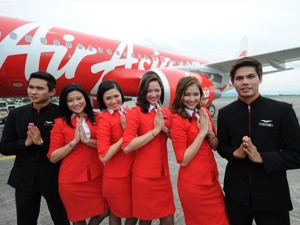
MANILA, Philippines—The local unit of Malaysia’s AirAsia Berhad, dubbed as “mother of all budget airlines,” officially landed in the Philippines as it took delivery Monday of the first of several planes to be based in Clark Freeport in Pampanga.

AirAsia Philippines, a joint venture between a local group—Antonio “Tonyboy” Cojuangco Jr., Michael Romero and Marianne Hontiveros—and Malaysia’s Tony Fernandes, aims to become one of the leading players in the country’s competitive air travel sector.

According to company officials, AirAsia is scheduled to start regular flights from Clark by October this year once it receives the required government permits.

The officials, in a briefing on Monday, said the airline would start with popular regional destinations such as Singapore, Hong Kong and Macau.

“This is a proud moment for AirAsia Philippines as the arrival of the new aircraft signifies our first step in introducing ourselves to the nation,” said Hontiveros, AirAsia Philippines’ president and CEO.

AirAsia Philippines expects to take delivery of its second plane by the fourth quarter of this year, while two more are scheduled to arrive by next year.

The company intends to turn Clark, which it earlier chose as its home in the Philippines, into a major hub in Asia-Pacific.

Hontiveros said the Diosdado Macapagal International Airport (DMIA) could become a jump-off point for passengers from other countries who might want to fly to other destinations within the range of the Philippines.

AirAsia’s fleet is made up mostly of Airbus A320 aircraft, which can fly for only about four hours at a time.

She said Filipino passengers would be able to take advantage of AirAsia’s regional network to reach more destinations.

Romero, the joint venture’s vice chairman, said the company aimed to have a total of 13 to 15 new planes in three to five years. “But if you look at the way AirAsia has expanded in other countries in the region, they usually reach their five-year targets in as fast as two years,” Romero said.

AirAsia Philippines is the group’s third subsidiary in Southeast Asia, next to AirAsia Indonesia and AirAsia Thailand.

Hontiveros said the company also aimed to turn the DMIA into a hub for long-haul flights to destinations such as Europe and the United States.

AirAsia Philippines’ sister company, AirAsia X, has direct flights to London and Paris.

Romero said the Philippine unit was not ruling out the possibility of mounting long-haul flights of its own, particularly to the US.

Clark International Airport Corp. president and CEO Victor Luciano said AirAsia Philippines was expected to be one of the biggest players in the country’s competitive airline industry. “We want (AirAsia) to propel Clark to new heights in years to come,” Luciano said.

ISG Bags PAL's Fiesta Boutique


August 9, 2011

Delight on all sides as an important new inflight relationship is forged between Philippine Airlines and Inflight Sales Group

By Martin Moodie

Philippine Airlines (PAL) has selected Hong Kong-based Inflight Sales Group (ISG) as its strategic partner to further develop the Fiesta Boutique inflight shopping programme.

This follows the airline’s review of its current inflight duty free programme and an evaluation of future requirements to enhance passenger service.

PAL and ISG have signed an exclusive supply agreement for an initial two-year period plus a performance-based option period, with their first programme slated to go onboard 1 November 2011.

Prior to its partnership with ISG, PAL was one of the few airlines in Asia that manages its duty free programme in-house. “The decision to tap ISG represents a very significant shift in PAL's strategy,” the companies noted in a statement.

ISG Managing Director Tony Detter said he was enthusiastic about the company's new partnership with PAL. “We’re honoured to be selected by Philippine Airlines as their partner to re-engineer this inflight shopping service, and are already hard at work with the PAL team to ensure we have a great first programme launch and a smooth transition," he said.

Delight on all sides as an important new inflight relationship is forged between Philippine Airlines and Inflight Sales Group
“PAL has a very good core business and knows its customers quite well. Our job at ISG will be to introduce new brands and categories to the existing programme, leveraging our knowledge and brand portfolio to attract a broader base of customers to the Fiesta Boutique shopping program."

PAL Senior Assistant Vice President-Catering Services Jaime Arturo L. Viola said: “PAL is pleased to work with Inflight Sales Group. We were very thorough and careful during our review of our business and in making the decision to expand and refocus our duty free programme.

“We’re confident ISG is the right partner to help us grow our business, develop new shopping channels, and improve our promotional and crew motivation strategy. ISG has a long history of successful innovation with their product offerings and marketing programmes, and are well respected in the travel retail industry both for their ability to increase sales and to add value to their customers. We look forward to a mutually beneficial relationship with them.”

ABOUT PHILIPPINE AIRLINES

Philippine Airlines – Asia’s first airline – is the flag carrier of the Republic of the Philippines. This year marks the 70th anniversary of its first flight on March 15, 1941. PAL offers more than 70 flights to 25 international destinations daily on a modern fleet of aircraft including the Boeing 777-300ER and Airbus A340-300, and carries close to 25,000 passengers and 350 tons of cargo daily. More information is available at www.philippineairlines.com

ABOUT INFLIGHT SALES GROUP

Inflight Sales Group is the pioneer of airline concession operations, with more than 25 years of airline duty free concession management experience. Inflight Sales Group's predecessor was formed by Jean-Marcel Rouff in 1982 to supply amenity kits and as an exclusive distributor of duty free products from the leading suppliers to airlines in Asia and North and South America. Today ISG remains the leading concessionaire in Asia and North Africa, servicing 17 airline partners around the globe. More information is available at www.inflightsales.com

Source: ©The Moodie Report

Dnata rebrands Philipppine business


By JAMES A. LOYOLA
August 8, 2011,

MANILA, Philippines — Emirates’ ground handling unit Dnata, the fourth largest combined air services provider in the world, has rebranded its business in the Philippines as part of its global brand realignment.

The successful contribution the Philippine business makes to dnata’s global business was acknowledged in Manila as customers, suppliers and both local and international employees celebrated the start of a new era which will see positive changes to the business over the coming months.

Dnata’s profile and reputation in the Philippines have risen significantly since 1998 – when it first established its operations in the region as ‘dnata Inc.’ – the only internationally owned ground handling agent in Manila's airport.
Services offered by dnata in the Philippines include passenger, ramp and baggage services; cargo handling and ground support equipment.

The firm has invested heavily in its Manila operations, with the purchase of new equipment, introduction of staff training initiatives and renovation of their offices.

The operations have seen significant growth during the years since, with an increase in new customers and organic growth by existing customers.

Today, dnata is one of the most successful and highly reputed handling agents in the Asia-Pacific Region with customers including Emirates, Qatar Airways, Hawaiian Air, and Air China.

“We are proud to have strong roots in the Philippines, the team here has worked hard and played an important part in establishing our reputation in the region as a respected global air services provider,” said Dnata President Gary Chapman.

He added that ‘dnata in Manila has excellent potential for growth, future success and to play its part in dnata’s global team effort to achieve its vision of becoming the world’s most admired air services provider.”

The brand re-fresh has come at a key time for the dnata team in the Philippines in particular, having recently welcomed a new General Manager Margaret Yu – who has been appointed to take the lead as the business enters this new era.

“We have more than 200 dedicated staff working at the Ninoy Aquino International Airport, a number of whom have been with the team since we first began our operations in Manila,” said Yu.

She said “the collective knowledge and experience we possess makes us a strong team and enables us to deliver the very best service to our customers. Add to that the combined knowledge, experience and reputation of the rest of the dnata family worldwide and we have a bright future ahead of us.”

Air Philippines, fastest growing airline in 2011

Domestic Travel Grew 16%

Quick Facts (Growth year-on-year):
Air Philippines .............176%
Zest Air grew ................85%
Cebu Pacific .................3.9%
Philippine Airlines .....-17%
Seair ...........................-36%


August 8, 2011

DOMESTIC air travel rose by double digits in the first half of the year, boosted by airlines’ agressive expansion and price wars, according to to the Civil Aeronautics Board.

Data from CAB showed the number of domestic passengers rose 15.9 percent to 9.72 million from 8.39 million in the same six-month period last year.

The country’s five major carriers’ seat capacity jumped 16.76 percent to 12.12 million from 10.38 million last year.

Domestic load factor, which measures the number of seats occupied during a flight, averaged 79 percent, up from 77 percent last year. The industry’s increasing load factor reflects a steady growth in passenger demand.

In a text message, Carmelo Arcilla, CAB executive director, attributed the passenger growth to the liberal policy of the government that has encouaged competition and expansion of existing services.

“Another factor is the high acceptability of the low cost airline model that offers very reasonable and competitive fares,” Arcilla said.

Cebu Pacific remained the leading domestic carrier during the period, but the increase in its passengers was lower than other budget airline such as AirPhil Express and Zest Airways, both of which have been agressively expanding their fleets and destinations.

Cebu Pacific carried a total of 4.25 million passengers, up by 3.9 percent from 4.09 million last year. Its load factor however fell to 84 percent from 85 percent.

AirPhil Express flew 1.85 million passengers, higher by 176.5 percent from 667,686 last year.

In a telephone interview, Alfredo M. Herrera, Airphil Express senior vice president for marketing and sales, said the huge increase in passengers was driven by the airline’s competitive fare and increased capacity.

He said the airline has been successful in snatching passengers from rivals, while gaining new travelers.

Herrera said AirPhil Express expects to carry more than four million passengers by end of the year.

Zest Airways recorded an 85.34 percent increase in domestic passengers to 1.14 million from 616,058 last year.

Butch Rodriguez, ZestAir senior vice president for commercial and external affairs, attributed the growth to the doubling of its fleet from three Airbus A320s to six, as well as to more destinations and frequencies.

Philippine Airlines recorded a 17 percent decline in domestic passengers to 2.39 million from 2.88 million last year.

Southeast Asian Airlines also posted a drop in passengers to 97,326 from 132,416 last year.

Industry-wide cargo dropped to 80.78 million kilograms in the first six months as against 83.6 million last year.

PAL carried 27.31 million kilograms; Cebu Pacific, 37.50 million; AirPhil Express, 9.43 million; Seari, 101,387 kilograms and Zest Air, 6.43 million. - Manila times

Philippine Tiger's Dilemma

To be or not to be. That is the Question?

August 7, 2011

Like the now famous quote of the President of the Philippines in his State of the Nation Address in 2011 "Ang sa Pilipinas ay sa Pilipinas", literally translated to mean that flying in the Philippines remains to be largely a Filipino business. And so it was for Tiger airways and its five year struggle to gain a foothold in the country.

Tiger Airways, (established 2005) a low cost subsidiary of Singapore Airlines, recently announced sometime in February 2011 plans to acquire 32.5% stake in the Philippines only leisure airline, Southeast Asia Airlines (SEAir), the smallest operating airline in the country with regular scheduled trips.

But that was not the first time Tiger's intent to set up a local subsidiary was announced. The Philippine affiliate plan was laid on the table as early as late 2005 after its organization but was made public only September 26, 2006, for a flight commencing February 2007.

The venture involves initially the dry subletting of two Tiger planes in the colors of SEAIR, but desires to implement the agreement was put to the test after Philippine registered carriers objected to the agreement as a clear circumvention of "cabotage rules", thus, the objections.

The airline's international flight plans was approved by CAB, so the long delayed official launching on December 16, 2011 to three international points.

Tiger began international flights from Clark by proxy, to Singapore, Hong Kong, and Macau. It has pending application to fly Kuala Lumpur and Kota Kinabalu in Malaysia. It also applied Kutching, Penang and Langkawi flights from Clark under the Asean open skies initiative.

SEAIR was planning to add two Tiger A320s in Jul-2011 and launch domestic services. It already operated two Airbus 319's out of Manila-Clark. But the CAB forced SEAir to suspend the launch of Tiger-branded domestic flights due to "cabotage claim" by local airlines. Air Asia's local subsidiary cautiously took notice and decided to fly overseas.

Cabotage Rights

Cabotage rights has its origin in Maritime law, first applied in France, literally meaning to navigate along the coast. The French translation refer to it as coastal Navigation while the English refer to it as Coastal trade.

Navigation refer to nautical operations while Coastal trade refer to sales of services, like freightage and carriage of persons and goods for profit. Aerial cabotage, applying the English rule to maritime, follows the latter.

The English objective for Cabotage was for the protection of national shipping activities within its territory from foreign competition, which as a matter of national policy should be protected from competition by a foreign owned vessels.

From the 1900's maritime cabotage referred to economic protection. It was later adopted to mean the same thing upon the introduction of aerial cabotage. It is fondly associated with the principle of Sovereignty in international civil aviation, as the right of the State to exclude foreign owned airlines from operating within its territory.

The Freedom of aerial navigation (aerial cabotage) was actually introduce by the French in 1910 during its first aerial convention held at Paris. The Germans introduce the reciprocity rule, allowing foreign aircraft operator to operate domestic as long as the other State opens its borders to the latter State's aircraft operators.

The German proposal was not however admitted. Instead, what was adopted was that the right to aerial trade would be subject to limits within the other States territory and further security restrictions, thus formed the basis of the State's Air Services Agreement (ASA) with other countries where they have diplomatic relation.

A Philippine Tiger?

There is no doubt that SEAIR is a local airline entitled to cabotage rights within the Philippine shore. Its partner however isn't, and by carrying the name tag of the latter to its marketing strategy puts its domestic plans in limbo.

For a start, Singapore has no domestic territory to fly. The Philippines has vast area of airspace with 90 million people as market.

The airline's plan to fly domestic via SEAIR to Cebu and Davao ran a snag as it intend to make international connections to Hong Kong and Singapore.

But former Silk Air CEO and now Tiger Airways newly-installed group chief executive Chin Yau Seng said on the joint venture agreement that without a domestic operation in the Philippines, the Tiger Group investment wouldn’t make sense for Tiger and the deal will not be completed until approval is secured for domestic services.

Chin expects the issue to be resolved with SEAIR officially becoming a Philippine tiger following the footprints of LCC heavyweight Air Asia which intends to launch flight out of the country by October.

Legal complications goes back to cabotage rights and patrimonial issues, which the local carriers are very sensitive.

Second, Airlines are grantees of Legislative franchises from the government. Which means that their operation should be subject to control and regulation by the Philippine Government and not that of Singapore to which the airline is based.

“We are engaged in discussions with the relevant people over there” says Chin.

“Were hoping on getting the issue resolved” adds Chin.

Tigers plan in the Philippine is to grow the Philippine fleet to five at the end of the year. It currently operates 28 Airbus A320's with 9 more orders coming by 2012.

Chin said that 6 of the additional 9 aircraft have been allocated to Tiger Singapore, giving it a modest fleet of 20 A320s by the end of the fiscal year, while embattled Tiger Australia kept its current fleet of 10 A320s. The remaining 3 aircraft has been allocated to its Philippine affiliate.

Tiger Singapore already took aircraft deliveries intended to the Philippine affiliate and should start flying Davao and Cebu segments out of Singapore by November.

"Tiger Singapore cans still take another aircraft or two beyond current plans, but the Singapore market would not be able to support the group’s entire fleet" said Chin.

The Tiger group intends to grow its fleet to 68 aircraft by December 2015. Where these aircraft end up depend on Tiger’s progress in setting up its three planned joint ventures and potentially other new affiliates in Asia.

Tiger also has in place a contingency plan to sublease to other carriers some of its newly delivered aircraft, as well as potentially some of the 10 A320s in Australia should that operation be reduced in size, if all three of its three planned joint ventures are unable to launch this fiscal year.

Tiger Airways is the 8th largest low cost carrier in Asia Pacific Region behind Air Asia and Cebu Pacific at number one and fourth place respectively.

Tiger flies Cebu Davao Nonetheless

Singapore-Davao flight to start November 1

August 4, 2011

Singapore - Budget airline Tiger Airways has announced that they will add Cebu and Davao, the Philippines second and third largest metropolitan City to their route network effective October 1 and November 1, 2011, respectively.

The Singapore Airline's low cost subsidiary will fly Cebu daily and Davao three times a week with the following schedules:


Tuesday
Singapore to Davao 3:00pm arrives 6:45pm
Davao to Singapore 7:45pm arrives 11:40pm

Thursday
Singapore to Davao 2:50pm arrives 6:45pm
Davao to Singapore 7:45pm arrives 11:40pm

Sunday
Singapore to Davao 4:45pm arrives 8:35pm
Davao to Singapore 9:05pm arrives 12:45am (next day)


“We are excited to add Davao to our growing portfolio of exciting destinations” Stewart Adams, Managing Director of Tiger Airways Singapore said Monday.

Tiger Airways entered a joint-venture agreement with South East Asia Airlines (SEAIR)to fly domestic points across the Philippines but the deal was challenged by local airline operators Philippine Airlines (PAL), Cebu Pacific (CEB) AirPhil Express and Zest Airways. Resolutions are pending at the Civil Aviation Board (CAB).

SEAir currently flies to Singapore, Hong Kong and Macau from its hub at Manila-Clark using let planes from Tiger Airways.

It was supposed to be a SEAir flight until the restraining order came out preventing the airline from flying Tiger planes for domestic flights to Cebu and Davao.

The CAB said that they issued a cease order against these planned domestic routes due to possible violations of the constitutional provision that bars foreign entities from providing transportation services within the country.

Airphil Express opens Cebu-Hong Kong flight

August 1, 2011

MANILA, Philippines - Airphil Express is on track to dominate the budget air travel category in the Philippines with the launch of the Cebu-Hong Kong route last July 28, 2011. The new flight connection is seen to further boost business and tourism between the two destinations and will strengthen the presence of Airphil Express beyond domestic borders.

Cosmopolitan Cebu province in the Visayas region, which is rich in heritage appeal, attracts domestic and foreign tourists and investments because of good infrastructure and a dynamic export industry, and serves as gateway to some of the world’s most breathtaking shorelines and nature attractions. Hong Kong, host to many thousands of OFWs, remains an important business hub, shoppers’ paradise, and, with the presence of Disneyland and other theme parks, continues to be a favorite destination among Filipinos. The expanded route of Airphil Express redounds to the benefit of passengers who want savings and convenience in their frequent business and pleasure travels.

“The decision to launch the first Hong Kong flight of Airphil Express from Cebu is an acknowledgment of the valuable business that the province brings into the country in terms of trade and tourism,” said Alfredo Herrera, Airphil Express SVP for marketing and sales. The addition of the Cebu-Hong Kong route follows the success of Airphil Express’ launch of its international flight to Singapore in December last year.

Another company milestone by the end of July is the arrival of a new A320 in addition to the current six Airbuses as part of Airphil Express’ re-fleeting program. The A320 is one of the most modern airplanes today and ensures increased comfort and safety for passengers. The budget airline also maintains three reliable Q300s and five high-speed Q400s for inter-island travel.

The new Cebu-Hong Kong route and the company’s investment in new aircraft are in service of a continuously growing air travel market. While traffic growth from all Philippine carriers remains at double digits this year, the rise of Airphil Express’ market share has been described as “staggering.” From cornering 2.9 percent of the market share during the airline’s pre-rebranding period in 2009, the carrier’s slice of the domestic market in 2010 grew to 11 percent, representing some 1.9 million passengers on its first full year of operations.

Only a little more than a year old, Airphil Express is already redefining the budget category not just in terms of low airfare but also other services.

PNP second-hand choppers owned by Arroyo

August 1, 2011

By Cathy Yamsuan
Philippine Daily Inquirer

Two five-year old helicopters sold as brand new to the Philippine National Police in 2009 were among the five choppers that then First Gentleman Jose Miguel “Mike” Arroyo acquired for the campaign of his wife, then President Gloria Macapagal-Arroyo, in the 2004 presidential election.

This was disclosed by a businessman, who was privy to the sale of the helicopters to Mike Arroyo in late 2003. The businessman is scheduled to appear as a witness at a hearing of the Senate blue ribbon committee on Tuesday.

The Inquirer tried to contact Sunday night Raul Lambino, lawyer and spokesperson of the Arroyos, to get his side but did not get any response.

Senate President Pro Tempore Jinggoy Estrada said the witness got in touch with him last week and presented documents, including copies of the record of payments made by Arroyo from December 2003 to March 2004.

Estrada said the witness, a well-known personality in the aviation industry, told him that the five helicopters—all Robinson R44 Raven Is with Series Nos. 1370 to 1374—were purchased for use in the 2004 election campaign of then President Arroyo.

Initially, the witness said Mike Arroyo only wanted to lease helicopters from Lionair, exclusive distributor of Robinson helicopters in the country.

However, Mike Arroyo was told that all Robinson units at the time were already out on loan to his wife’s political rival, Fernando Poe Jr.

Documents shown to the Inquirer indicated that Mike Arroyo paid a deposit of $95,000 each for the five units on Dec. 11, 2003, for a total of $475,000. The net balance of $948,025 was paid from March 2 to March 9, 2004. A total of $1,423,025 was paid to Lionair for the five helicopters.

Cash payments

Estrada said all helicopters were paid for in cash that a Lionair representative would collect from the LTA Building, which belongs to Arroyo’s family, on Perea Street in Makati City.

Estrada said the witness claimed that in early 2004, the helicopters were sent via air cargo to Asian Spirit, an airline company in the Clark Freeport Zone in Pampanga.

“He (the witness) said this was done because Asian Spirit was a locator in Clark, meaning it can receive goods without paying taxes and the new owner of the choppers at that time wanted to avoid paying them,” Estrada said in an interview.

“At that time, Asian Spirit and Lionair were owned by one person. But Asian Spirit has since been sold to Zest Air,” the senator said.

Investment banker Noel Oñate sold Asian Spirit for P1 billion in 2008 to AMY Holdings of Alfredo Yao, owner of juice maker Zest-O. A year later, Oñate led a group that acquired the preneed unit Pacific Plans Inc. from the Yuchengcos for P250 million.

Speedy delivery

Estrada added that the witness also pointed out the speed by which the helicopters were delivered. It usually takes six months to deliver a brand new helicopter, according to the witness.

“But he said that in the case of (Mike) Arroyo, this was expedited to three months only. From the time the deposit was made (in December) until full payment (in March),” the senator said.

Supt. Claudio Gaspar, a licensed pilot of the PNP, said under oath last week that he was familiar with two of the helicopters owned by Mike Arroyo. This is because Gaspar frequently ferried Mike Arroyo and his son, Juan Miguel “Mikey” Arroyo, from 2004 until the two units were sold to the PNP.

The two units were sold along with a brand new Robinson R44 Raven II to the PNP in 2009 for P105 million. Senators have raised a howl over the transaction since the PNP paid the full price for the old units passed off as brand new.

Gaspar said that while he was aware that the units were old, he did not notify anyone in the PNP about it. He explained that he was present during the inspection “to assist” and not to warn anyone of the real condition of the units.

Gaspar, in his testimony, recalled seeing “PNP markings” being painted on the 5-year old helicopters before the inspection by a PNP team.

2 others unsold

Sen. Panfilo Lacson, in an ambush interview, said he received reports that two of the helicopters owned by Arroyo were still languishing in the Lionair hangar.

A fifth chopper, Gaspar told the Senate, crashed in 2004. Its passenger at the time, Ilocos Sur Gov. Chavit Singson, survived.

“The two unsold helicopters are still in the hangar,” Lacson said. “It is now Mike Arroyo’s problem how to get them. Because the helicopters have already been identified through their serial numbers, who’s going to buy them now?”

Lacson added that he also got word that when the helicopters arrived in Clark, “you’ll be amazed at how powerful the person who owned them was. They arrived on a Friday, disassembled and quickly assembled. By Tuesday, there were already certificates from (Air Transportation Office).”

Lacson said insiders in the airline industry disclosed that registration of a new unit usually takes two weeks to a month.

Revenue flights

Estrada, in the interview, said Mike Arroyo supposedly made money on the helicopters during his ownership.

“There were revenue flights when the helicopters were chartered to other parties. However, the witness said these parties were known to FG (a popular reference to Arroyo),” he said.

The witness allegedly told Estrada that Mike Arroyo kept “blank deeds of sale” as proof of purchase of the helicopters.

Responding to a text message on Sunday, Sen. Teofisto Guingona III said Mike Arroyo could not invoke private citizenship should he be charged with violation of the Anti-Graft and Corrupt Practices Act for selling secondhand helicopters at brand new prices to the government.

“Any person who causes undue injury to government through a manifestly gross and unjust situation will have accountability,” said Guingona, the chair of the Senate blue ribbon committee.

“Let’s not presume his guilt at the moment but he cannot invoke that he is a private citizen in this case,” the he added.